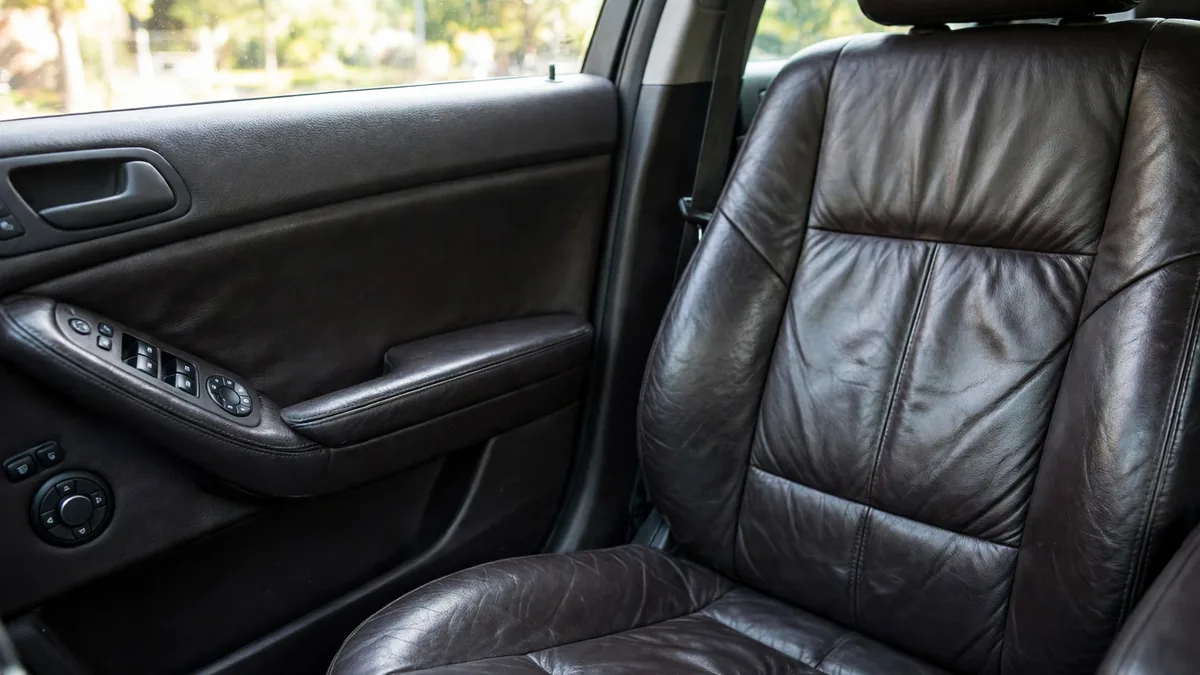
You press a button on the door, and the seat glides back, tilts, rises and settles, all without you moving a muscle. Then it warms up on a cold morning, cools down on a hot afternoon, and starts kneading your back on a long drive, as if it knew exactly what you needed.
It is not one machine doing all of this. It is a frame, a set of small motors, heating wires, air bladders and a computer, all packed under the leather you sit on. This is how a luxury car seat works, and why it feels less like furniture and more like it is thinking.
How It Works
Step 1: The frame and rails carry the weight
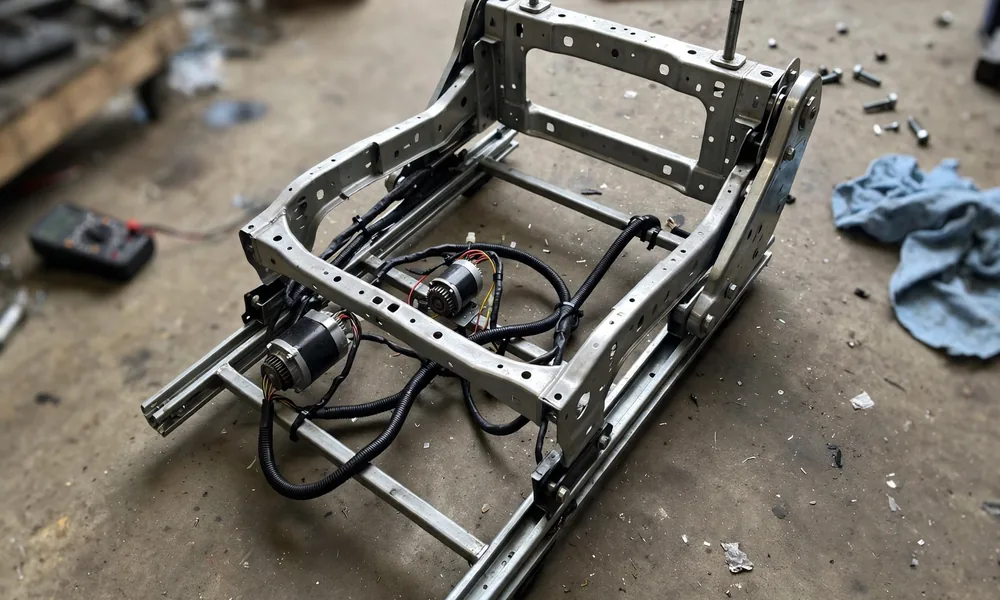
Under the leather sits a steel frame, the skeleton of the seat, bolted to rails on the car floor that let it slide forwards and backwards. The frame has to hold a person securely in a crash, so it is far stronger than it looks: in a hard stop it must take many times the weight of the person sitting on it without bending or breaking free.
The rails themselves are a small piece of engineering. Two steel tracks, one on each side, run on rollers or ball bearings, and a locking pin holds the seat in place once you have chosen your position. The seat must never slide on its own, not under braking and not in a crash, so the lock is tested thousands of times before the seat is approved.
Step 2: Small motors move the seat in every direction
A luxury seat can move in a dozen directions or more, and each one has its own small electric motor. One motor slides the seat along the rails, another raises and lowers it, a third tilts the backrest, and more still adjust the lumbar support and the cushion length. Each motor turns a small gearbox and a screw thread, turning fast spinning into slow, strong movement.
The motors are quiet by design. They are mounted on rubber bushes that soak up vibration, and they move slowly enough that you can stop them exactly where you want. The seat remembers where each motor stopped, counting the turns of its screw, so it can return to your saved position later without you having to fiddle with the buttons again.
Step 3: Heating and cooling elements work through the leather
On a cold morning, heating wires under the leather warm the seat within a minute. The wires are woven into pads in the cushion and the backrest, and a thermostat switches them on and off to hold a steady temperature, so the seat warms quickly and never gets hot enough to be uncomfortable.
Cooling works the other way round. Small fans under the seat draw air in and push it through the perforated leather, carrying heat away from your body. Some luxury seats add a cooling element that chills the air first, so the seat can feel cool even on a hot day. The perforations in the leather, thousands of tiny holes, are what let the air reach you at all.
Step 4: The massage system kneads and rolls
The massage in a luxury seat is not a vibrating pad. It is a set of air bladders inside the backrest that inflate and deflate in sequence, pressing against your back in waves, like a pair of hands kneading slowly. The bladders are arranged in rows, and the computer inflates them in different patterns for different programmes, from a gentle rolling motion to a firmer deep press.
Some seats add small rollers that travel up and down the backrest, driven by their own motor. The combination of rollers and bladders can cover the whole of your back, and the system is timed so the massage never presses on the same spot for too long.
Step 5: Sensors and memory remember the driver
The seat knows who you are. When you unlock the car with your key, the seat reads your saved profile and moves itself to your position before you have even sat down, adjusting the mirrors and the steering column at the same time. Each key can hold a different driver, so the car reshapes itself for whoever is holding it.
Sensors in the seat also watch for a passenger. A pressure mat under the cushion tells the car whether someone is sitting there, which decides whether the passenger airbag should be armed and whether the seatbelt warning should sound. The same sensors can detect a child seat and switch the airbag off, a small decision that matters enormously.
Step 6: The seat protects in a crash
In a crash, the seat becomes safety equipment. The frame is built to absorb energy, the headrest moves forward to catch your head and stop whiplash, and the seatbelt pretensioner pulls you tight against the backrest in the first milliseconds. The seat and the belt work as one system, holding you in the safest possible position.
After the crash, engineers study how the seat performed, measuring the forces on the frame and the movement of the dummy’s head and chest. The results feed back into the next seat design, making the frame a little stronger here or the headrest a little quicker there. A luxury seat is never really finished; each generation learns from the crashes of the last.
| Spec | Detail |
|---|---|
| Frame | Steel skeleton on floor rails, built to hold many times the occupant’s weight |
| Motors | Small electric motors with gearboxes and screw threads, one per adjustment |
| Heating | Woven wire pads in cushion and backrest, thermostat controlled for steady warmth |
| Cooling | Fans pushing air through perforated leather, some with a chilling element |
| Massage | Air bladders inflating in sequence, some seats add travelling rollers |
| Memory | Saved profiles per key, seat, mirrors and column moving together on unlock |
The hardest part of a luxury seat is fitting all of this into a space the size of a dining chair. Motors, fans, bladders, wires and sensors all share the same few litres under the leather, and none of them can be felt through the cushion. If you can feel a motor while you sit, the seat has failed, however clever it is.
What One Costs
A single luxury car seat typically costs an estimated $2,000 to $12,000, set mostly by the number of adjustments and the massage and cooling systems it carries. A standard powered seat sits near the bottom, while a fully loaded seat with massage, ventilation and memory costs far more. For the best seats on the market, the best hypercar seats, ranked compares the leaders, and the best hypercar interior materials, ranked shows what covers them.
A Rare Fact
A top luxury seat can have more than twenty electric motors inside it, one for every direction it can move, plus the massage rollers and the fans. There are more motors in a single seat than in many small cars, and all of them are hidden under the leather you sit on.
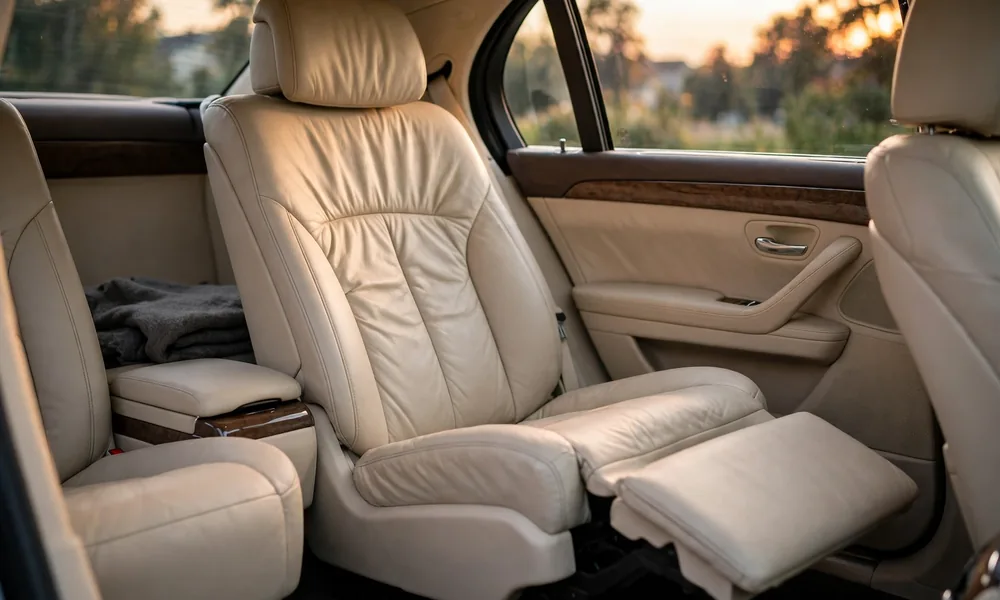
A luxury car seat is a chair that moves, warms, cools, massages, remembers and protects, all while looking like a simple leather seat. It is the part of the car you spend the most time touching, and it works hardest when you notice it least. For how that seat is built in the first place, how a luxury car seat is made follows the frame, foam and stitching from the workshop to the cabin.