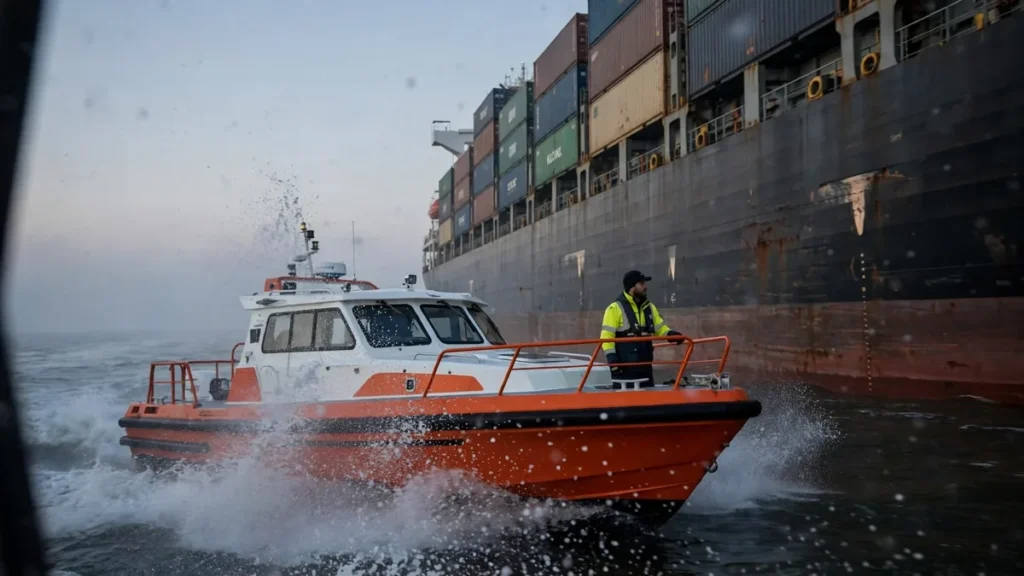
The radio crackled at 4 a.m. A container ship was an hour out, the pilot had to be aboard before it reached the channel, and the wind was already gusting thirty knots. The pilot boat crew cast off in the dark, the orange hull slamming through the swell, spray flying over the wheelhouse. Twenty minutes later they were alongside a moving wall of steel three hundred metres long, matching its speed, holding a steady gap of less than a metre while the pilot stepped from the boat onto the ladder and climbed to the bridge.
A pilot boat is the harbour’s taxi, ambulance, and workhorse in one hull. Its job is to carry a harbour pilot out to a ship at sea and bring the pilot back, in any weather, at any hour, and to do it alongside a moving ship without ever touching it. It is a small boat with an outsized job, and everything about it, from the hull to the fenders, is built around one moment: the transfer.
How a Pilot Boat Works
A pilot boat works in a cycle that repeats all day and all night: the call comes in, the crew launches, the boat meets the ship, the pilot transfers, and the boat returns to the station. Each stage has its own demands, and the boat is designed so that no stage ever waits on another. The crew is small, usually two or three, and the boat must be operable by that crew alone, in the dark, in bad weather, with a ship alongside.
Step 1: The call and the launch
It starts with the harbour’s vessel traffic service, which tells the pilot station which ships are arriving and when each pilot must be aboard. The pilot boat is kept fuelled, crewed, and ready around the clock, and the launch takes minutes: the crew boards, the engines start, and the boat is under way. Speed matters here, because a ship does not wait. The boat leaves the harbour at full speed, using its navigation systems to intercept the ship at a point agreed with the ship’s master, often miles out to sea.
Step 2: The run out to the ship
The run out is the pilot boat’s sprint. A modern pilot boat can do twenty-five to thirty knots, and it needs every knot, because the ship is already moving at ten or twelve. The hull is a deep-V, designed to cut through a head sea without slamming, and the wheelhouse is built to take green water over the top. The engines are usually twin diesels driving waterjets or propellers, chosen for acceleration and for the ability to hold a precise speed alongside a ship.
Step 3: Coming alongside a moving ship
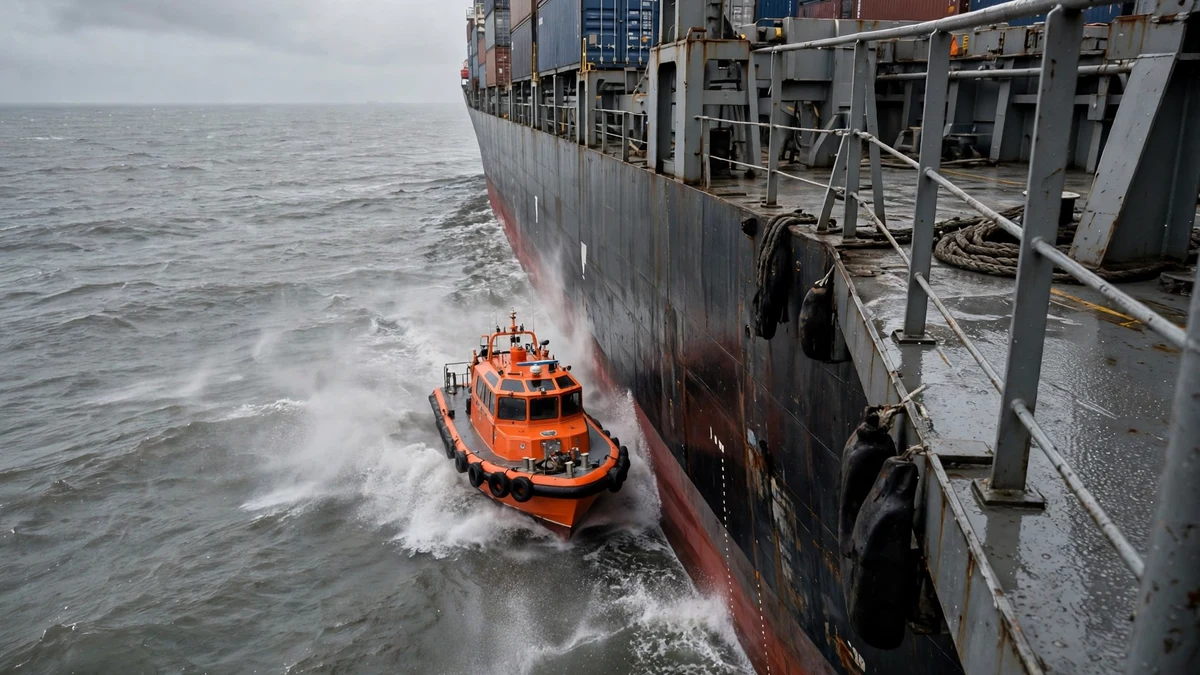
This is the hardest part of the job. The pilot boat approaches the ship from astern, reads the ship’s speed and course, and slides in alongside at the ship’s lee side, where the hull shelters it from the wind and the sea. The coxswain matches the ship’s speed exactly, holding the boat a metre or less from the ship’s side, and keeps it there while the pilot prepares to transfer. The same low-speed power and control that moves a ship in harbour is at work here, and how a tugboat works shows that power in its heaviest form.
Step 4: The pilot transfer
The pilot climbs from the pilot boat to the ship on a rope ladder hung over the ship’s side, with a combination ladder used on larger ships. The transfer takes less than a minute, and it is the most dangerous moment of the whole operation: the pilot steps from a boat that is rolling in the swell onto a ladder on a ship that is rolling differently, with the sea between them. The pilot boat crew holds the boat steady, the pilot’s gear is already aboard, and the moment the pilot is on the ladder the boat eases away.
Step 5: The return and the next job
Once the pilot is aboard, the pilot boat peels away from the ship and runs for the station, often to pick up the next pilot or to meet an outbound ship whose pilot needs collecting. The boat is refuelled, the crew debriefs, and the cycle starts again. A busy station can run a dozen transfers a day, and the boat is built to do it without rest: the engines are commercial diesels with long service intervals, the hull is built to take daily impacts, and the whole boat is designed to be hosed down, refuelled, and sent out again. The engines that make that pace possible are cousins of the ones that drive short-sea shipping, and how ferry propulsion works explains the same demands for reliability and quick response on a larger hull.
Step 6: Surviving the worst weather
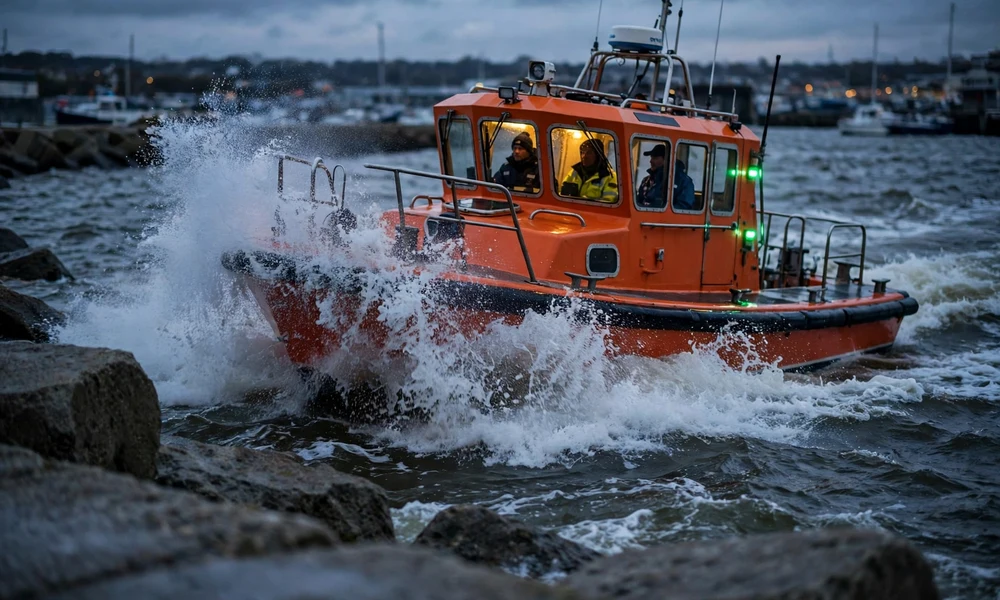
A pilot boat cannot refuse a job because of the weather, so it is built to survive conditions that would keep most boats in port. Many pilot boats are self-righting: if a wave rolls the boat over, the weight of the engines low in the hull and the buoyancy of the sealed wheelhouse bring it back upright. The wheelhouse windows are thick laminated glass, the decks are self-draining, and every item of equipment is secured against a roll. The bridge of the ship the pilot is boarding is a very different workplace, and ship bridge specs show what the pilot finds when he climbs to the top of that ladder.
Pilot Boat Specifications
| Specification | Typical figure |
|---|---|
| Length | 12 to 20 metres |
| Top speed | 25 to 30 knots |
| Engines | Twin diesels, 500 to 1,000 hp each |
| Hull material | Aluminium or GRP, deep-V |
| Crew | Two or three |
| Self-righting | Yes, on most modern boats |
| Range | 150 to 300 nautical miles |
What a Pilot Boat Costs
A pilot boat is a specialised commercial vessel, and its price reflects that. A new fifteen-metre pilot boat typically costs an estimated $1 million to $2 million, while a larger twenty-metre self-righting boat with waterjets and a full electronics fit can reach an estimated $3 million to $4 million. Harbour authorities pay it gladly, because without the pilot boat the ships cannot enter the port, and a port that cannot take ships is a port that earns nothing.
A Rare Fact About Pilot Boats
Some pilot boats are designed to roll all the way over and come back up. The self-righting test is dramatic: the boat is capsized in a test tank or in open water, rolls through 180 degrees, and then rights itself, driven by the weight of its engines and the buoyancy sealed into the wheelhouse. The crew inside is strapped in and the engines keep running through the roll. It is the only boat in the harbour that is built to be upside down and still work, and it is tested that way before it ever carries a pilot.

The next time you see a small orange boat racing out of a harbour toward a ship on the horizon, remember the job it is going to do. It will match the speed of a moving ship, hold itself a metre from a wall of steel, and hand over a pilot on a rope ladder in the dark. The pilot boat is the smallest boat in the port with the biggest responsibility, and it is built to carry it.