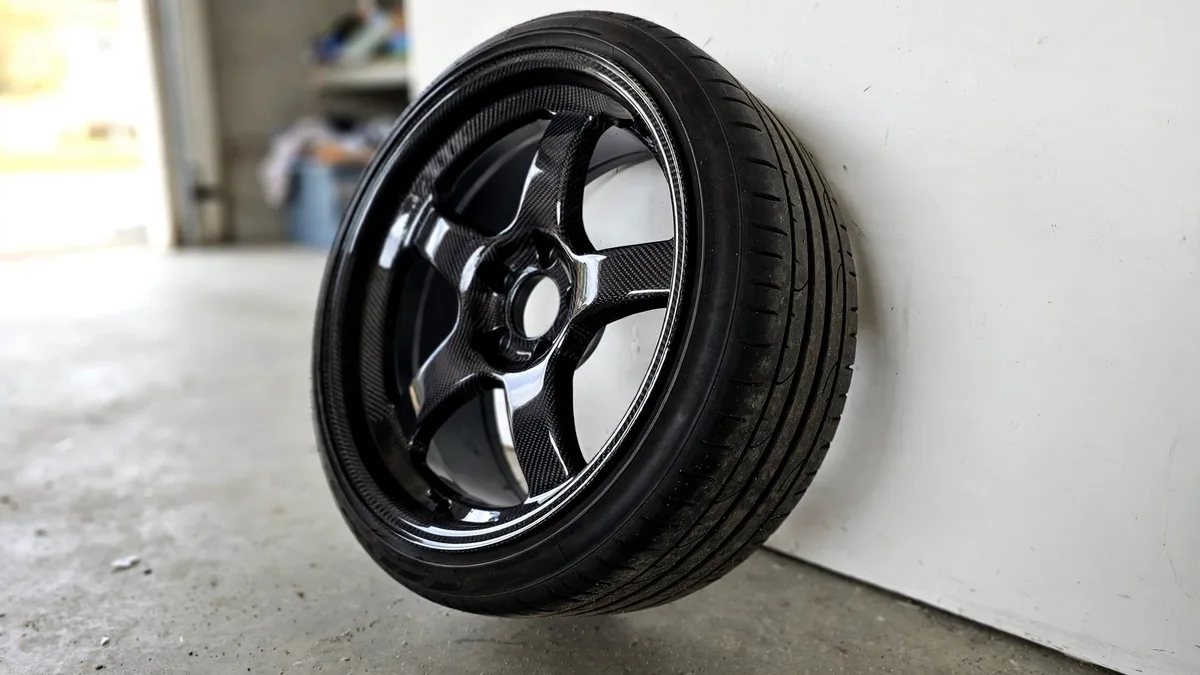
In a bright workshop in Italy, a wheel sits on a stand, and it does not look like a wheel at all. It is black, glossy, and so light that the engineer holding it lifts it with one hand, turning it in the light so the woven pattern under the clear coat catches the sun. It is a carbon fibre wheel for a luxury car, and it costs more than some whole cars, yet it weighs less than the alloy wheel it replaces by several kilograms. The owner of the car it belongs to will never see the engineering inside it, only the way the car turns in a little sharper and stops a little shorter. The spec sheet of that wheel is where the magic is written down, and it reads very differently from the sheet of an ordinary alloy wheel.
A car wheel has two jobs, and they pull in opposite directions. It must be strong enough to carry the weight of the car, survive potholes and kerbs, and hold the tyre at speed, and at the same time it must be as light as possible, because every kilogram in the wheel is a kilogram that the suspension has to control and the engine has to spin up. Alloy wheels do the job well, and most cars use them, but carbon fibre does it better: it is stiffer than aluminium for its weight, and it can be shaped so that the material is thick where the load is high and thin where it is not. The result is a wheel that is lighter, stiffer and, in the right hands, stronger than metal, and the numbers on its spec sheet explain how.
Weight, Stiffness and the Weave Itself
The first number on any carbon fibre wheel spec sheet is the weight, and it is the number the whole wheel is built around. A luxury carbon fibre wheel in a common 20-inch size typically weighs 7 to 9 kilograms, against 11 to 13 kilograms for a comparable forged alloy wheel. That saving of three or four kilograms per wheel adds up to 12 to 16 kilograms across the car, and because the weight sits at the very edge of the spinning wheel, the effect on handling is far bigger than the raw number suggests. Less weight to spin up means the car accelerates a little faster, less weight to stop means the brakes work a little less hard, and less weight for the suspension to control means the tyre stays in contact with the road over bumps.
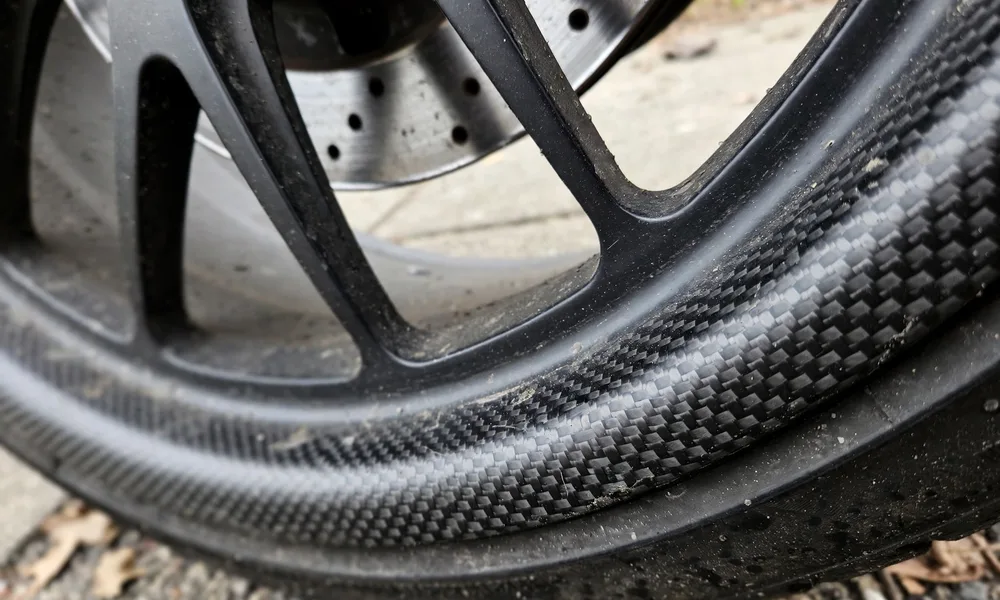
The second number that matters is stiffness, which is how much the wheel flexes under load. A wheel that flexes lets the tyre move sideways in a corner, and the driver feels it as vagueness in the steering. Carbon fibre is very stiff, and a luxury carbon wheel is typically 20 to 30 per cent stiffer than an alloy wheel of the same size, which is why the steering of a car fitted with them feels sharper. The stiffness comes from the weave: layers of carbon fibre cloth laid at different angles, so that the wheel resists bending in every direction. The spec sheet will sometimes name the weave pattern and the number of layers, and a wheel with more layers in the spokes and fewer in the rim is a wheel that has been tuned like an instrument.
The Spec Table, in Plain Numbers
| Specification | Typical luxury carbon fibre wheel | What it means |
|---|---|---|
| Diameter | 19 to 21 inches | The common sizes for luxury sports cars. |
| Width | 8.5 to 12 inches | Wider at the rear for grip under power. |
| Weight, 20 inch | 7 to 9 kilograms | Three to four kilograms lighter than forged alloy. |
| Weight saving | 12 to 16 kilograms per car | The total across all four wheels. |
| Stiffness gain | 20 to 30 per cent over alloy | Sharper steering and a more direct feel. |
| Load rating | 600 to 800 kilograms per wheel | The certified maximum weight each wheel can carry. |
| Material | Carbon fibre, resin cured | Woven cloth set hard in resin under heat. |
| Hub material | Machined aluminium centre | Metal where the bolts and bearings sit. |
| Finish | Clear coat over the weave | Protects the fibre and shows the pattern. |
| Tyre fitment | Low-profile, 30 to 35 series | Short sidewalls suit the stiff, light wheel. |
Reading the Numbers Like an Engineer
The numbers only make sense together. A wheel that is very light but not stiff will feel nervous at speed, because the tyre will move around under the car, and a wheel that is stiff but heavy gives up the very advantage carbon fibre exists to provide. The way to read the sheet is to look for balance: weight, stiffness and load rating should all point at the same kind of car, doing the same kind of driving, and if one number looks far better than the others, the wheel is probably being asked to do a job its construction cannot support. Diameter and width matter just as much, because a wheel that is too wide for its tyre will wear the edges, and a wheel that is too narrow will let the tyre roll in corners.
What a Luxury Carbon Fibre Wheel Costs
A luxury carbon fibre wheel is not bought one at a time from a catalogue. Prices are estimates, and they vary with size and maker, but a single luxury carbon fibre wheel is generally estimated at roughly $4,000 to $8,000, and a set of four is generally estimated at $16,000 to $32,000, before tyres and fitting. A comparable forged alloy wheel might cost a quarter as much, which is why carbon wheels remain a luxury choice rather than a standard one. The running costs are low, though: there is nothing to corrode, the wheels stay true for years, and the only real risk is damage from a hard kerb strike, which can mean replacing the wheel rather than repairing it.

A Rare Fact Worth Knowing
Here is the detail that surprises even experienced engineers: a carbon fibre wheel is made in a single piece, and it takes days. The cloth is laid by hand into a mould, layer by layer, then the mould is sealed, heated and pressurised so the resin sets, and the wheel is cured, trimmed, inspected with ultrasound and finally clear-coated. A single wheel can take more than twenty hours of skilled labour, and if the ultrasound finds a single air bubble in the wrong place, the wheel is scrapped. It is less like making a car part and more like building an aircraft wing, and that is why the wheels are so rare.
For anyone comparing wheels, the advice is simple: start with the car, not the material. Know the weight, the power and the way the car is driven, and then read the spec sheet to see whether the diameter, width, weight and load rating match that car. Carbon fibre is the finest material for the job, but a badly matched carbon wheel will still be beaten by a well-matched alloy one. When the numbers line up, though, there is nothing quite like it: a black, glossy wheel that weighs less than the tyre it carries, turning a fast car into a sharper one. The story of how a luxury carbon fibre wheel is made shows the hand-laying behind the wheel, how a luxury carbon fibre yacht hull works explains the same material at the scale of a ship, and luxury titanium exhaust specs explained covers another part where saving weight changes the whole car.


