The showroom was silent in the way only expensive places are silent, and the motorcycle on the plinth looked less like a vehicle than a sculpture that happened to have wheels. The price card beside it read $120,000, and the visitor laughed, because a motorcycle that costs as much as a house needs a better explanation than a spec sheet. The salesman did not argue. He pointed at the battery, at the brakes, at the frame, and he started with the number that explains everything else: how few of them exist.
Luxury electric motorcycles are expensive for reasons that have almost nothing to do with speed, and everything to do with scale, materials, and the cost of building a machine that has no petrol ancestor to borrow parts from. A petrol superbike is the end of a hundred years of shared engineering, with engines, gearboxes, and frames produced by the million. A luxury electric motorcycle is built in the hundreds, from parts that are often designed for that one machine alone, and every one of those parts carries the cost of its own development.

The Battery Is Half the Motorcycle, and Half the Price
The battery pack is the single most expensive component of any electric motorcycle, and on a luxury machine it can account for an estimated 35 to 45 percent of the total build cost. A large pack of 20 to 22 kilowatt-hours, using high-energy-density cells, costs an estimated $8,000 to $12,000 on its own, before it is wrapped in a crash-resistant housing, cooled, wired, and connected to a battery management system that watches every cell. The cells themselves are only the start, because the housing must survive a crash without puncturing, the cooling system must keep the pack at a safe temperature during fast charging and hard riding, and the management system must balance hundreds of cells so that none of them ages faster than the rest.
Volume is the problem, because the battery industry is built around cars, and a motorcycle maker ordering a few hundred packs a year pays far more per kilowatt-hour than a car maker ordering a hundred thousand. A car company can negotiate cell prices down to a level a motorcycle company cannot reach, and it can spread the cost of testing and certification across a million vehicles. A luxury motorcycle maker spreads the same cost across a few hundred machines, and each one carries a share that would make a car engineer wince. That is why a luxury electric motorcycle can cost three times as much as a petrol bike with similar performance, even though it has fewer moving parts.
Why the Rest of the Bike Costs So Much
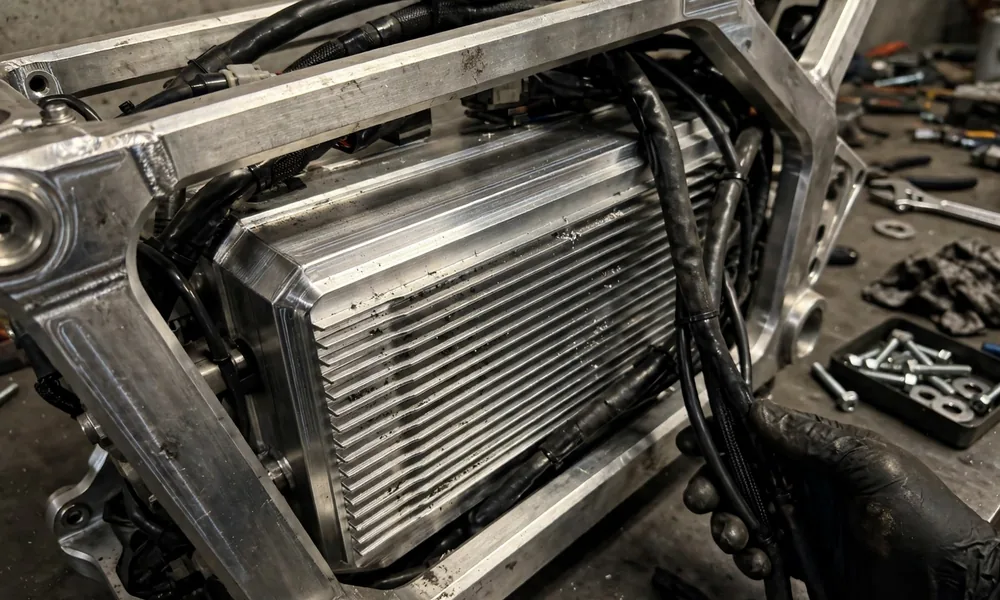
The frame is the second great expense, because a luxury electric motorcycle cannot simply borrow a petrol frame. The battery is heavy and shaped like a brick, and the frame must carry it low and central while still leaving room for the rider, the motor, and the suspension. Many luxury makers use a machined aluminium monocoque or a carbon fibre structure, built in small batches by specialists, and a single frame can cost an estimated $5,000 to $8,000 to produce, compared with an estimated $1,000 or less for a mass-produced petrol frame.
Brakes, suspension, and wheels are where luxury makers spend money that a buyer can actually see, and they do it because the machine is heavy. A luxury electric motorcycle weighs 220 to 260 kilograms, which is 30 to 50 kilograms more than a comparable petrol superbike, and stopping that weight requires top-tier brakes, usually Brembo units with cornering anti-lock systems, and fully adjustable suspension from a specialist such as Ohlins. A set of those components can cost an estimated $4,000 to $6,000 at retail, and they are fitted because a heavy motorcycle with cheap brakes would be dangerous.
Small Numbers, Big Costs
Production volume is the quiet multiplier behind every other cost. A mainstream motorcycle maker builds tens of thousands of a single model, spreading design, testing, and certification across all of them, while a luxury electric maker may build 200 to 500 machines a year. Certification alone can cost an estimated $2 million to $5 million for a new model, and on a production run of 300 machines, that is an estimated $7,000 to $17,000 per bike before a single part is bought.
After-sales support is the final cost that buyers forget, because a luxury motorcycle is sold with a promise. The maker must keep spare parts available for years, train dealers to work on high-voltage systems, and honour a warranty on a battery that may need replacing a decade after the sale. A small maker cannot spread that risk across a large fleet, so it prices the risk into the motorcycle. A buyer who pays $120,000 is not only buying a machine, they are buying a guarantee that the company will still be there in five years to fix it, and that guarantee is expensive to keep. For the numbers behind the class, see the luxury electric motorcycle specs explained guide, which breaks down power, range, and weight in detail.
Design and materials add the last layer, because luxury buyers expect hand-finished bodywork, machined aluminium details, and paint applied by hand rather than by robot, and all of it costs more on a small production run. The same logic applies across the class, and the best electric motorcycles of 2027 shows how the luxury machines compare with mainstream bikes that do the same job for a third of the price.
Luxury Electric Motorcycle Costs at a Glance
| Cost Driver | Typical Share or Cost | Why It Is Expensive |
|---|---|---|
| Battery pack | Estimated $8,000–$12,000 | Large pack, crash housing, cooling, management system |
| Frame and chassis | Estimated $5,000–$8,000 | Bespoke aluminium or carbon structure, small batches |
| Motor and inverter | Estimated $3,000–$5,000 | High-output motor, fast-switching power electronics |
| Brakes and suspension | Estimated $4,000–$6,000 | Top-tier parts needed to stop a heavy machine safely |
| Certification and testing | Estimated $7,000–$17,000 per bike | Fixed cost spread over 200–500 machines a year |
| Design and finishing | Estimated $3,000–$5,000 | Hand-finished bodywork and machined details |
| Warranty and support | Estimated $2,000–$4,000 per bike | Long battery warranty, dealer training, parts stock |
| Total build cost | Estimated $35,000–$60,000 | Before dealer margin, marketing, and profit |
What a Luxury Electric Motorcycle Costs
Retail prices for luxury electric motorcycles typically start at an estimated $35,000 to $50,000 for the more accessible machines and climb to an estimated $100,000 to $150,000 for limited-run flagships, with some hand-built examples exceeding an estimated $200,000. These are estimates based on published list prices and recent sales, not fixed prices. The fastest machines in the class underline the point, because the top 10 fastest electric motorcycles of 2027 includes bikes that are slower than the luxury flagships yet cost a fraction of the price.
A Rare Fact
The rarest fact about luxury electric motorcycles is that the most expensive part of the bike is not the part you ride, but the part you never see: the battery management system, a small computer that watches every cell in the pack, can cost more to develop than the motor, because a single faulty cell can destroy a $10,000 battery, and the software that prevents that is written, tested, and certified to a standard closer to aviation than to motorcycling.


