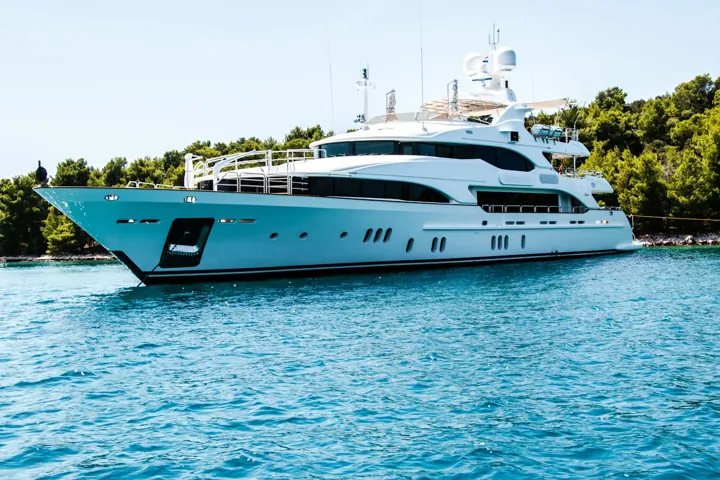
Roll is one particular motion
Roll is the side-to-side rotation of a vessel. A boat can also pitch, heave and move in other ways, so reducing roll should not be confused with making the boat motionless. The distinction matters when reading stabiliser performance claims.
Seakeeper explains its system using a flywheel enclosed in a sphere. When the vessel rolls, the flywheel assembly is allowed to tilt fore and aft in a controlled way. The resulting gyroscopic response supplies an opposing roll torque.
The direction of motion matters
A gyroscope’s response is not as intuitive as a simple weight pushing against the side of a boat. The spinning rotor carries angular momentum, and changing the orientation of that momentum produces a torque through the mounting arrangement.
This makes installation and control part of the engineering. The supporting structure must accept the forces, while the system manages the movement of the gyro assembly. The flywheel alone is not a complete stabiliser, just as a spinning wheel alone is not a complete drivetrain.
Why put the flywheel in a vacuum?
Seakeeper uses a near-vacuum enclosure to reduce air resistance around its flywheel. The manufacturer identifies reduced aerodynamic losses and protection from the marine environment as reasons for the arrangement. Its specific performance claims depend on its particular designs.
The enclosure also creates an engineering problem: heat still needs a route out. Bearings and the motor generate heat even when air resistance is reduced. A sealed system therefore needs deliberate thermal management alongside the spinning hardware.
Judge the installation as a whole
A stabiliser has to fit the vessel, its structural arrangement and the conditions in which it will operate. Selection is not simply a matter of placing the largest possible flywheel somewhere below the deck. Space, power and service access all belong in the discussion.
The appealing part of gyro stabilisation is that the machinery can remain largely out of sight while changing the onboard experience. Its effectiveness comes from matching rotational physics to controlled movement and a suitable installation, with expectations focused on the motions the system is designed to reduce. A useful performance report should identify the boat, operating conditions and the motion being measured.
Without that context, a broad reduction claim is difficult to compare. The same distinction applies to an onboard impression: a calmer roll response can be valuable while other movements remain noticeable. Understanding the target motion leads to clearer expectations than treating stability as one undifferentiated quality.
Sources & further reading
Primary references used to explain the technology and its limits.
Seakeeper — How It WorksSeakeeper — Why Use a Vacuum Enclosure
This is a researched explainer, rather than a hands-on product test. Product-specific capabilities depend on the manufacturer, design and operating conditions. This content is for informational purposes only and reflects our editorial analysis.