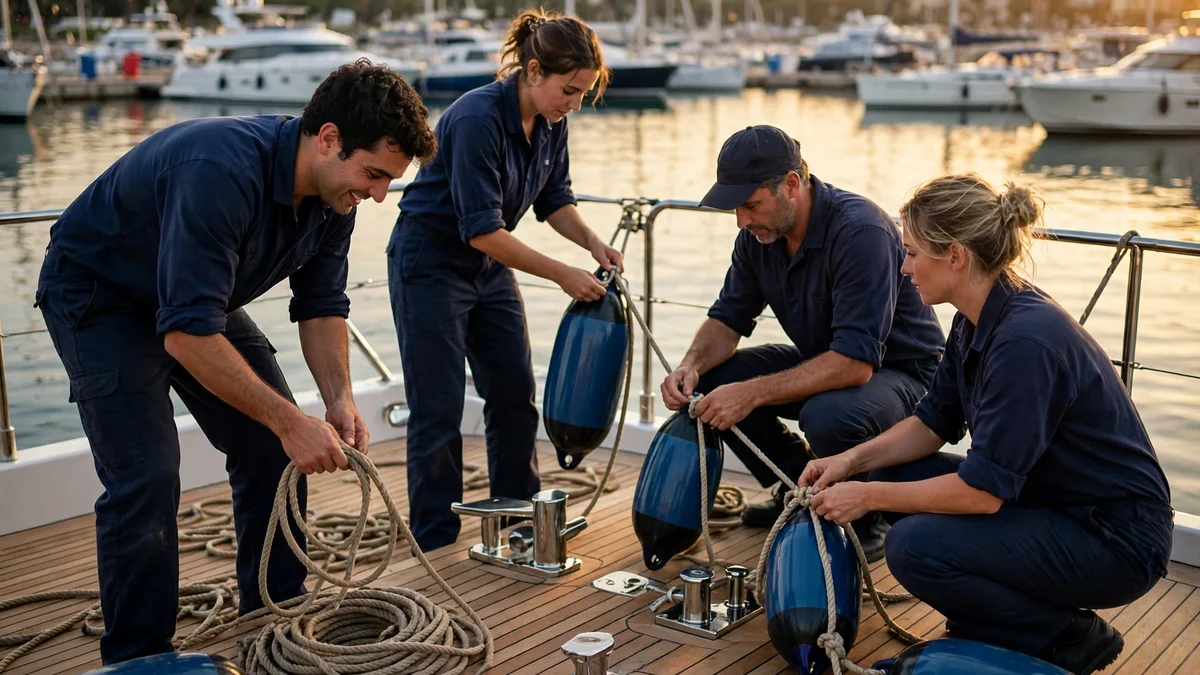
Stand on a marina pontoon at dusk and count the people moving on a fifty-metre superyacht, and the arithmetic starts to look absurd. Fourteen to eighteen crew, by the usual industry figures, are looking after twelve guests at most, and often far fewer. Two people per guest is not unusual on the largest yachts. The brochure calls it service. The owner calls it standards. I call it a habit that has outgrown its purpose, and the case for smaller superyacht crews is stronger now than it has ever been, because the machines have caught up, the costs have not stopped climbing, and the experience on board is often worse, not better, when a small floating hotel is staffed like a small floating hotel.
None of this is an attack on crew. Anyone who has watched a good deckhand land a tender in a crosswind, or a chef produce dinner for twelve from a galley the size of a cupboard, knows the job is real and hard. The argument is narrower and sharper than that. A superyacht does not need a crew member for every guest, plus a spare, to be safe, comfortable and well run. It needs the right crew, well rested and well paid, doing work that only people can do, while the machines do the rest. Everything else is theatre, and theatre is expensive.
The numbers no longer add up
Start with the money, because money is where the habit bites hardest. Crew is routinely the single largest running cost of a superyacht, typically around a quarter to a third of the annual running bill, which itself runs at roughly eight to twelve percent of the yacht’s value every year. On a fifty-metre yacht that means a crew bill measured in millions, before food, uniforms, flights, training, insurance and the cabins they sleep in. Every extra steward or deckhand is not just a salary. It is a cabin that could have been a guest cabin, a berth that must be fed and flown home, and a rota that must be managed. Owners who would haggle for weeks over a fuel bill will wave through a crew list of eighteen without asking what the sixteenth person actually does all day.
Automation has already done the hard part
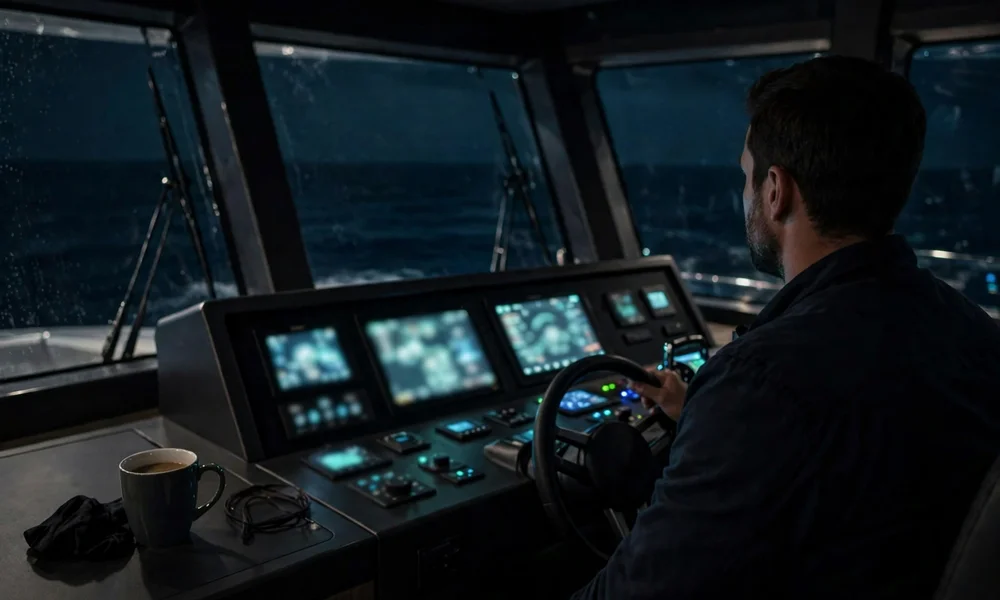
The strongest reason to cut crew numbers is that the yacht itself has changed. A modern superyacht steers itself for hours at a time, holds station without an anchor, stabilises its own roll, and watches its own engines. The yacht autopilot follows a plotted route, compensates for wind and current, and hands control back the moment a sensor disagrees with its backup. Stabiliser fins, bow thrusters, dynamic positioning and integrated bridge systems have taken over the dull, exact work that once needed extra hands on deck and extra eyes on the bridge. The machines do not get tired, bored or seasick, and they do not need a cabin.
Smaller crews are better rested crews
Here is the part the big-crew lobby never mentions. A large crew is not automatically a rested crew. Maritime labour rules set minimum rest hours, and on a yacht running a full guest programme those hours are hard to protect when every meal, every tender run and every turndown has to be covered by someone. The answer is usually more people, but more people means more handovers, more miscommunication and more chances for a tired steward to miss something a fresh one would have caught. A smaller crew, properly rota’d, with real days off and real sleep, will beat a larger crew running on broken rest every time. Safety at sea is a function of alertness, not headcount.
There is also a human cost that owners rarely see. Crew cabins on even the largest yachts are tight, shared and noisy, and the best crew leave the industry young because the life is relentless. How superyacht crew quarters are designed shows how much engineering goes into fitting people into the space left over after the guests have had theirs. Fewer crew means better cabins for the crew who remain, more privacy, more storage and less churn. A yacht that keeps its good people for five years will run better than a yacht that burns through twice as many in two, however impressive its crew list looks on a charter brochure.
The counter-argument, answered honestly
The honest objection is safety, and it deserves a straight answer. Every commercial yacht carries a safe manning document that sets the minimum crew for its size, tonnage and area of operation, and nobody is arguing for sailing below it. A fifty-metre yacht typically needs five or six certificated crew as a legal minimum, and a chief engineer becomes mandatory above five hundred gross tonnes. The case for smaller crews is a case for sailing close to a sensible, well-judged number above that minimum, not for ignoring it. Firefighting, man overboard, medical emergencies and abandon-ship drills all need enough trained hands, and any owner who cuts below that line is not being efficient. They are being reckless, and their insurer and their flag state will say so.
The second objection is service. Twelve guests, three meals a day, laundry, watersports, a beach club and a bar do take people, and anyone who has tried to run a dinner service for twelve with two stewards knows the limit. But service is not a linear function of headcount. A great chef and two great stewards, with a galley that works and a service plan that has been rehearsed, will deliver a better dinner than four average stewards tripping over each other in a corridor. The luxury hotels that superyachts copy learned this decades ago: the best service feels effortless because the people delivering it are unhurried, not because there are more of them. Guests notice a calm, confident crew. They do not count heads.
What a smaller crew looks like
Design has to follow the decision. The luxury yacht master suite gets the best space on board because the owner sleeps there, and rightly so, but a yacht designed for a crew of ten instead of eighteen gains guest space, storage and range that no amount of clever joinery can conjure on a yacht designed for eighteen. Fewer cabins mean a shorter, lighter yacht for the same guest experience, or the same yacht with a proper gym, a proper laundry and a proper crew mess. The savings compound through fuel, berthing, maintenance and refit, year after year.
The verdict
Superyachting has spent thirty years adding people to solve problems that engineering has since solved better. The result is yachts that cost more to run, tire their crews faster and deliver service that is busier rather than better. Smaller crews are not a cut. They are a correction: fewer people, better paid, better rested, better housed, doing work that matters, on a yacht whose machines carry the load they were built to carry. The owner who insists on twenty-four crew for twelve guests is not buying safety or service. They are buying a number on a brochure, and paying for it every single year. The future of the superyacht is not a bigger crew. It is a better one, and a smaller one.


