Beneath the glass roof of a showroom in California, a silver coupe sat under the spotlights with almost no badging to give it away. Its roof and bonnet were covered in dark, seamless panels that looked like tinted glass, and the cabin was trimmed in pale leather and open-pore wood. A visitor pressed a hand to the roof and asked the salesperson the obvious question: does the sun really charge this car, or is it just for show?
The answer is in the specifications, and the luxury version of the solar car is a different machine from the affordable one. The panels are larger, the battery is bigger, the cabin is quieter, and the materials are chosen for comfort as much as for weight. This guide explains the specifications of a luxury solar car: the solar array, the battery, the range, the charging, and the premium details that set it apart.

Step 1: The solar array on the roof and bonnet
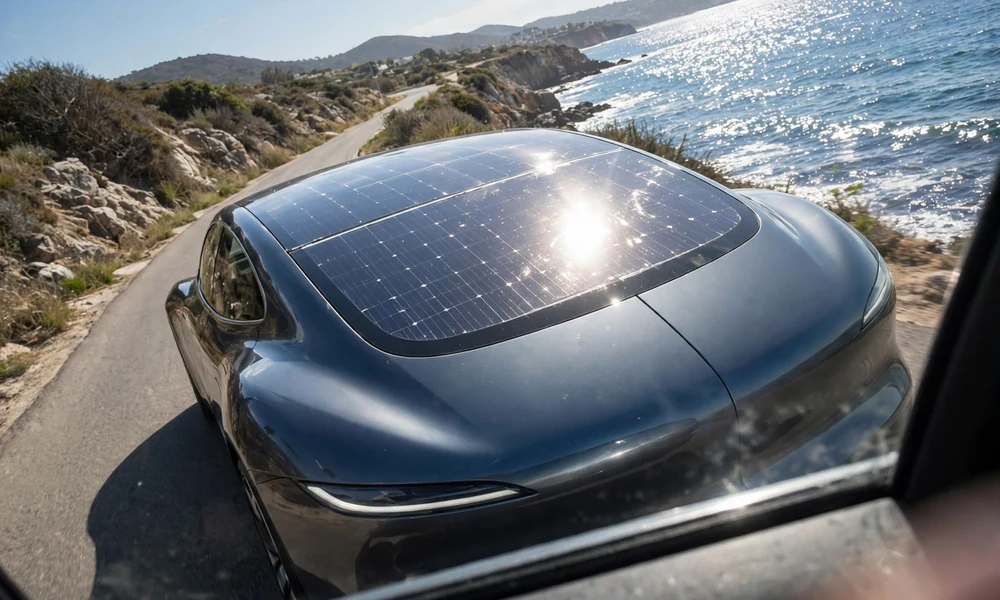
The most visible specification is the solar array itself. A luxury solar car carries panels across the roof, the bonnet, and sometimes the boot lid, with a total area of around 3 to 5 square metres. In strong sunshine those panels produce roughly 800 watts to 1.2 kilowatts at peak, which is enough to add meaningful range over the course of a day rather than a token trickle.
The array is wired in sections, so shade on one part of the roof does not shut down the whole system. On a sunny summer day, the panels can generate 3 to 5 kilowatt-hours, which translates to roughly 20 to 35 kilometres of extra driving.
Step 2: The battery bank underneath the floor
Under the floor sits a lithium-ion battery pack, typically between 60 and 100 kilowatt-hours in a luxury solar car. The pack is the main energy store, and the solar array is a slow but constant top-up on top of it. The battery feeds one or two electric motors, and its management system keeps the cells at a safe temperature and balances the charge across them.
The usable capacity matters more than the headline total, because the car keeps a small reserve to protect the cells. The standard solar car specifications, explained show the same battery thinking in a simpler, lighter car, and the luxury version builds on it with more capacity and more refinement.
Step 3: Motors, power, and the quiet cabin
Power in a luxury solar car usually comes from one or two electric motors producing a combined 250 to 400 kilowatts, roughly 340 to 540 horsepower. That is enough for brisk acceleration, with 0 to 100 kilometres per hour in around 4 to 5 seconds, yet the delivery is silent and smooth, with no gear changes to interrupt it.
The quiet is part of the luxury. With no engine noise, the builders invest in acoustic glass, extra insulation, and carefully tuned suspension, so the cabin stays calm at motorway speed.
Step 4: Solar range and total range
Range needs two numbers, not one. The total driving range on a full charge is typically 600 to 800 kilometres, measured on the standard test cycle. The solar range is the extra distance the panels add, and it depends entirely on the weather: around 20 to 35 kilometres on a bright summer day, and only a few kilometres on a grey winter one.
Over a year of ordinary driving, the solar contribution adds up to several thousand kilometres of free motoring, which is the honest way to think about it. How a luxury solar car is made describes the bodywork and the panel integration that make this daily top-up possible.
Step 5: Charging when the sun is not enough
When the sun is not enough, the car charges like any other electric car. On a home wall box at 11 kilowatts, a full charge takes roughly 6 to 9 hours overnight. On a fast DC charger at 150 to 250 kilowatts, the battery can go from 10 to 80 percent in about 20 to 30 minutes, which is a coffee stop rather than a long wait.
The charging port, the cable, and the charge curve are all standard, so the owner can use public chargers without any special equipment. The difference from a normal electric car is simply that the car arrives at the charger with a little more charge already in it, thanks to the day in the sun.
Step 6: Premium materials and the luxury trim
The luxury trim is where the solar car stops being a science project and starts being a car you want to sit in. The cabin uses soft leather, real wood, and brushed metal, and the seats are heated, cooled, and adjustable in more directions than most drivers will ever use.
Weight is watched everywhere, because every kilogram costs range. The body uses aluminium and composites, the wheels are aerodynamically shaped, and even the tyres are chosen for low rolling resistance. The luxury electric car specifications, explained cover the same premium approach without the solar roof, and the comparison shows how much of the luxury is shared.

Key specifications at a glance
| Specification | Typical figure |
|---|---|
| Solar array | 3 to 5 square metres, 800 watts to 1.2 kilowatts peak |
| Daily solar yield | 3 to 5 kilowatt-hours in summer sun |
| Solar range added | 20 to 35 kilometres per sunny day |
| Battery | 60 to 100 kilowatt-hours, lithium-ion |
| Power | 250 to 400 kilowatts, one or two motors |
| 0 to 100 km/h | 4 to 5 seconds |
| Total range | 600 to 800 kilometres |
| Fast charging | 10 to 80 percent in 20 to 30 minutes |
| Home charging | 6 to 9 hours on an 11 kilowatt wall box |
What a luxury solar car costs
As an estimate, a luxury solar car typically costs between 120,000 and 250,000 dollars, depending on the size of the battery, the extent of the solar array, and the level of trim. The panels and the curved glass that carries them are expensive to make, and the hand-finished interior adds much of the rest. Running costs are low, because the sun covers part of the fuel bill and the electric motors need little servicing.
A rare fact
Here is a rare fact: the solar panels on a luxury solar car can keep the battery topped up while the car sits in long-term airport parking, so the owner can return from a three-week holiday to a car with more charge than when they left it. The car charges itself while it waits, which is a small joy no petrol car can offer, and it is the detail owners mention most once they have lived with one.
The specifications of a luxury solar car tell a balanced story. The sun adds real range, the battery does the heavy lifting, and the luxury trim makes the whole thing worth sitting in. Read the solar range and the total range as separate numbers, check the usable battery capacity, and remember that the panels work hardest when the car is parked in the sun.