In the old cities of South Asia, the rickshaw is the sound of the street: a small three-wheeled taxi, weaving through traffic, carrying shoppers, schoolchildren, and market goods. It is cheap, practical, and everywhere. A luxury electric rickshaw is the same shape with a different soul: hand-finished, whisper-quiet, and built to order for owners who want the most charming way to move through a city, a resort, or a private estate.
Only a handful of these machines exist, and each one is effectively a small coachbuilt vehicle. The price is not a markup on a taxi; it is the cost of turning a working vehicle into a piece of craftsmanship, with materials, labour, and engineering that no mass-produced rickshaw ever sees. Here is where the money goes.

1. Hand-built, one at a time
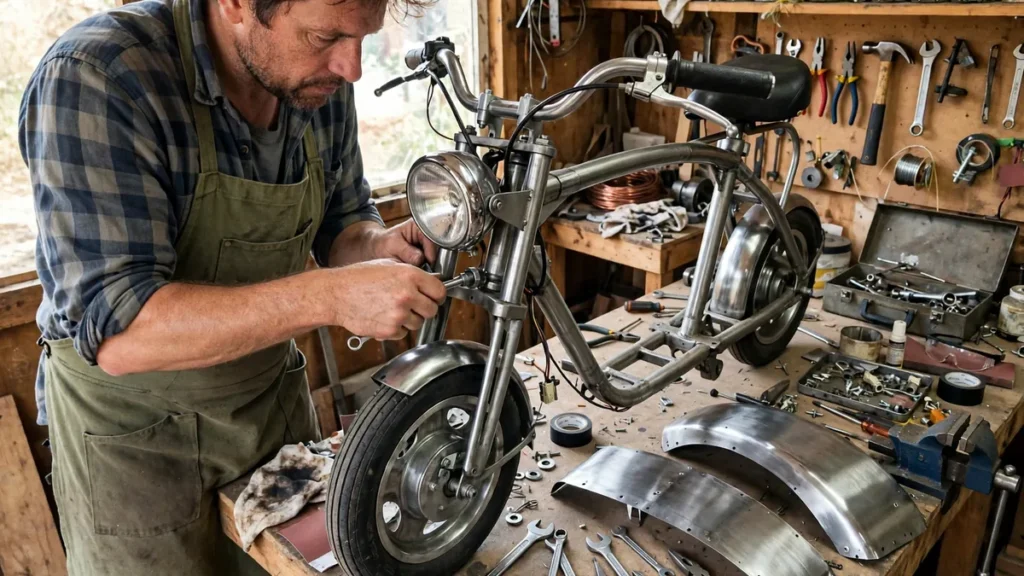
A luxury electric rickshaw is not assembled on a line. Each one is built to order by a small workshop, often over several months, with a coachbuilder shaping the body, an electrician wiring the drivetrain, and a trimmer finishing the interior by hand. There are no shared parts bins and no economies of scale, so the first owner pays for the design, the jigs, and the learning, all in one invoice.
The build is slow because the vehicle is small and the detail is dense. Every panel has to be fitted, every seam stitched, and every switch placed where the driver can reach it without looking. A mass-produced rickshaw rolls off a line in hours; a luxury one takes a team weeks, and the labour alone accounts for a large share of the price.
2. Materials a taxi never sees
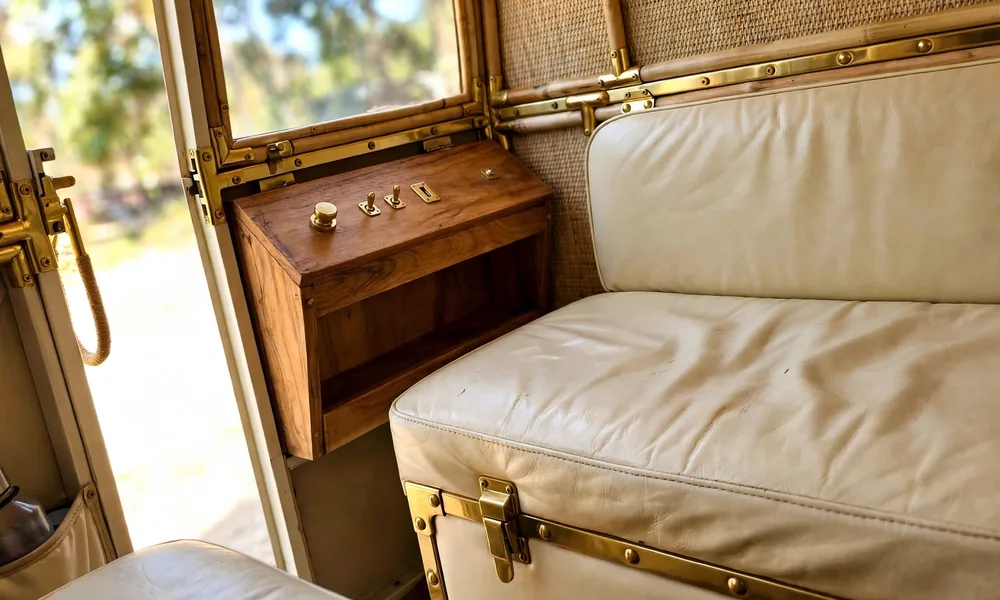
The materials are where the luxury is most visible. The body panels are often teak or another fine hardwood, sealed against rain and sun, and the seats are leather, stitched by hand, with brass or polished steel fittings. The canopy is a heavy woven fabric rather than plastic sheet, and the floor is wood or stone composite rather than bare metal.
Those materials cost more to buy and far more to fit, because wood moves with heat and moisture, leather has to be cut and matched, and brass has to be polished and lacquered. A taxi uses pressed steel and vinyl because they are cheap and easy; a luxury rickshaw uses materials chosen for how they look, feel, and age, and each one needs a craftsman who knows how to work with it. The luxury electric scooter shows the same idea at a smaller scale, with premium materials wrapped around a simple electric drivetrain.
3. An electric drivetrain built for silence
The drivetrain is a second source of cost. A luxury electric rickshaw uses a quiet hub or mid-drive motor, a lithium battery pack, and a controller tuned for smooth, silent starts, because the whole point of the vehicle is to glide rather than rattle. The motor is sealed against dust and monsoon rain, the battery is housed in a vented, lockable compartment, and the wiring is routed and protected like a car’s, not a taxi’s.
Silence is expensive. Cheap electric rickshaws whine, vibrate, and jerk; a luxury one accelerates like a lift, with no noise and no shudder, and that refinement comes from a better motor, a better controller, and careful mounting. Range matters too: a luxury pack is sized for a full day of short trips, around 80 to 120 kilometres, and it charges from a standard outlet overnight.
4. Comfort and detail in a tiny space
A rickshaw cabin is barely bigger than a sofa, and making that small space feel luxurious takes more care than fitting out a large car. The seats are shaped and padded for short trips in the heat, the canopy is lined to keep out sun and rain, and the footrests, handrails, and storage are all placed within easy reach. Lighting is soft and warm, and the dashboard is a small piece of joinery rather than a plastic moulding.
The detail extends to things passengers rarely notice: the stitching on the seats, the weight of the door handles, the way the canopy folds, and the sound the latch makes when it closes. Each detail is a small job for a skilled worker, and a luxury rickshaw has dozens of them. The luxury golf cart is the closest comparison, a small electric vehicle finished like a car, and the rickshaw takes that idea and adds open sides, city streets, and a far more demanding climate.
5. Scarcity, and the buyers who want one
Only a few luxury electric rickshaws are built each year, and that scarcity is part of the price. There are no showrooms full of them, no standard models to compare, and no second-hand market to set a value, so each sale sets its own price. The buyers are resort owners, collectors, and private estates, people who want a vehicle that makes an arrival feel like an occasion.
That demand meets a tiny supply: few workshops have the skills, fewer have the parts, and no large manufacturer has entered the market. Every build is a conversation between the buyer and the builder, and that conversation is priced in. The best electric scooters for commuting show the mass-market end of small electric transport; the luxury rickshaw is the opposite end, where rarity itself is part of what is being sold.
The spec sheet at a glance
| Specification | Typical luxury figure |
|---|---|
| Length overall | 2.6 to 3.0 metres |
| Width | 1.3 to 1.5 metres |
| Weight | 350 to 550 kilograms |
| Passengers | 2 to 3, plus driver |
| Motor power | 3 to 7 kilowatts |
| Battery capacity | 4 to 8 kilowatt-hours |
| Top speed | 25 to 45 kilometres per hour |
| Range | 80 to 120 kilometres |
| Charge time | 4 to 6 hours |
| Body material | Teak and steel, leather trim |
| Drive | Rear hub or mid-drive motor |
Price
A new luxury electric rickshaw typically costs between an estimated $25,000 and $80,000, depending on size, materials, and fit-out, with fully bespoke builds reaching higher. That estimate covers the vehicle itself, not the shipping, the spares, or the maintenance, all of which are priced for a one-off machine. Used examples almost never come up for sale, and when they do, they hold their value because there is nothing else like them.
A rare fact
One of the oddest details of the luxury electric rickshaw is that it is often bought not for the road, but for the arrival. Resort owners use them to carry guests from the gate to the lobby, a journey of a few hundred metres, because the slow, silent, open-sided ride turns a walk into a small ceremony. The vehicle is at its most valuable when it is barely moving, and that is a strange thing to say about any machine with a motor.

A luxury electric rickshaw is expensive because it is a hand-built, hand-finished vehicle made in tiny numbers from materials a taxi never sees. The price is the cost of turning the humblest vehicle on the street into the most charming one.