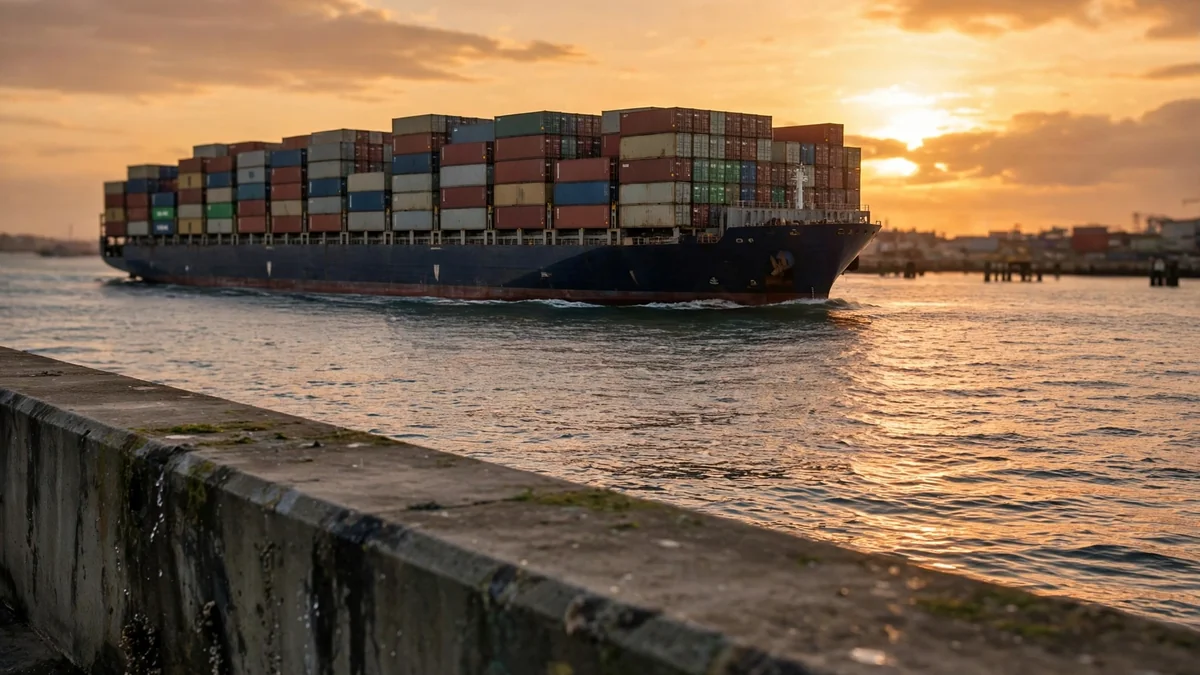
The ship is so long that standing at the bow you cannot see the stern. It carries more cargo than a whole fleet of trucks, its engine is taller than a house, and its crew is smaller than a football team. A visitor asks what such a ship costs, hears a number with nine figures in it, and assumes it must include the cargo. It does not. A luxury cargo ship, the kind built for high-value goods, refrigerated food or specialist freight, can cost hundreds of millions of dollars, and the reasons are not obvious until you follow the money from the steel yard to the open sea.
A luxury cargo ship is three expensive things at once: a floating warehouse, a power station and a small town, all built to survive the worst weather on earth for thirty years. Every part of it is made in small numbers, fitted by hand, and expected to work around the clock in salt water. This article follows the money through the seven costs that add up to the price tag, and explains why a cheaper ship, for all its similarities, is a very different vessel underneath.
1. The hull: thousands of tonnes of shaped steel
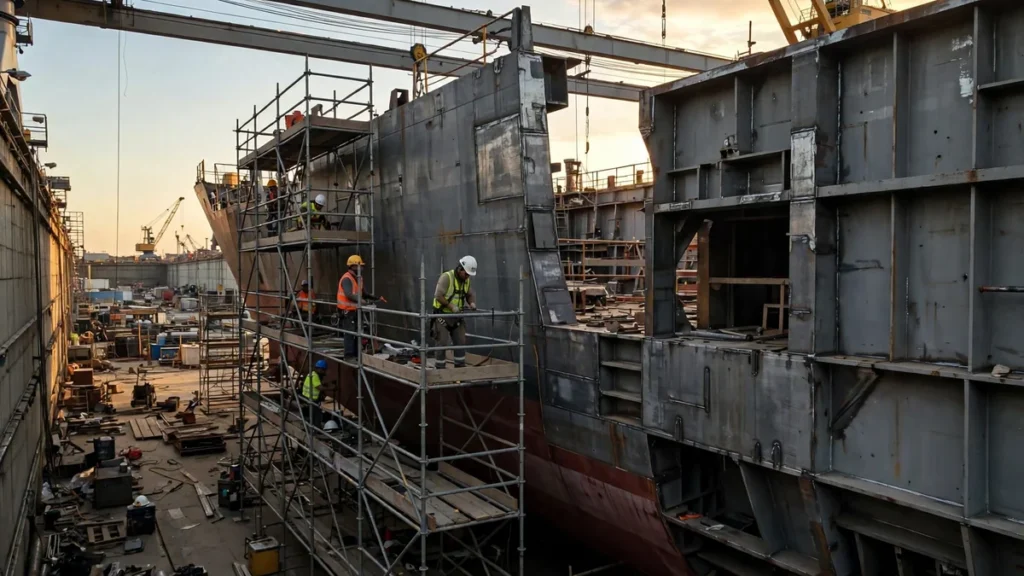
Everything starts with the hull, and a large cargo ship uses thousands of tonnes of steel, cut, bent and welded into a shape that must be strong enough to carry its cargo and flexible enough to ride ocean waves without cracking. The steel is a special marine grade, the welding is inspected plate by plate, and the whole hull is painted with coatings that must resist salt water for years between dry dock visits.
The size is the cost. A ship 300 metres long needs a dry dock big enough to hold it, cranes big enough to lift its sections, and a workforce of thousands for months or years. The hull alone can cost tens of millions of dollars before a single engine or cabin is fitted, and the design work, the model testing in a wave tank and the classification society approvals add millions more. The scale of big-ship building is covered in luxury tall ship specs explained, where the hull is the heart of the whole vessel.
2. The engine: a power station that never stops
The second cost is the engine, and a large cargo ship’s engine is one of the biggest machines ever built. A two-stroke marine diesel can be as tall as a three-storey building, produce tens of thousands of horsepower, and burn heavy fuel oil by the tonne every hour. It is designed to run continuously for weeks at sea, and it must be reliable, because a ship that loses power in a storm is in serious danger.
The engine room is a power station in its own right, with generators, fuel treatment plants, cooling systems and exhaust scrubbers that clean the smoke before it leaves the funnel. Modern ships add expensive emissions equipment to meet international rules, and the fuel itself is a major cost: a large ship can burn a hundred tonnes of fuel a day. The whole propulsion system is the ship’s beating heart, and it is built to be overhauled at sea by the crew if it has to be.
3. Cargo systems: cranes, holds and cold chains
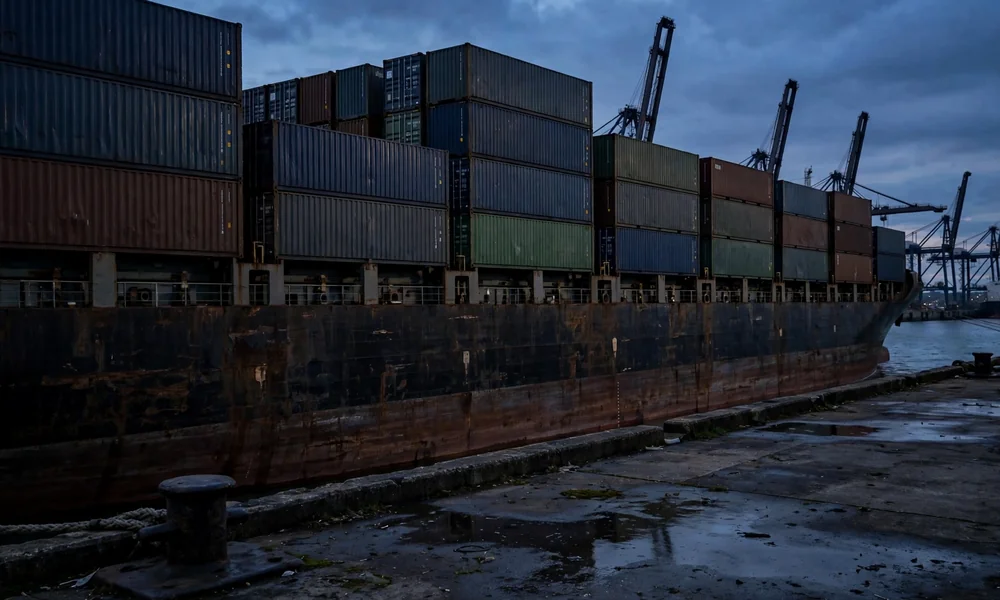
A luxury cargo ship earns its keep from what it can carry, and the cargo systems are the third cost. Container ships need cell guides, lashing bridges and cranes that can lift forty tonnes at a time. Refrigerated ships need insulated holds, cooling plants and power sockets for hundreds of refrigerated containers, each one holding food at an exact temperature from port to port. Specialist ships carry cars, chemicals or liquefied gas, and each cargo needs its own tanks, pipes and safety systems.
The cold chain is the most demanding of all. A refrigerated cargo ship must hold its holds at a precise temperature for weeks, with backup cooling, alarms and a crew trained to fix a failure in the middle of the ocean. If the cooling fails, the cargo is lost, and the cargo can be worth more than the ship itself. The river trade is a smaller-scale cousin, as how a luxury river cruiser works shows, where the cargo is people and the systems are built around their comfort instead.
4. Navigation and safety: seeing in the dark
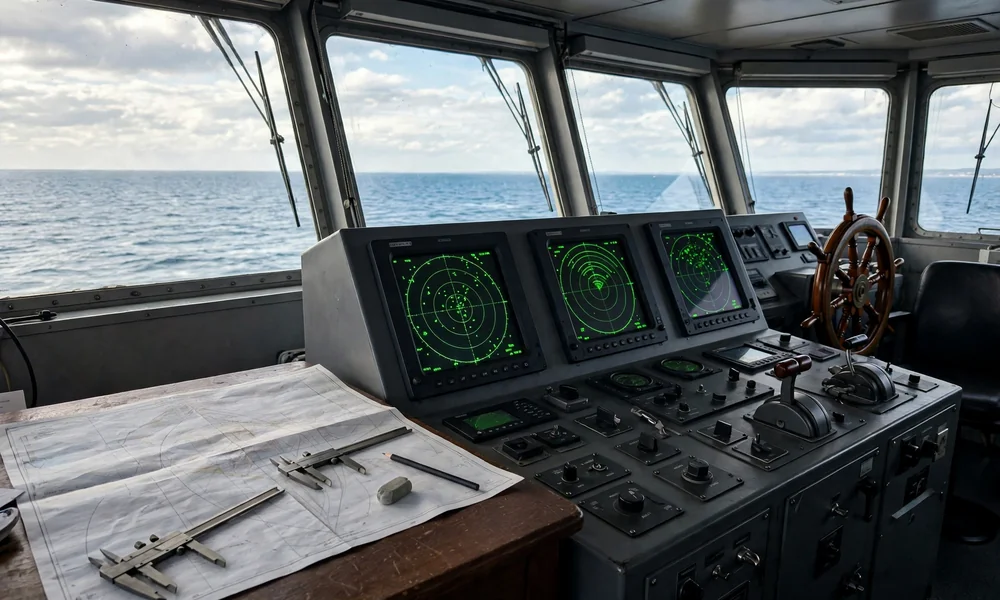
The fourth cost is the bridge, and a modern cargo ship’s bridge looks more like an aircraft cockpit than a ship’s wheelhouse. Radar, satellite navigation, electronic charts, automatic identification systems and collision-avoidance software watch the sea in every direction, and the ship can be steered by autopilot for days at a time. The equipment is expensive, the software licences are expensive, and the training for the crew is expensive too.
5. The crew: a small town at sea
A large cargo ship sails with a crew of only twenty or so, but it must house, feed and protect them for months at a time. The accommodation block is a small hotel, with cabins, a mess room, a galley, a gym and a recreation room, all air-conditioned and soundproofed against the engine. The crew’s wages, food, medical care and travel home are a large part of the ship’s running cost, and the training for officers takes years.
6. Small numbers and long lives
That long life is part of the price. The ship must survive salt water, storms and constant vibration for thirty years, and its parts must be available for that whole life. The classification society inspects it regularly, and every five years it goes into dry dock for a full overhaul. The grand sailing ships of an earlier age faced the same maths, as luxury steam yacht specs explained shows, where a hull built to last was worth more than a cheap one built to fail.
7. Rules, insurance and the cost of going wrong
The final cost is the world of rules around the ship. International safety and environmental rules dictate the design of the hull, the engine, the fuel and the cargo systems, and meeting them costs millions. Insurance for a ship and its cargo is expensive, and the cost of a single accident, a grounding, a fire or a spill, can run into hundreds of millions, so owners pay for the best equipment and the best crews they can afford.
Price and a rare fact
A luxury cargo ship typically costs an estimated 100 million to 300 million dollars, with the largest container ships and specialist gas carriers going higher still. That is more than a fleet of aircraft, and it is the single biggest purchase a shipping company will make in a decade. Finance, charter income and the resale market all soften the blow, and a well-kept ship holds its value because the demand for moving goods by sea never fades.
The rare fact is hidden in the engine room: the largest cargo ship engines are so big that their pistons are taller than a person, and a single cylinder can produce more power than a whole locomotive. The engine turns slowly, about a hundred revolutions a minute, and each turn moves the ship forward by the length of a bus. It is the biggest, slowest and most powerful engine most people will ever stand beside, and it runs day and night, for weeks, without stopping.