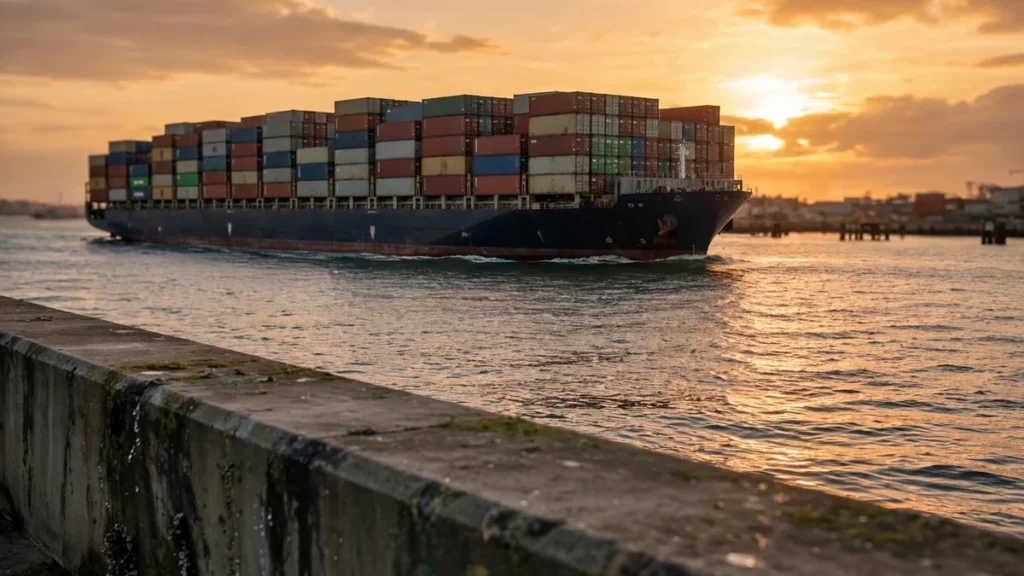
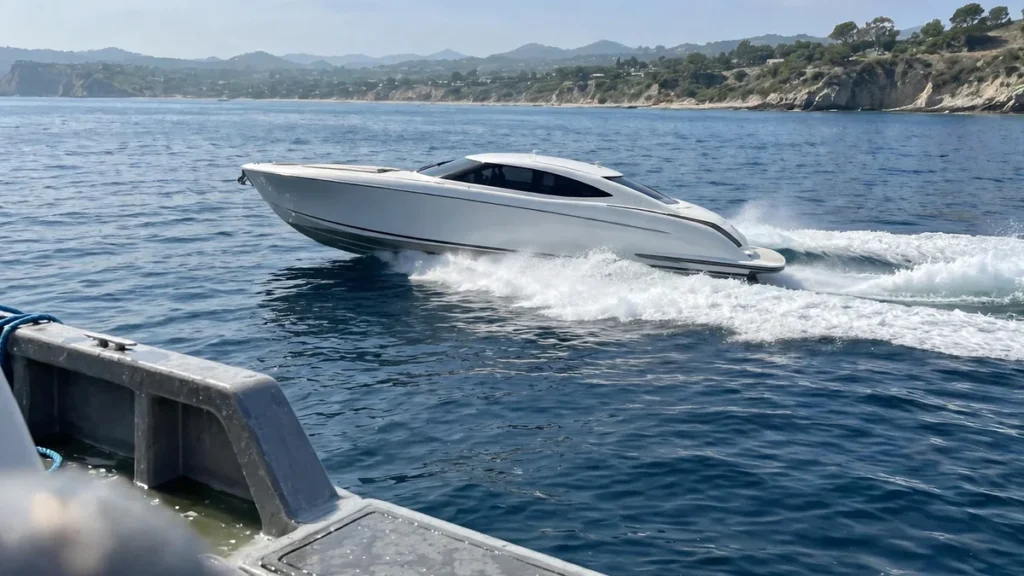
The river is low and the bridge ahead is lower. On the sun deck, passengers are watching the wheelhouse sink slowly into the hull as the whole top of the ship folds down, and a minute later the cruiser glides under the arch with a foot to spare, the wheelhouse rising again on the far side. Nobody on board thinks of it as engineering. To the crew, it is Tuesday.
A luxury river cruiser is a machine built around limits: shallow water, low bridges, narrow locks, and a timetable that cannot slip. Everything about it, from the flat bottom to the diesel-electric drive, exists to keep a floating hotel moving safely through water that a sea-going ship could not even enter. This is how a luxury river cruiser works.

Step 1: The shallow hull
A river cruiser draws very little water, often less than two metres, because rivers shoal without warning and a grounded ship misses its port. The hull is wide and flat-bottomed, spreading its weight across the water like a raft, with a blunt bow that pushes a gentle wave rather than cutting one. There is no deep keel to catch on a sandbar, and the bottom is strengthened so the ship can sit on a riverbed at low water without damage.
The trade is stability and space. What Is a Luxury River Cruiser explains the ship itself, from its cabins to its itineraries, and the hull underneath is the reason all of that fits on a river at all.
Step 2: Diesel-electric power
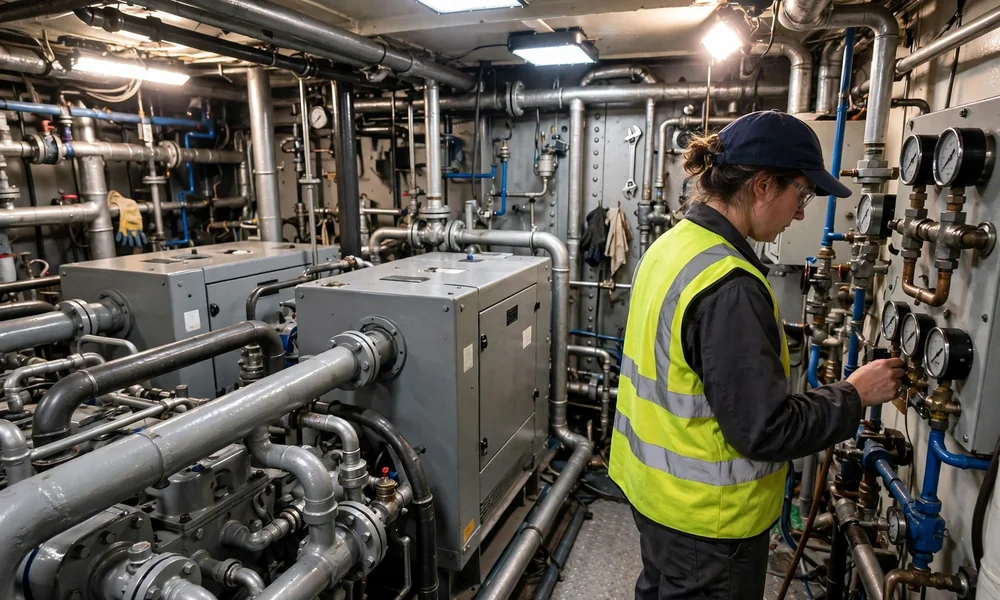
Most modern river cruisers run on diesel-electric power. Diesel generators in the engine room make electricity, and electric motors turn the propellers. The engines can run at their most efficient speed whatever the ship is doing, and the propellers can be driven gently and precisely, which matters when the ship is inching into a lock with centimetres to spare on each side.
The arrangement also keeps the ship quiet. The generators sit on floating mounts deep in the hull, wrapped in insulation, so a passenger in a cabin above hears almost nothing. How Cruise Ship Propulsion Works follows the same idea on ocean ships, where electric drive lets a huge vessel manoeuvre in port with a precision no direct-drive engine could match.
Step 3: Propellers, rudders, and thrusters
A river cruiser usually has two propellers in tunnels or nozzles under the stern, with two rudders behind them. The nozzles squeeze the water into a jet, giving more thrust at low speed, which is exactly what a river ship needs.
For the tight work, the ship has bow thrusters, propellers set across the bow in a tunnel, and sometimes stern thrusters too. With a thruster at each end, the captain can slide the whole ship sideways into a mooring or hold it steady against a current while the lines go ashore. In a lock, the thrusters and the main propellers work together, nudging the ship a few centimetres at a time until the gates can close behind it.
Step 4: Getting under bridges
The most theatrical trick a river cruiser owns is the retractable wheelhouse. The whole bridge, with its windows, consoles, and the captain, lowers hydraulically into the hull until only a low stub remains above the sun deck. Railings fold flat, the radar mast drops, and even the funnel can telescope down, so the ship’s air draught, its height above the water, falls by several metres.
The captain slows, the crew walk the decks to check that nothing is left standing, and the wheelhouse sinks on its rams. A minute under the bridge, and it all rises again, the ship returning to its full height as if nothing had happened. It is routine, but it never stops being a small piece of theatre.
Step 5: Locks and the river itself
A river cruiser spends much of its life in locks, concrete chambers that lift the ship from one stretch of river to the next. The captain brings the ship in slowly, the thrusters holding it off the walls, and the crew step ashore with lines to the bollards. The gates close, the chamber fills or empties, and the ship rises or falls with the water, sometimes by ten metres or more.
The ship’s systems are built for this rhythm. Cruise Ship Engine: How a Floating City Gets Moving describes the same hotel-load balancing on a larger scale, where the engines must feed both the propellers and a small town’s worth of guests at the same time.
Step 6: The hotel above the machinery
Above the engine room, a river cruiser is a hotel, and the two halves of the ship meet at the waterline. Cabins line the hull sides, each with a window or a French balcony that opens to the river, and the public rooms, the restaurant, the lounge, and the sun deck, sit on top. The galley is sized to feed two hundred people three times a day, with cold stores and freezers below deck.
Everything is arranged so the machinery never intrudes. Cabins are insulated against noise and vibration, the air is conditioned river by river as the climate changes along the route, and the water the guests drink is made on board or bunkered in port.
Specifications
| Detail | Specification |
|---|---|
| Hull type | Wide, flat-bottomed steel hull |
| Length overall | Around 110 to 135 metres |
| Beam | Around 11 to 12 metres |
| Draught | Around 1.5 to 2 metres |
| Propulsion | Diesel-electric, twin propellers |
| Power | Around 1,500 to 3,000 kilowatts |
| Service speed | Around 12 to 15 knots in open water |
| Passengers | Usually 150 to 200 |
| Crew | Usually 40 to 60 |
| Air draught, lowered | Can fall by several metres |
Price
The estimated price of a new luxury river cruiser is around 20,000,000 to 40,000,000 dollars, and that figure is an estimate only, because the cost depends on length, passenger capacity, and the standard of the cabins and public rooms. The hull and machinery are a large share, but the hotel fit-out, with two hundred cabins and a full galley, costs nearly as much again. A buyer is paying for a ship that can earn its keep every night of the season, moving a hotel from town to town without ever leaving the river.
A rare fact
Few people know that a river cruiser can steer with its propellers alone, even if the rudders fail. By driving one propeller ahead and the other astern, the captain can turn the ship in its own length, a trick called differential thrust that is also how the ship is held still in a strong current. It is the same principle that lets the ship slide sideways into a lock, and on a river where the current never stops, it is the skill the crew practise most and talk about least.
When the wheelhouse rises after a bridge and the sun deck opens again, the ship looks simple, just a long white hull moving quietly between green banks. That quiet is the achievement of the machinery below: generators humming, thrusters waiting, and a hull shaped for water barely deeper than a swimming pool.