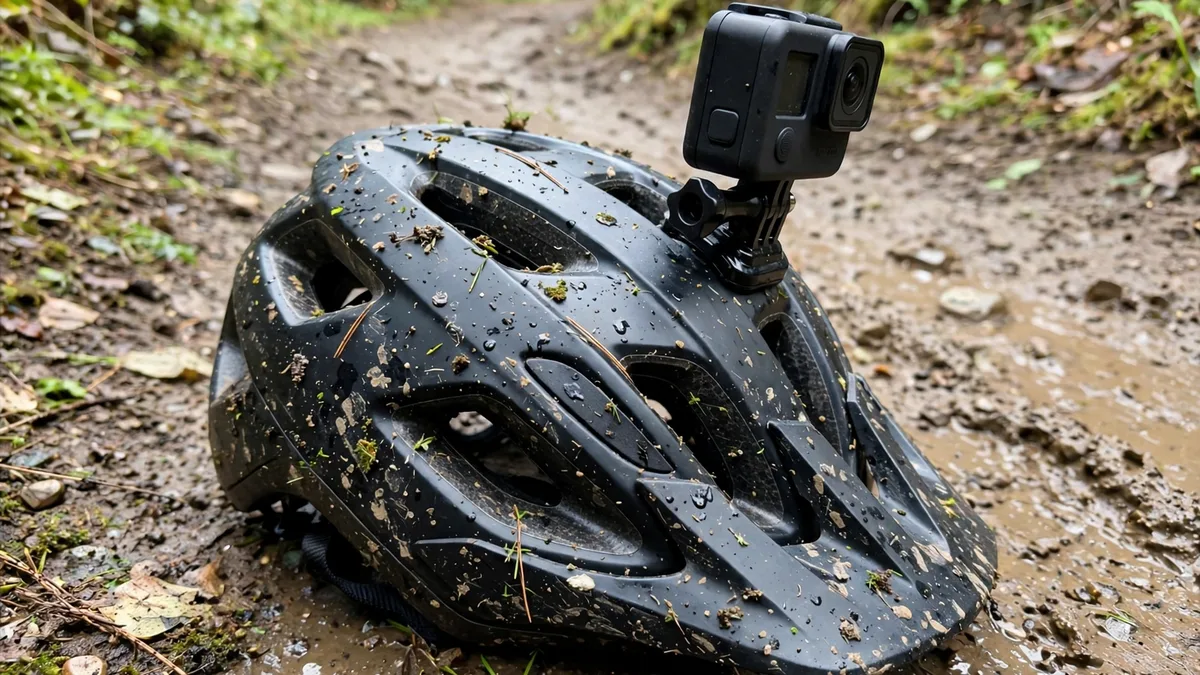
The mountain biker hits a rock garden at speed, the bike bucks, and the camera on his helmet takes a beating that would smash a phone. It is soaked in mud, shaken hard, and dropped onto a rock at the bottom. He picks it up, wipes the lens, and it is still recording.
A luxury action camera is a tiny machine built to survive what would destroy any other camera. It is waterproof, shockproof and smaller than a matchbox, yet it shoots video sharp enough for a cinema screen. This is how a luxury action camera works, from the lens on the front to the file on the memory card.
Step 1: Light enters a tiny, tough lens
Everything starts with the lens, a small piece of glass set deep behind a protective cover. The lens is wide, taking in far more of the scene than a normal camera, so the viewer feels inside the action rather than watching it from a distance. The glass is coated to resist scratches and water, and the cover can be replaced if it is damaged.
Behind the lens sits the sensor, a small chip that turns light into an electrical signal. It is smaller than the sensor in a phone, but it is tuned for bright sunlight and fast movement, and it reads the scene many times a second. A luxury camera uses a larger sensor than a cheap one, which is why its video looks cleaner in low light.
Step 2: The processor turns light into video
The signal from the sensor goes to a processor, a small chip that does an enormous amount of work in a fraction of a second. It turns the raw signal into video, compresses it so it fits on a memory card, and adjusts the exposure as the camera moves from sun into shade. It does all of this while the camera is being shaken, soaked and dropped.
The processor also runs the stabilisation, which is the feature that makes action camera video watchable. It reads a gyroscope many times a second, works out how the camera moved, and crops the picture slightly to cancel the shake. The result looks like the camera is floating, even when it is bolted to a rattling handlebar.
Step 3: Stabilisation, horizon lock and slow motion
Stabilisation is only the start. A luxury action camera can lock the horizon, keeping the picture level even when the camera rolls upside down, which is why footage from a somersault still looks upright. It can also shoot slow motion, recording many more frames per second than normal video, so a jump or a splash can be stretched out and studied.
The same small-chip thinking that steadies a camera also steadies a flying one, as described in the guide to how a luxury drone works, where a gyroscope and a processor keep a machine level in the wind. The camera does the same job with light instead of lift, and it does it with a battery the size of a matchbox.
Step 4: The sealed body keeps water and dust out
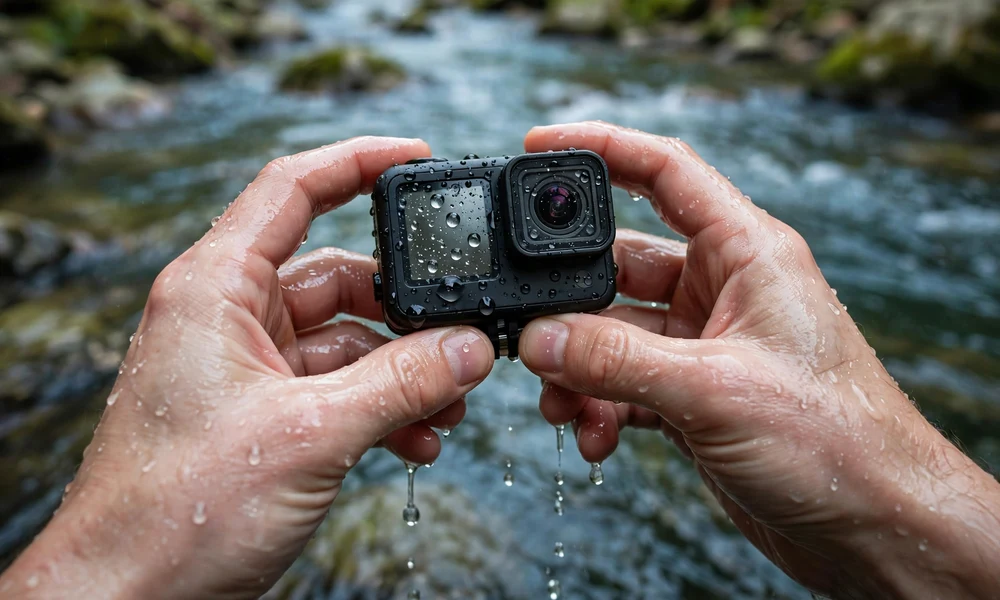
The body of a luxury action camera is a single sealed shell, with no doors or openings that water can find. The battery and the memory card sit behind a hatch with a rubber seal, and the buttons are sealed too, so the camera can be used underwater without a case. Most luxury models are waterproof to about ten metres, deep enough for snorkelling and surfing.
The shell is made from tough plastic and metal, and it is tested by dropping it onto concrete and freezing it overnight. The screen on the back is covered in toughened glass, and it works with wet fingers, which matters when the camera is used in rain. The full range of toughness and image quality is set out in the guide to luxury action camera specifications explained.
Step 5: Voice, touch and wireless control
A luxury action camera is controlled in three ways, because the rider is often busy. The touchscreen on the back works like a phone, the voice control answers spoken commands such as start recording, and a phone app can control the camera from a distance, showing a live preview on the phone screen.
The app is also how footage gets off the camera. It transfers video over a wireless connection, lets the owner trim a clip, and shares it without a computer. The camera itself has no fan and no moving parts, so the only sound it makes is a small beep when recording starts.
Step 6: Power, storage and the end of the day
Power comes from a small removable battery, good for about an hour or two of recording, and most owners carry spares. The battery is charged over a small cable, and the camera can record while it charges, which is useful on a long day. Storage is a memory card, slotted into the sealed hatch, holding hours of video.
At the end of the day, the camera is rinsed in fresh water, dried, and the footage is copied off the card. The camera is then charged and packed for the next trip. The craft of building small flying machines that carry cameras is described in the guide to how a luxury drone is made, and the camera inside is often the same kind of tough, tiny machine.
Specifications at a glance
| Feature | Typical luxury figure |
|---|---|
| Video | 5.3K at 60 frames per second |
| Sensor | About 1/1.7 inch, larger than budget models |
| Waterproof | About 10 metres without a case |
| Stabilisation | Electronic with horizon lock |
| Battery life | About 60 to 120 minutes |
| Weight | About 150 grams |
| Storage | Memory card, up to 512 gigabytes |
What it costs
A luxury action camera typically costs between about $400 and $600, and these are estimates, not fixed prices. The price rises with video resolution, with better stabilisation, and with a larger sensor, while older models in the range sell for less. Running costs are small: spare batteries, memory cards and mounts, usually a modest sum. Buyers pay for the toughness and the image quality, and for a camera that can be dropped, soaked and frozen and still record the next day.
A rare fact
The first action cameras were not built for sport at all. They were small cameras strapped to surfboards and helmets by enthusiasts who wanted to show their friends what a wave looked like from the inside. The companies that made them started in garages, and the cameras were crude, with no screen and no stabilisation. The modern luxury camera, with its horizon lock and slow motion, is the descendant of a home-made surfboard mount, and it still does the same job: showing you what it felt like to be there.
From lens to memory card, a luxury action camera is a study in surviving the unsurvivable. A tiny sensor, a hard-working processor and a sealed shell add up to a camera that records the moment nothing else could, and that is exactly the feeling its builders are chasing.


