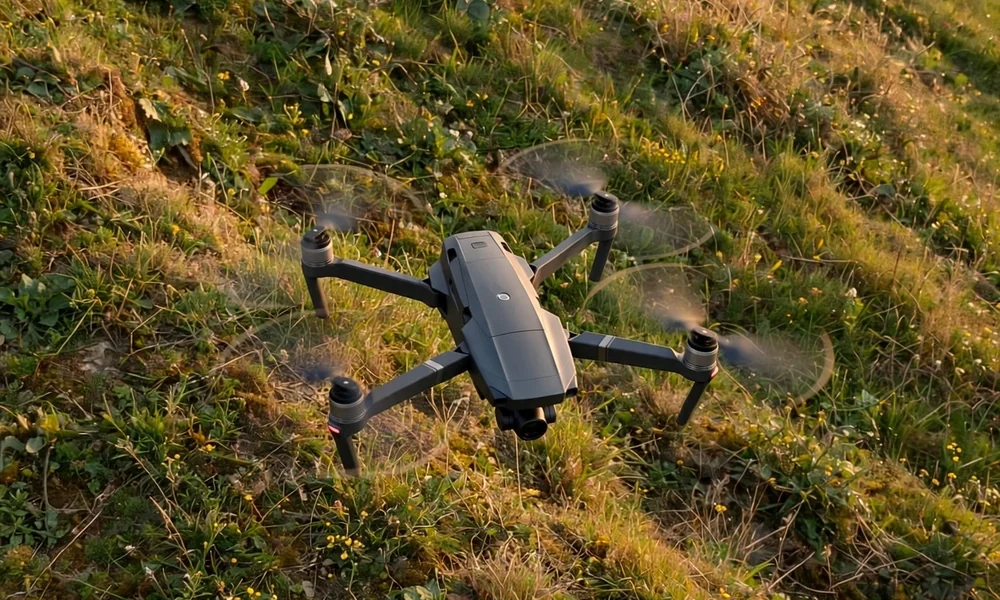
On a still morning above a vineyard in the hills, a drone the size of a small suitcase lifts off a folding table and climbs until the rows of vines below shrink to green corduroy. The pilot watches a screen, but the machine is doing most of the work itself, holding position in a light breeze, tilting its camera, and reading the ground with a patience no human spotter could match. It looks effortless, and that is the point. A luxury drone is built to make difficult flying feel boring.
What separates it from a hobby quadcopter is not one big thing but a hundred small ones, each made to a tighter tolerance. This is how a luxury drone is made.
Step 1: Designing the airframe
Every luxury drone starts as a digital model, shaped and reshaped in software long before any material is cut. Engineers chase two enemies at once: weight and vibration. A gram saved in the frame is a gram that can go into a bigger battery or a better camera, and a frame that flexes in flight will blur every photograph the drone takes.
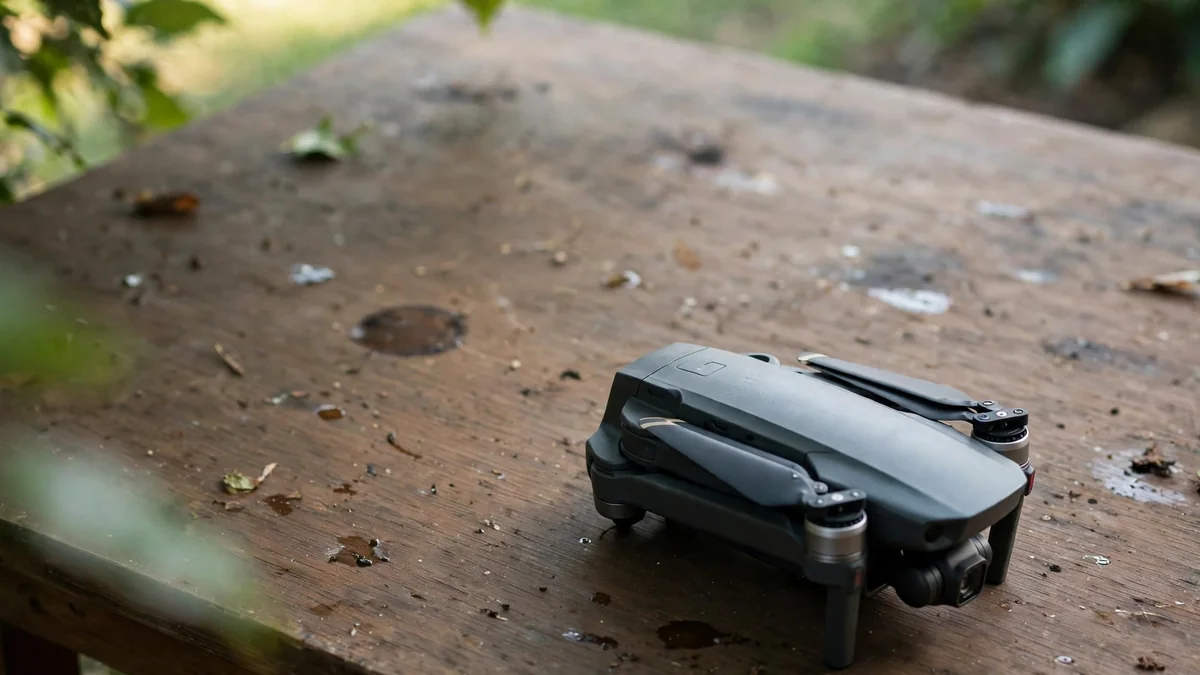
The arms fold, because a luxury drone must pack into a bag a traveller will actually carry, and the folding joints are the hardest part of the design. Each hinge is tested through thousands of open-and-close cycles, since a joint that develops play after a year of use will make the whole aircraft shudder in a hover.
Step 2: Moulding the carbon fibre shell
The body and arms are moulded from carbon fibre, laid up by hand in sheets over shaped forms. Workers place each layer at a different angle, because carbon fibre is strong along its threads and weak across them, and only a careful stack of layers gives strength in every direction the frame will be loaded.
The moulds are cured under heat and pressure, then the shells are trimmed and inspected for voids and wrinkles that would weaken them. A shell that fails inspection is scrapped rather than repaired, since a hidden flaw in a flying machine is a risk no luxury maker will take. Inside the Titanium Frame in Your Phone follows the same obsession with a thin, stiff shell in a different device, where the frame must be both light and unyielding.
Step 3: Fitting the motors and propellers
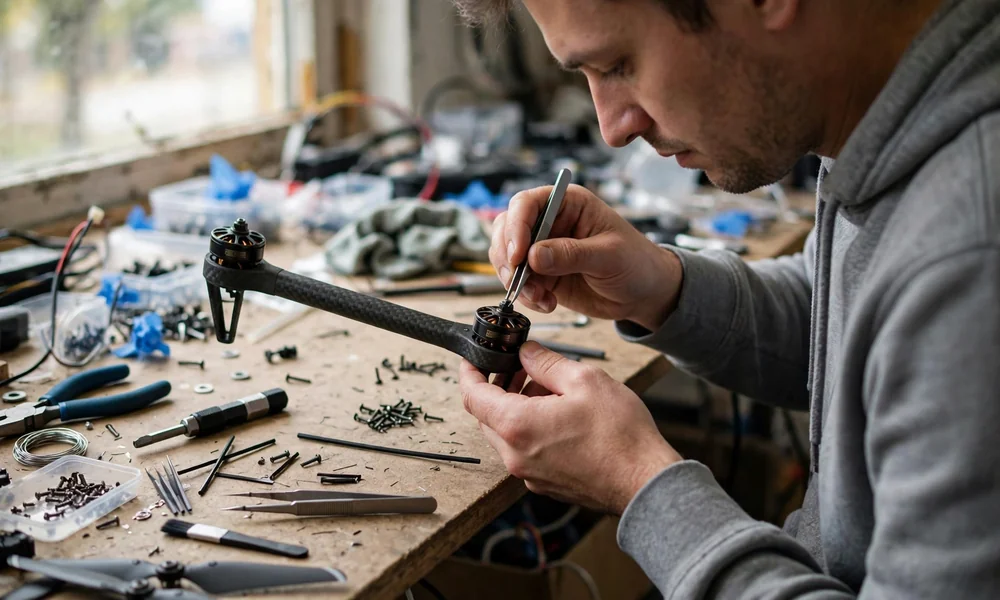
Four brushless motors are mounted at the end of each arm, each one balanced to spin at thousands of revolutions per minute without shaking. The motors are wound with fine copper wire by machine and then tested one by one, because a motor that runs even slightly rough will send vibration straight into the camera.
The propellers are moulded to an exact profile and matched in pairs, so that opposite rotors cancel each other’s torque. They are designed to fold flat against the arms for travel, and to snap open with centrifugal force the moment the motors spin up.
Step 4: Installing the camera and gimbal
The camera is the reason most buyers pay luxury prices, and it sits in a three-axis gimbal that keeps it level while the drone pitches and rolls around it. The gimbal’s motors make tiny corrections hundreds of times a second, reading the aircraft’s motion from gyroscopes and smoothing it out before it reaches the lens.
The lens itself is ground and coated like a camera lens, because it is one, and the sensor behind it is the largest that will fit in the space. Building a Smartphone Camera Lens, Step by Step shows how those tiny optics are made, and the drone’s camera borrows the same craft at a larger scale. The whole gimbal assembly is calibrated on a rig that tilts it through its full range while engineers watch the image for drift.
Step 5: Wiring the battery and electronics
The battery is a dense lithium pack shaped to fill the body, and it is the single heaviest part of the aircraft. Its cells are matched so they age together, and a management board watches each cell’s voltage, cutting power before any cell can be damaged by over-discharge.
The flight controller, the drone’s brain, sits on a vibration-damped mount in the centre of the body. It fuses data from satellite positioning, a barometer, compasses, and downward-facing sensors to hold the aircraft still in the air. Solid-State Battery Production: Inside the Factory looks at the next generation of cells that may one day give drones like this even longer flights from the same weight.
Step 6: Testing, tuning, and first flight
Before a luxury drone is boxed, it flies. Each aircraft goes through hover tests, range checks, and camera calibration in a test hall, and the flight logs are read for any wobble or drift that the sensors can see but a pilot cannot. A drone that fails a test goes back to the bench, not into a box.
The final tune is done in the open air, where the drone is flown through its modes: a slow cinematic orbit, a fast tracking run, and a return-to-home from a distance. Only when the logs are clean and the footage is steady does the aircraft earn its serial number and its case.
Specifications
| Detail | Specification |
|---|---|
| Frame material | Carbon fibre shell with magnesium alloy core |
| Takeoff weight | Around 900 grams to 1.2 kilograms |
| Motors | Four brushless, with folding propellers |
| Camera | Large sensor, three-axis gimbal, 5K video |
| Flight time | Around 40 to 45 minutes per charge |
| Top speed | Around 70 kilometres per hour |
| Range | Around 15 kilometres with a clear signal |
| Obstacle sensing | Forward, backward, sideways, and downward |
| Battery | Lithium pack, around 5,000 milliamp hours |
| Build and test time | Around two to three days per aircraft |
Price
The estimated price of a luxury camera drone is around 2,500 to 5,000 dollars, and that figure is an estimate only, because the cost depends on the camera, the sensor size, and the bundle of spare batteries and filters. The airframe itself is a modest share; the camera, the gimbal, and the flight software are where the money goes. A buyer is paying for footage that stays steady in wind, and for an aircraft that comes home by itself when the signal drops.
A rare fact
Few people know that a luxury drone’s propellers are deliberately designed to be the weakest part of the aircraft. In a crash they are meant to shatter first, absorbing the impact and sparing the motors, the gimbal, and the camera. Spare propellers are cheap and quick to change, while a bent motor shaft can write off the whole arm. The break is not a flaw; it is a fuse, built to fail so nothing more expensive has to.
When the case clicks shut and the drone is packed away, none of that engineering is visible. What remains is a machine that takes off, hovers, and films as if flying were the easiest thing in the world.