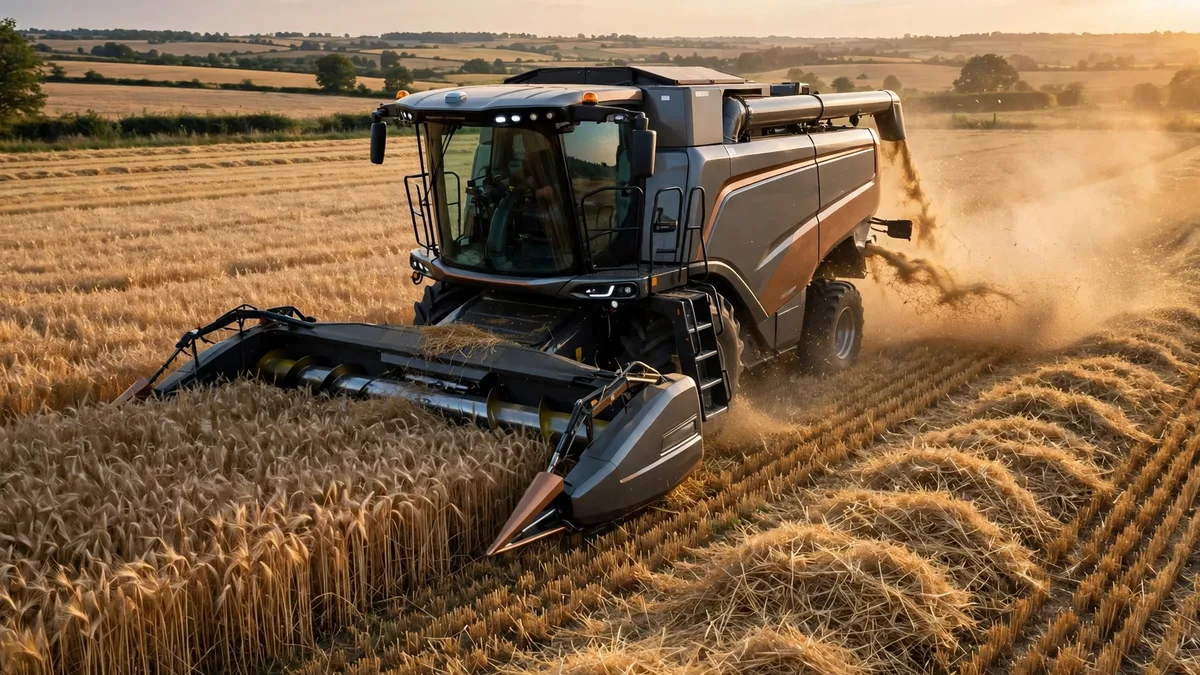
At harvest time, when the light turns gold in the late afternoon, a combine moves across a barley field like a slow, patient animal, and behind it the field is suddenly bare and tidy, with only a trail of chopped straw to show where the crop once stood. The grain that was in that field is now in a tank on top of the machine, clean and ready for the trailer. It is a luxury electric combine, and it has done in one pass what once took a village a season.
A luxury electric combine is a farming machine powered by batteries and electric motors, built to cut a crop, thresh the grain from the ears, clean it and store it, all while moving steadily across a field. It is made for owners who want a harvest that is quiet, precise and gentle on the grain, and for farmers who work near homes and villages where a noisy diesel machine would be unwelcome. To understand it, follow the grain from the front of the machine to the tank, because each stage hands the crop to the next in a careful chain.
How It Works
Step 1: Cutting and feeding the crop
At the front of the combine sits the header, a wide frame with a spinning reel and a cutter bar that slices the standing crop close to the ground. The reel turns gently, laying the cut stems onto a belt that carries them to the centre, where a large auger feeds them into the feeder house. The feeder house is a sloping tunnel with a chain of slats that lifts the crop up into the threshing heart of the machine, and it is wide enough to take a full swathe without choking.
Step 2: Threshing in the heart of the machine
Inside the combine, the crop meets the threshing system, which in a modern machine is often a long rotor that turns inside a cage, rubbing the grain out of the ears as the crop moves slowly along its length. The rotor is gentler than the old drum and concave, and it is kinder to the grain, because it threshes by rubbing rather than by beating. The grain falls through the gaps in the cage, while the straw is carried onward to the back of the machine.
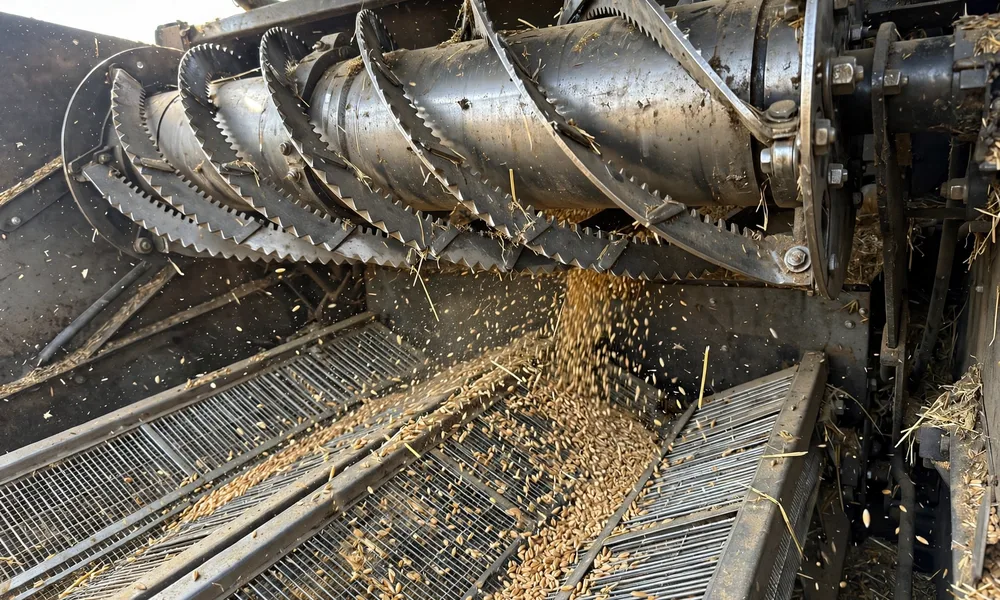
Electric motors drive the rotor, and they can change its speed smoothly, so the driver can thresh a delicate crop slowly or a tough crop quickly without stopping. Sensors watch the grain as it falls, and if too much grain is still in the straw, the screen warns the driver to slow the rotor or close the cage a little. The same careful threshing is at the heart of every harvest machine, and the way a luxury electric combine is made shows how the rotor and the cage are built before they ever turn.
Step 3: Separating grain from straw
After the rotor, the straw passes over a set of shaking walkers or a second rotor, which shake out any grain still hiding in the straw before it leaves the machine. The grain that falls through joins the grain from the threshing cage, while the straw moves on to the chopper at the back. This separation stage is where a good combine earns its money, because grain left in the straw is grain lost on the field.
The separation is tuned for each crop, with the speed of the walkers and the gaps in the grates set from the cab. The driver watches a live loss monitor, which shows how much grain is leaving with the straw, and adjusts the settings until the loss is as small as can be. When the separation is set well, the straw that leaves the back of the machine is almost empty, and the grain in the tank is full and unbroken.
Step 4: Cleaning the grain and filling the tank
Below the threshing and separation stages, the grain falls onto cleaning sieves, which shake back and forth while a fan blows air across them. The air lifts away chaff, dust and light weed seeds, and the sieves let only clean grain fall through to the auger below. Any ears that are not yet threshed are carried back around for another pass, so nothing is wasted.
The clean grain is carried by an auger up into the large tank on top of the combine, which holds several tonnes. When the tank is full, an unloading auger swings out over a trailer driving alongside, and the grain pours out in a steady golden stream while the combine keeps harvesting. The tank is fitted with a sensor that tells the driver how full it is, and the unloading auger folds away again at the touch of a button, ready for the next load.
Step 5: The cab, the battery and the end of the day
The cab sits high at the front of the combine, with a wide view over the header and the field, air conditioning, a comfortable seat and a screen that shows the battery, the yield, the grain loss and the speed of the rotor and the sieves. The driver steers with a joystick, and the machine adjusts its own settings to keep the grain clean as the crop changes across the field. The cab is sealed and filtered, so the driver can work through a dusty harvest in clean, cool air.
The battery pack sits low in the body, keeping the combine steady on a slope, and it is cooled while the machine works. At the end of the day the combine is parked by a charger, and by morning it is ready for another field. The quiet working day is a theme across the range, and the way a luxury electric harvester is made shows the same calm cab and clean grain tank, while a luxury electric excavator at work shows the same silent electric motors doing heavy work in a different field.
| Specification | Typical machine |
|---|---|
| Power source | Large battery pack low in the body, charged overnight |
| Header | Reel and cutter bar feeding the crop into the machine |
| Threshing | Long rotor in a cage rubbing grain from the ears |
| Separation | Shaking walkers shaking grain out of the straw |
| Cleaning | Shaking sieves and fan blowing away chaff and dust |
| Grain tank | Large tank holding several tonnes, unloaded on the move |
| Cab | Glazed, air-conditioned, yield, loss and battery displays |
| Working time | A full day of combining on one overnight charge |

A luxury electric combine is an estimate of $280,000 to $650,000, depending on the width of its header, the size of its grain tank and the capacity of its battery. The price covers the machine, the battery and charging equipment, the header, the first years of service and the training for the driver who will work with it through the harvest.
Here is a rare fact worth knowing. The word combine comes from the fact that the machine combines three jobs that were once done separately: reaping, threshing and winnowing. Before the combine, a harvest needed three different crews and three different seasons of work, with the grain stored in a barn all winter while it was threshed by hand with flails. The first combines of the 1800s were pulled by teams of twenty horses and needed a whole crew on board, yet a modern electric combine does all three jobs in one quiet pass, driven by a single person in a cool, clean cab.