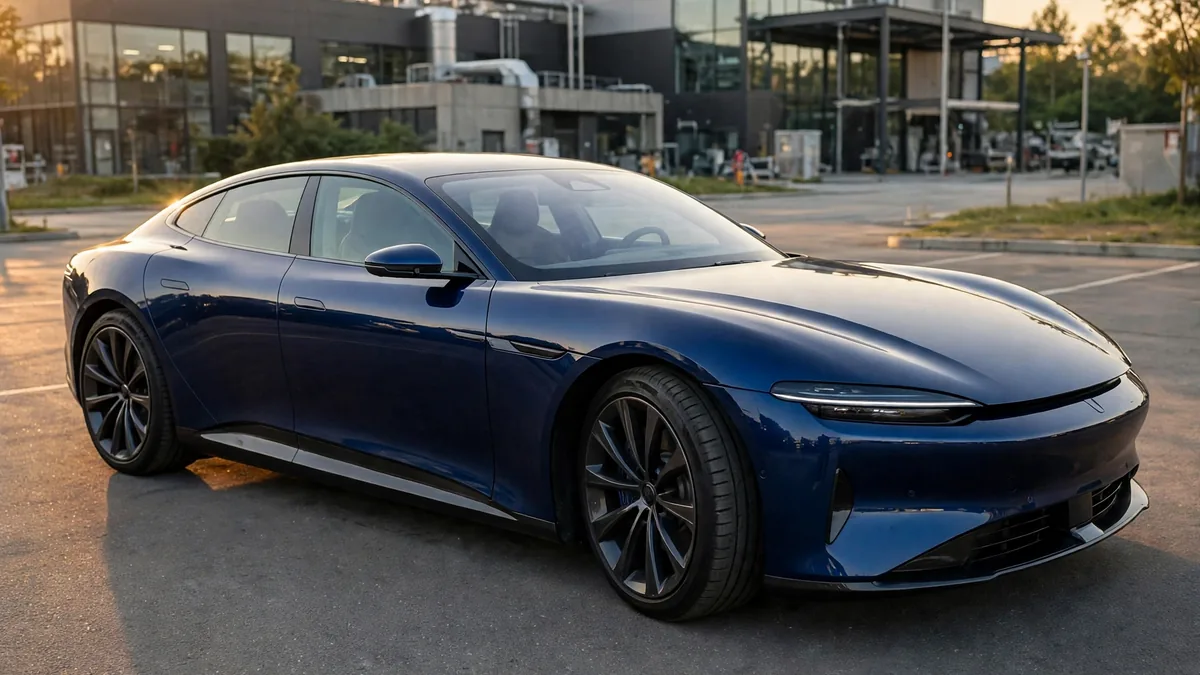
There is a moment on the factory floor, just before dawn, when a luxury electric grand tourer is still nothing more than a skeleton of aluminium and steel. At dawn, the car that will one day glide silently across a continent begins to take shape. Nobody hurries.
A grand tourer has always been a particular kind of promise: a car that can cross a country in a single day without tiring its driver, and arrive looking as good as it did when it left. The electric version keeps that promise with a flat battery pack under the floor, one or two motors, and a cabin that must be quieter than any petrol car, because no engine note is left to hide behind.
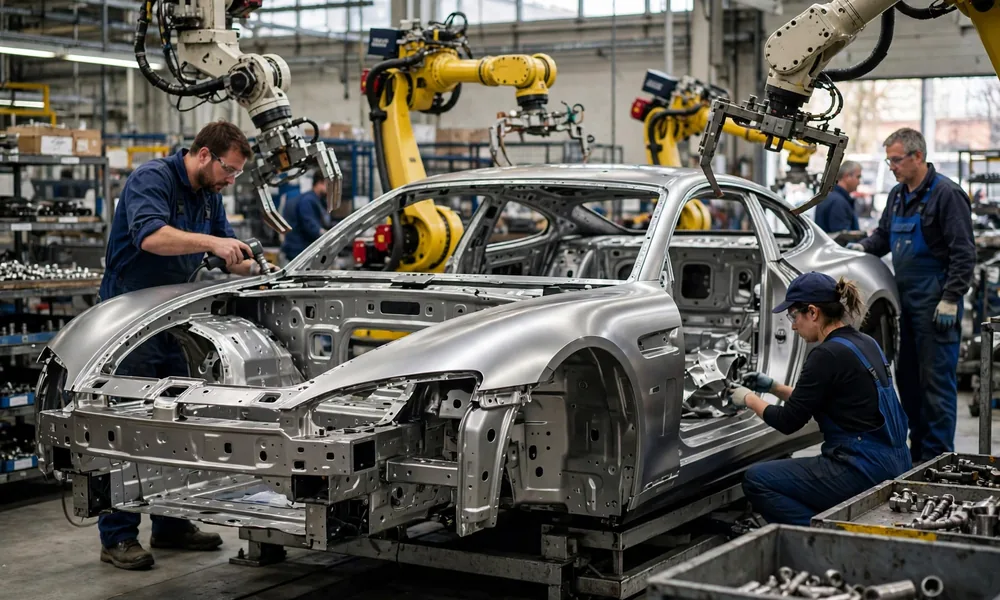
Building one is a slow, deliberate process that mixes robots and handwork in almost equal measure. The robots do the heavy, precise jobs, and human hands do the finishing, the fitting, the leather and the wood.
How It Is Made
Step 1: The body takes shape
Everything starts with the body-in-white, the bare shell of the car before paint or trim. Sheets of aluminium are pressed into panels by enormous stamping machines, each one applying thousands of tonnes of force. Aluminium is chosen because it is light and does not rust, and lightness matters more than ever in an electric car, where the battery alone can weigh as much as a small car. The panels are then joined by robots that weld, rivet and glue them together with a precision measured in fractions of a millimetre. Laser scanners check the finished shell against the digital design, and any panel out of line is sent back.
Step 2: The battery pack is built
While the body is being formed, another team builds the battery pack in a clean, climate-controlled hall. Hundreds of individual cells are grouped into modules, and the modules are bolted into a strong metal case that will sit flat under the cabin floor. The case also forms part of the car’s structure and protects the cells in a crash. Cooling channels run between the modules, because a battery that stays at the right temperature charges faster and lasts longer. Every pack is leak-tested and charge-tested before it is allowed near a car.
Step 3: Paint, layer by layer
Paint is where a luxury car first starts to look like a luxury car. The shell is dipped in a bath that coats every surface against corrosion, then dried in an oven. After that comes a primer, a base colour coat and a clear coat, each applied by robotic arms in a dust-free booth and each baked hard. Between coats, workers inspect the surface by hand and eye, feeling for the smallest imperfection.
Step 4: Motors, suspension and the rolling chassis
With the body painted, the car moves to the line where its running gear is fitted. The battery pack is lifted into place from below and bolted to the floor. Electric motors are mounted at the front and rear axles, and the suspension, steering and brakes are attached around them. With no exhaust or driveshaft, the flat underside helps air flow smoothly at speed. The wheels go on, the car is lowered onto the ground for the first time, and it becomes a rolling chassis that can move under its own power.
Step 5: The cabin is finished by hand
Now the human craftspeople take over. Seats are trimmed in leather that has been cut, stitched and checked by hand. Wood veneers are matched so the grain flows across the dashboard in one continuous sweep. The carpets are laid, the headliner is fitted, and the wide digital displays are connected and tested. Sound insulation is layered into the doors and floor, because a silent car makes every small rattle noticeable. This is the slowest part of the build, and the owner will touch it every day, so nothing may feel cheap or look rushed.
Step 6: Software, charging and the first power-on
A modern electric grand tourer is as much software as it is metal. Once the cabin is in, technicians load the car with its operating software and run through a long checklist. The motors are spun up, the battery management system is calibrated, and the charging port is tested at full power. Driver assistance systems are calibrated with targets set up in front of the car, and the headlights are aimed precisely. Any car that fails a check is pulled aside and fixed, because a fault found here costs far less than one found by an owner.
Step 7: The road test and final inspection
The last step is the one no machine can do: a human driver takes the car out on real roads. The test driver listens for rattles, feels for vibrations and checks that the car tracks straight at speed. The brakes are tested, the steering is checked, and the car is driven over rough surfaces to make sure nothing squeaks. Back at the factory, the car is washed, polished and inspected under bright lights before it is signed off for delivery.
Key Specifications
The figures below describe a typical current luxury electric grand tourer; individual models vary.
| Specification | Typical figure |
|---|---|
| Battery capacity | 100 to 120 kWh |
| Power output | 450 to 650 horsepower |
| Range | 450 to 600 kilometres |
| 0 to 100 km/h | 3.5 to 4.5 seconds |
| Top speed | Around 250 km/h |
| Charging | 10 to 80 percent in about 20 to 30 minutes on a fast charger |
| Seating | Four seats, two doors |
| Body | Aluminium and steel coupe |
How Much Does It Cost?
A luxury electric grand tourer typically costs from around $150,000 to well over $250,000, depending on the maker, the battery size and the level of bespoke trim. That is an estimate based on current flagship models, and the price can climb much higher once a buyer starts choosing personal paint colours, unique leather and hand-finished details. Much of the cost sits in the battery, the hand-built cabin and the low production volumes, since some factories build only a few thousand a year. Running costs, on the other hand, are comparatively gentle: electricity is cheaper than petrol, and an electric motor has far fewer moving parts to wear out. To understand what the car feels like once it leaves the factory, read how a luxury electric grand tourer works on the road. If the price seems high, why a luxury grand tourer is so expensive explains where the money goes. And for the numbers behind the car, the luxury electric grand tourer specs explained breaks down what each figure means.

A Rare Fact
Here is a detail most people never hear about: the silence of an electric grand tourer is so complete that engineers have to design the sound of the doors closing. In a petrol car, the engine masks small noises. In an electric car, a door that clicks or rattles even slightly will be heard by everyone inside, every single time. So the latches, seals and hinges are tuned like an instrument, and testers close each door dozens of times during inspection, listening for one clean, soft thud.
When the finished car finally rolls out of the factory gates, it carries more than a battery and two motors. It carries the work of the press operators, the battery builders, the painters, the leather workers and the test driver who took it out on a wet road at dawn. That is what a grand tourer has always been: not just a machine for crossing continents, but a machine built slowly, by people who care about the parts nobody will ever see.


