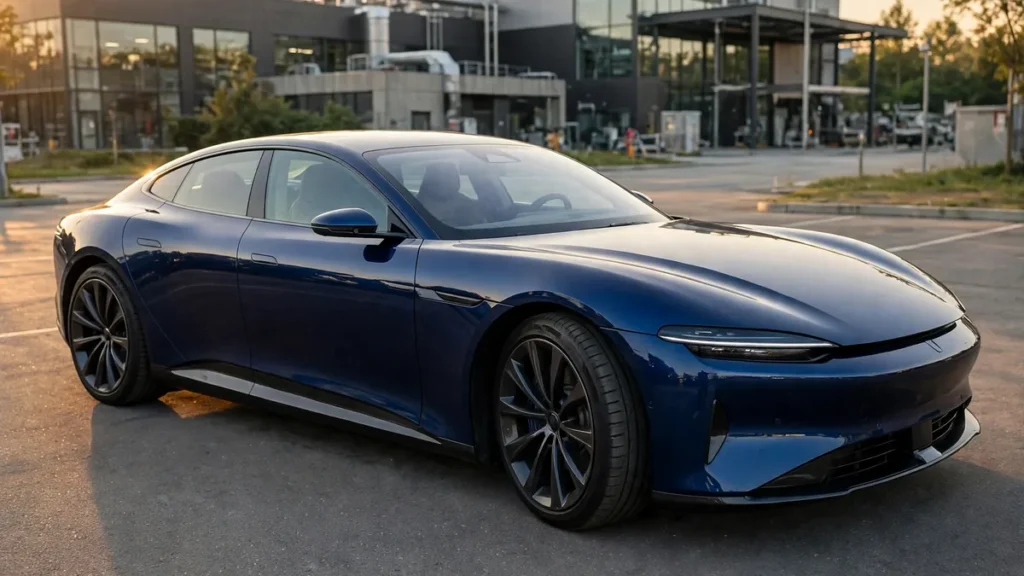
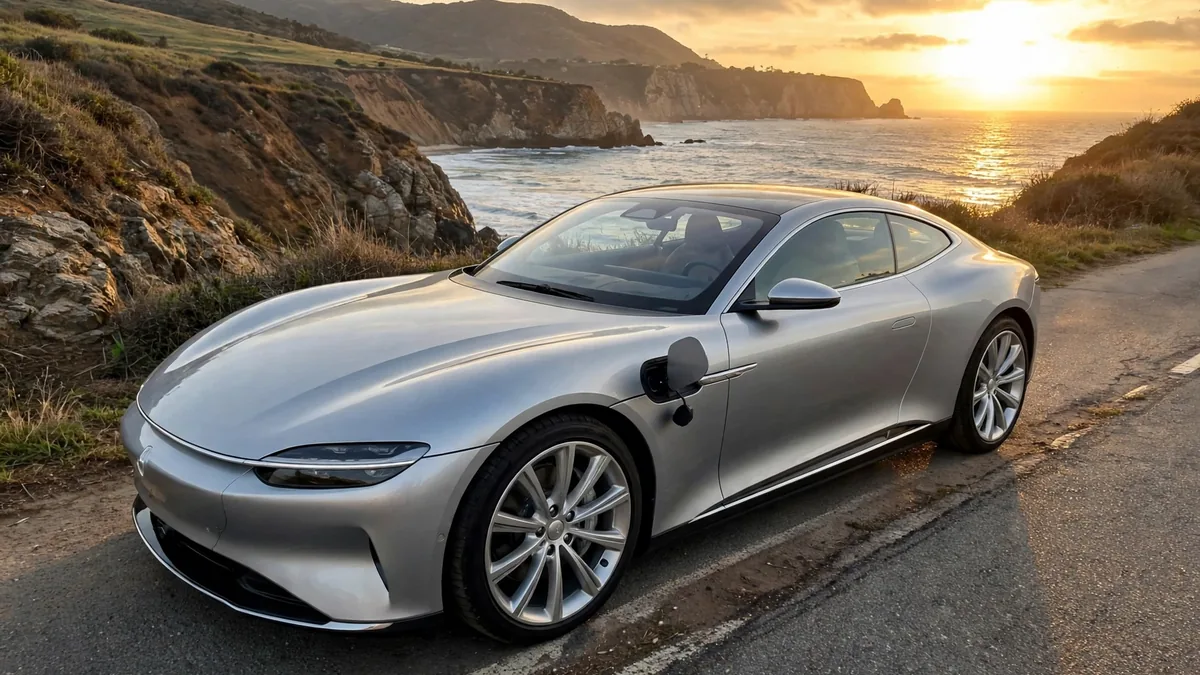
The silver grand tourer pulled out of the coastal lay-by just after sunrise, and within a minute it had settled into a long, easy rhythm. The road unwound along the cliff edge, the sea glittered on one side, and the car seemed to do nothing at all except glide. There was no drama, no roar, no sense of effort, and that was the point. A grand tourer is not built for a racetrack or a city street. It is built for the long road, and an electric one adds silence to a job that was always about distance.
The spec sheet of an electric grand tourer can be hard to read, because the numbers that matter most are not the ones printed largest. Top speed looks exciting, but a grand tourer rarely uses it. The figures that decide how the car feels on a five-hundred-mile day are range, charging speed, weight, and the way the power is delivered. This guide translates every number into plain English, so the sheet tells you what the car is actually like to live with.
Range: the grand tourer’s first job
Range is the most important number on a grand tourer spec sheet, and a luxury electric grand tourer usually offers between 350 and 500 miles on a full charge. That distance is what makes the car a tourer rather than a toy: it can leave the city in the morning, cross a country by the afternoon, and still have charge left for the evening. The official figure comes from a mixed test cycle, so real driving at motorway speed in cold weather will return less, but a car that tests at 450 miles will still cover a serious day of driving without a charging stop.
The reason range matters so much is that a grand tourer is bought for journeys, not commutes. A driver who stops every two hours to charge is not touring, they are waiting, and waiting is the one thing this kind of car is supposed to remove. That is why builders fit the largest battery the body can hold, even though it adds weight, and why the range figure is the first thing a buyer should check. The guide to why a luxury electric grand tourer is so expensive explains how that huge battery, and the long body built around it, drive the price up.
Battery size: the fuel tank you cannot see
Battery size is measured in kilowatt-hours, written as kWh, and a luxury electric grand tourer usually carries between 95 and 115 kWh. Think of it as the size of the fuel tank: a bigger tank means a longer journey between stops, and the car draws from it steadily as it drives. The battery sits low in the floor, stretched between the axles, which keeps the car balanced and the centre of gravity close to the ground. That low weight is part of why a grand tourer feels so planted on a fast, sweeping road, even though the battery alone weighs more than half a tonne.
Power and torque: effortless, not violent
Power on an electric grand tourer is usually quoted between 450 and 650 horsepower, and the car can reach 60 miles per hour in around three and a half to four and a half seconds. The more useful figure is torque, the twisting force that pushes the car forward, and an electric motor delivers it instantly, without waiting for gears or engine revs. That is why the car feels so effortless: a gentle press of the pedal on a motorway slip road produces the same smooth surge at any speed. The guide to luxury electric roadster specs explained shows the same instant power tuned for sharpness, while the grand tourer tunes it for calm.
Charging speed: the lunch stop test
Charging speed is quoted in kilowatts, and a luxury electric grand tourer can usually accept between 200 and 300 kW from a fast public charger. At that rate, the battery can go from ten per cent to eighty per cent in about twenty to twenty-five minutes, which is a lunch stop rather than a lost afternoon. The figure to check is not just the peak rate but how long the car can hold it, because a car that charges at 270 kW for three minutes and then drops to half that speed will take far longer than the brochure suggests. A grand tourer that holds its charging pace is a car that keeps its promise on a long journey.
Weight and balance: the hidden handling number
Weight is the number grand tourer buyers most often ignore, and it is the one that shapes the handling. A luxury electric grand tourer usually weighs between 2,100 and 2,400 kilograms, which is heavier than a petrol car of the same size, because of the battery. The good news is where that weight sits: low in the floor and spread evenly between the front and rear axles, close to a fifty-fifty balance. That balance is why the car feels stable and predictable on a winding road, and why engineers spend so much effort on suspension tuning. The guide to luxury hybrid supercar specs explained shows how a lighter hybrid chases the same balance with a smaller battery and a petrol engine to help.
The numbers at a glance
| Specification | Typical electric grand tourer | Top electric grand tourer |
|---|---|---|
| Battery size | 95 kWh | 115 kWh |
| Range | 350 miles | 500 miles |
| Power | 450 hp | 650 hp |
| 0 to 60 mph | 4.5 seconds | 3.5 seconds |
| Top speed | 130 mph | 155 mph |
| Fast charging | 200 kW | 300 kW |
| 10 to 80 per cent charge | 25 minutes | 20 minutes |
| Weight | 2,100 kg | 2,400 kg |
What a luxury electric grand tourer costs
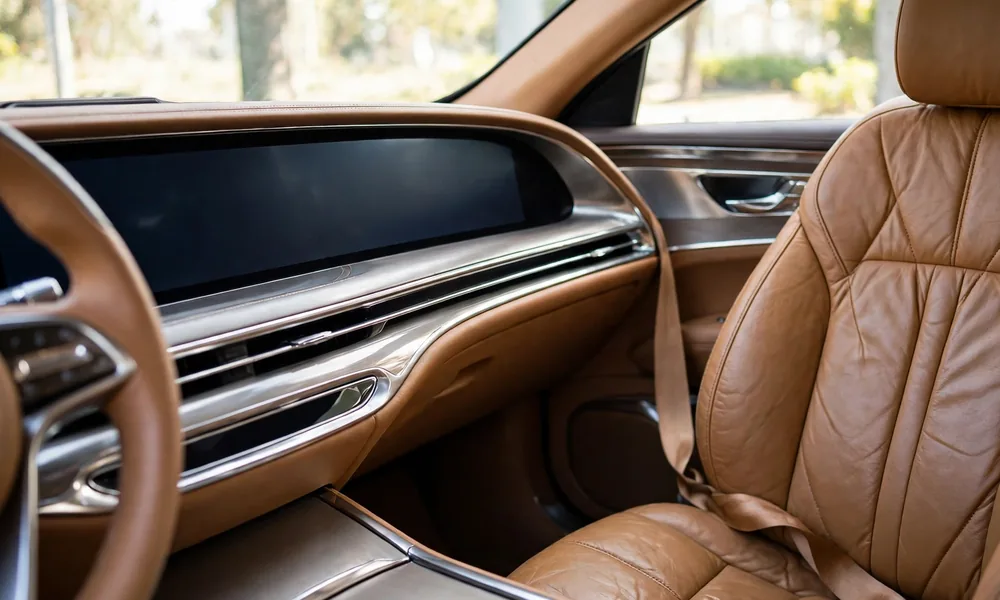
A luxury electric grand tourer costs an estimated 130,000 to 200,000 dollars, with the most exclusive hand-built versions reaching an estimated 250,000 dollars or more. The battery and the long, low body account for much of that price, and the hand-stitched leather cabin, the air suspension and the quiet, layered glass add the rest. Running costs are lower than a petrol grand tourer, because electricity is cheaper than fuel and the car has fewer parts to wear out, but the purchase price is still the number that decides who buys one. It is a car bought for the road it promises, and the spec sheet is the honest part of that promise.
A rare fact
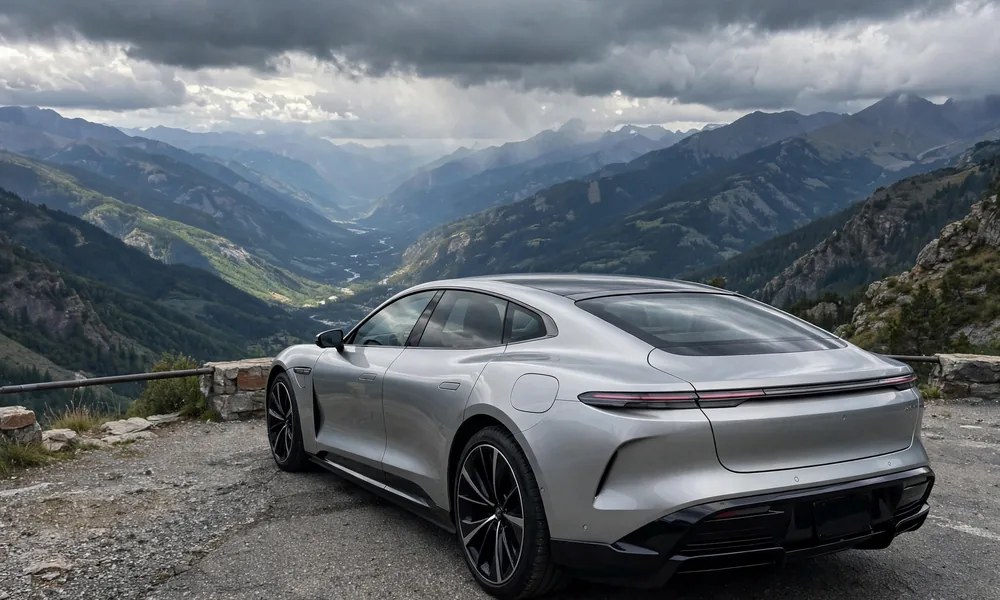
Some electric grand tourers can recover energy from their own brakes so well that a long downhill mountain pass can add miles back to the battery. The motors run in reverse as generators when the car slows, turning the downhill momentum into electricity instead of wasting it as heat in the brake discs. Drivers who cross a mountain range have watched the range figure climb as they descend, arriving at the bottom with more charge than they had at the top. It is a small magic trick, and it is built into every electric grand tourer, free with the car.
The next time an electric grand tourer spec sheet lists its numbers, read them as a description of a journey, not a list of parts. The range buys the day, the charging speed buys the lunch stop, the balance buys the corners, and the silence buys the calm. A luxury electric grand tourer will never be a sensible purchase, but its spec sheet is a sensible document: it tells you, in plain numbers, exactly how far the luxury will take you.