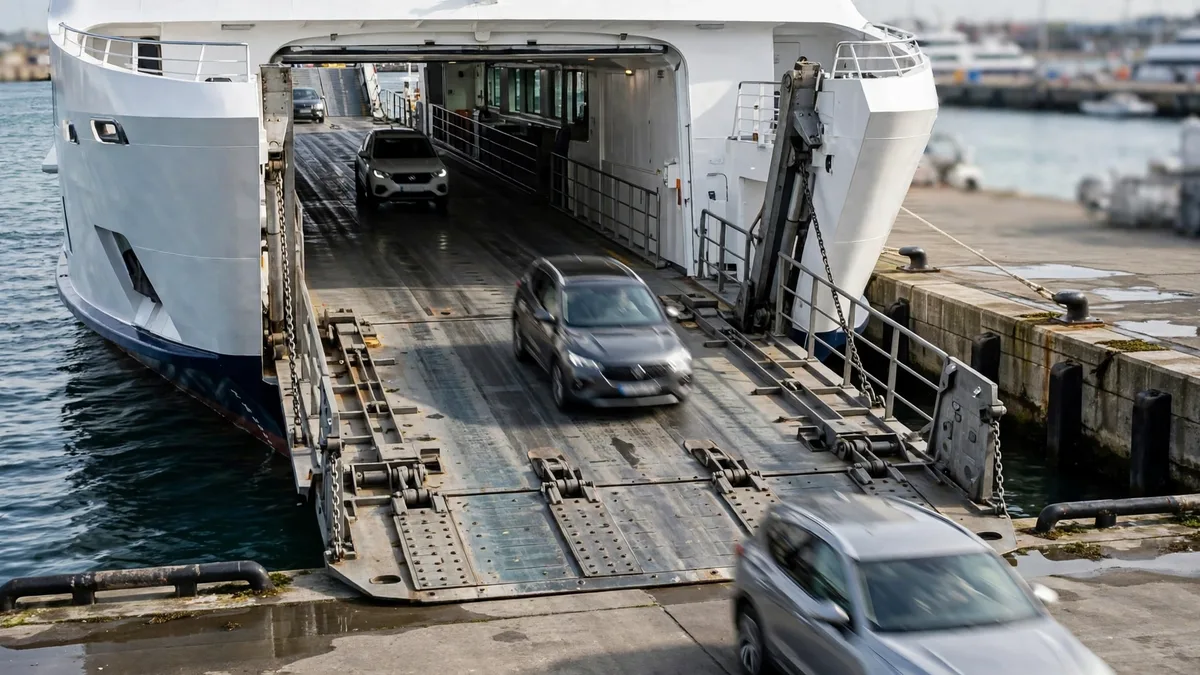
Watch a ferry come in, and the most ordinary moment of the voyage is also the most impressive: the great steel door at the bow swings down, touches the quay with a soft thud, and cars simply drive off, one after another, as if the ship and the land were one road all along.
That door is the ferry ramp, a roadway, a watertight door and a drawbridge all in one. This is what makes a luxury ferry ramp work, and why it has to be strong enough to carry trucks, gentle enough to meet a quay, and tight enough to keep the sea out.
How It Works
Step 1: The ramp itself
The ramp is a great steel plate, often the whole bow door of the ferry, hinged at the bottom so it can swing down to the quay or up to close the bow. It is built like a bridge deck, with beams underneath and a grippy steel surface on top, so cars and trucks can drive over it in rain, in ice and in a rolling sea.
The surface is fitted with cleats and a rough coating that grips tyres, and the edges have raised kerbs to keep a wheel from slipping off the side. The ramp is heavy, many tonnes of steel, and it is balanced so the hydraulics can move it smoothly, not fight it all the way down.
Step 2: The hinges that carry the weight
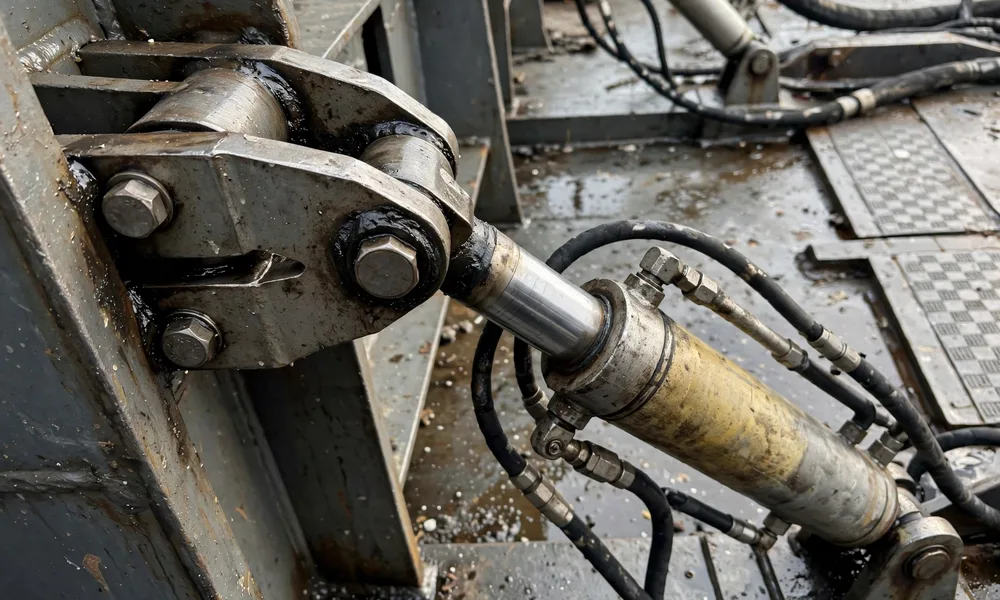
At the bottom of the ramp sit the hinges, great steel pins as thick as a man’s arm, set in brackets welded deep into the hull. The hinges carry the whole weight of the ramp and everything that drives over it, and they do it while the ship rolls and the quay stays still, a movement that would tear an ordinary hinge apart.
The pins are greased through small nipples, and the grease is renewed on a strict schedule, because a dry hinge wears quickly and a worn hinge lets the ramp sag. The brackets are inspected for cracks every time the ship is in dry dock, and the way a luxury ferry ramp is made shows how the whole door is built around these pins, since everything else hangs from them.
Step 3: The hydraulics that lift and lower it
The ramp is moved by hydraulic cylinders, great steel rams filled with oil under pressure, that push the ramp down and pull it up again. The cylinders are sized so they can lift the ramp even if one of them fails, and they are fitted with locks that hold the ramp in place if the oil pressure is lost.
The oil is pumped by electric motors in a small room just behind the ramp, and the whole system is controlled from the bridge and from a small panel on the vehicle deck. The operator watches the ramp as it moves, feeling for any hesitation, because a ramp that moves unevenly is a ramp that needs attention before it is used again.
Step 4: Meeting the quay
Lowering the ramp onto the quay is the delicate part. The quay is fixed and the ship moves, rising and falling with the tide and rolling with the swell, so the end of the ramp must be able to slide and flex without breaking. The tip of the ramp is fitted with a flap, a short hinged section that rests on the quay and follows its surface as the ship moves.
The crew watch the tide and the weather before they lower the ramp, and they lower it slowly, letting the flap find the quay before the full weight comes down. A good landing is silent and smooth; a bad one is a bang that everyone on the vehicle deck feels in their feet.
Step 5: Sealing the bow at sea
When the ramp is raised and the ferry sails, it must seal the bow watertight. Around the edge of the ramp runs a thick rubber gasket, and when the ramp closes, hydraulic dogs, great steel clamps, pull it tight against the gasket and squeeze it until no water can get past.
The seal is tested before every sailing, and the crew walk the edge of the ramp looking for damage to the gasket or the steel it presses against. A ferry with a leaking bow door is a ferry that does not sail, and the way a luxury ship bridge is specified shows the same discipline on the bridge, where the ramp is watched and locked from above before the ship ever leaves the quay.
Step 6: The daily care it needs
A ferry ramp works hard, several times a day, every day, and it needs constant care. The hinges are greased, the hydraulics are checked for leaks, the gasket is inspected, and the steel surface is washed down to keep salt and grit from wearing it away.
The crew keep a log of every movement, and any unusual noise or stiffness is written down and looked at the same day. A ramp that is looked after will last the life of the ship, and the crew who tend it live close to the machines they care for, below deck near the vehicle spaces.
| Spec | Detail |
|---|---|
| Ramp | Great steel plate forming the bow door, built like a bridge deck with beams below and a grippy surface on top |
| Hinges | Thick steel pins in brackets welded deep into the hull, greased on schedule and inspected for cracks in dry dock |
| Hydraulics | Oil-filled cylinders that push the ramp down and pull it up, with locks that hold it if pressure is lost |
| Quay flap | Short hinged section at the tip of the ramp that rests on the quay and follows its surface as the ship moves |
| Seal | Thick rubber gasket around the ramp edge, squeezed tight by hydraulic dogs so no water gets past at sea |
| Care | Daily greasing, leak checks and gasket inspections, with every movement logged by the crew |
What One Costs
A luxury ferry ramp is an estimated 500,000 to 3,000,000 dollars, depending on the size of the ferry, the width of the ramp and how much of the bow is built around it. The steel plate is only part of the price; the hinges, the hydraulics and the sealing system all cost far more than they look, and the fitting and testing add up too. A small ramp for a short crossing sits near the bottom, while a great ramp for a large ferry, wide enough for two lanes of trucks, costs far more.
A Rare Fact
Some ferries carry a ramp at both ends, bow and stern, so they never have to turn around. They load at one end, sail, and unload at the other, and the crew call them double-enders. It is a simple idea that saves hours on a busy route, and it means the ship always sails forwards, whichever way she is pointing.

A luxury ferry ramp is a bridge that folds away: a steel roadway, great hinges, hydraulic rams, a flexible flap and a watertight seal, all working together several times a day. It is the most-used moving part on the whole ferry, and the least noticed, until the day it does not move, and the way luxury ship crew quarters are specified shows who keeps it moving, the crew who live aboard and tend the ship’s machines.


