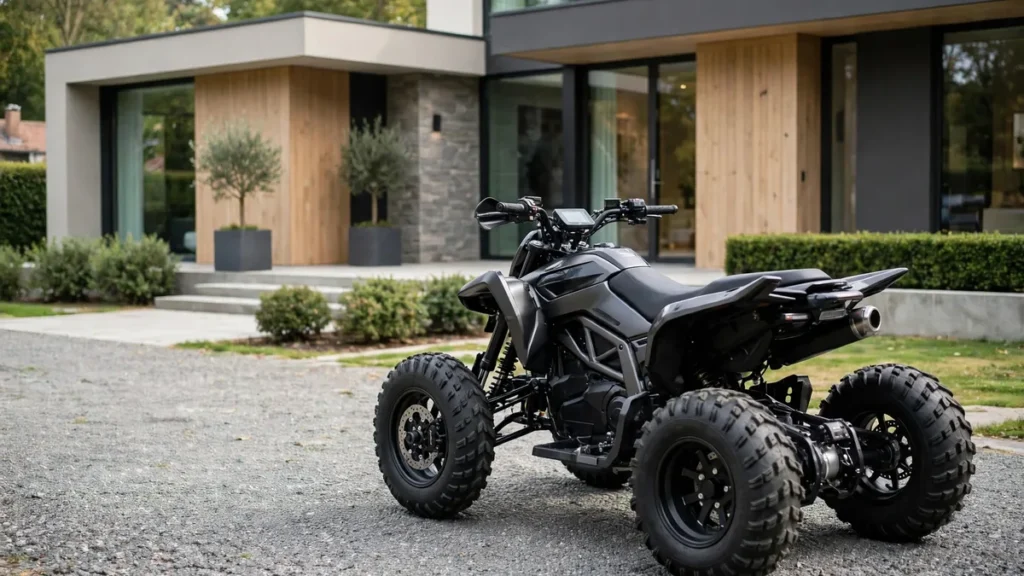
A utility task vehicle, a UTV, is the machine that does the jobs nobody photographs. It carries fence posts to the far field, hauls firewood to the lodge, tows a trailer of tools to a building site, and brings the shoot lunch out to the hill. It is not glamorous, and it is not meant to be. It is meant to start every morning, carry a heavy load over bad ground, and come home dirty.
A luxury electric UTV keeps all of that usefulness and changes the experience of it entirely. There is no diesel rattle at six in the morning to wake the guests, no exhaust smell in the vineyard, and no gearbox to wrestle with on a steep track. The driver presses a pedal, the machine moves, and the only sound is the tyres on the gravel. The luxury is not in gold trim or leather. It is in a machine that works hard and asks for almost nothing in return.
How It’s Made
Step 1: Welding the chassis
The chassis of a luxury electric UTV is a ladder of steel, two long rails joined by cross members, welded on a jig that holds everything square. It looks simple, and that is the point: a simple ladder chassis is easy to repair, easy to modify, and strong in exactly the places a loaded vehicle needs strength. The welders work along the whole length, and every joint is checked, because a chassis that carries a tonne of cargo over ruts will find any weak weld within a month.
Step 2: Fitting the battery and drivetrain
The battery pack of a luxury electric UTV is big, because the machine is expected to work all day, and it is fitted under the seats where it is protected by the chassis rails on both sides. It is sealed against dust and water, and it is bolted into a steel tray that can be dropped out from underneath for servicing, so a workshop does not have to strip the whole vehicle to reach it.
The motor drives the rear axle through a gearbox, and on four-wheel-drive models a shaft runs forward to the front axle as well. The electric motor’s instant pulling power is what makes the machine so good at towing: it can pull a loaded trailer away from a standstill on a muddy slope without slipping the clutch or spinning the wheels. Steering a heavy vehicle well matters just as much as pulling, and the way a luxury ship rudder is made is a reminder that the part that points a machine is as important as the part that pushes it.
Step 3: Building the suspension and steering
A UTV carries its load on long-travel suspension, arms at each corner with big coil springs and shock absorbers that can soak up a rut with half a tonne in the back. The suspension is fitted and set with the vehicle loaded, not empty, because a UTV spends most of its life carrying something, and a suspension set for an empty vehicle will sag and bottom out the first time it is loaded.
Step 4: Fitting the cab and seats
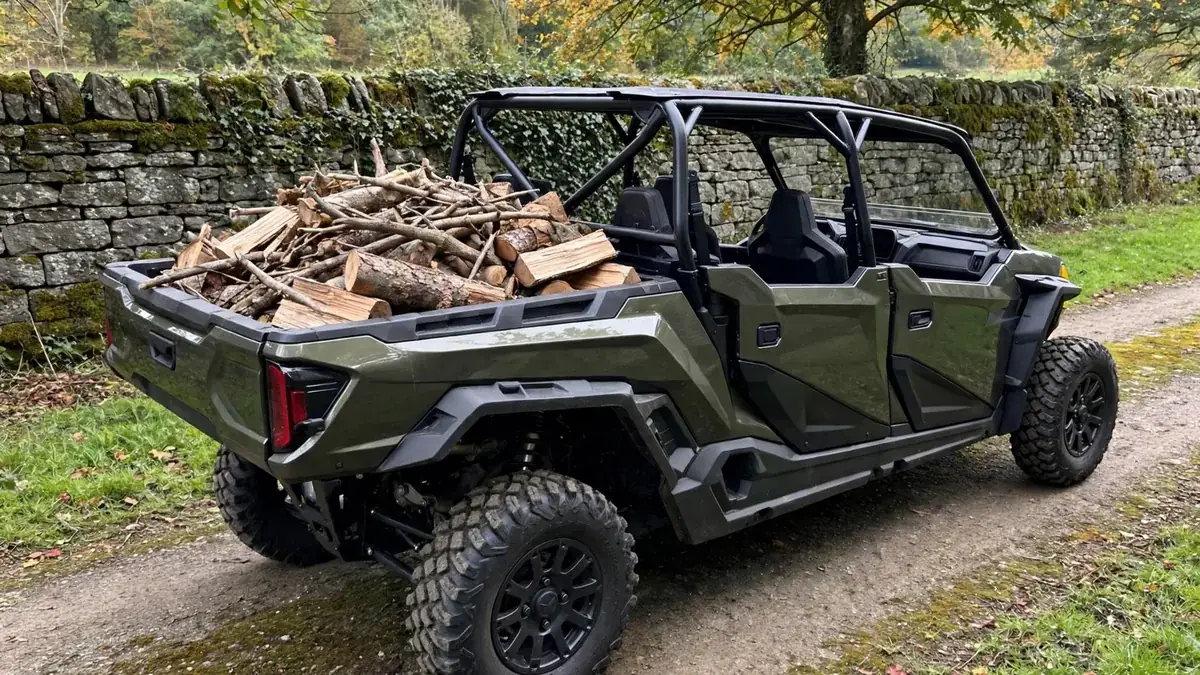
The cab is the part the driver lives in, and on a luxury UTV it is a proper weatherproof space rather than an open bench. It has a steel roll cage built into its frame, a roof, a windscreen that can fold down, and doors that keep the rain and dust out. The seats are wide, padded and covered in waterproof material, with room for two or four people depending on the model, and there is a dashboard with a screen for speed, battery and range.
The cab follows the same rule as the bridge of a ship, where every control sits within reach of the person in charge. The wheel, the screen and the switches are close at hand, and the view through the windscreen is wide, because a driver who can see the track ahead does not have to guess, which is why a luxury ship bridge, explained feels familiar here.
Step 5: Adding the cargo bed and towing gear
The cargo bed is the reason the machine exists, and it is built to be abused. It is a steel or heavy plastic tray with high sides, a tailgate that drops flat, and a hydraulic tipper that can lift a full load of gravel or logs and dump it where it is needed. The tipper is driven by a small electric pump, and the bed is lined with a tough mat that stops a load sliding around on a slope.
At the back, a tow hitch is bolted through the chassis, rated for a loaded trailer, and at the front a winch is fitted behind the bumper, strong enough to pull the vehicle out of a ditch or drag a fallen tree off a track. The winch is wired to a switch in the cab and a remote control, so one person can stand clear and operate it safely, which is the kind of small detail that only comes from building machines for people who work alone.
Step 6: Load testing and delivery
Before delivery, a luxury electric UTV is tested the way it will be used: loaded to its full rated weight and driven over rough ground, up a steep slope, through a muddy hollow and down again, with the brakes tested at every stage. The test driver checks that the battery stays cool under load, that the tipper lifts a full bed without straining, and that the winch pulls smoothly.

| Spec | Detail |
|---|---|
| Chassis | Steel ladder chassis welded on a jig, with the battery and motor mounted low between the axles |
| Battery | Large sealed pack under the seats in a steel tray, big enough for a full working day |
| Drive | Electric motor with instant pulling power, rear-wheel drive or four-wheel drive, strong towing ability |
| Cab | Weatherproof cab with a roll cage, roof, folding windscreen, heating and seats for two or four people |
| Cargo bed | High-sided tray with a drop tailgate and a hydraulic tipper, plus a tow hitch and a front winch |
| Payload | A full load of cargo in the bed plus a loaded trailer, carried over rough ground all day |
What One Costs
A luxury electric UTV is an estimated 25,000 to 60,000 dollars, depending on the size of the battery, the number of seats, and how much work equipment it carries. The battery is the biggest single cost, and a pack that can work a full day without charging costs far more than one that needs a midday top-up. A two-seat model for a vineyard sits near the bottom of that range.
A Rare Fact
The UTV was born on the golf course. The first ones were little electric carts built to carry golfers and their clubs around a course without noise or exhaust, and farmers noticed them and asked for a stronger version that could carry tools instead of golf bags. The modern UTV is that golf cart grown up, doing the hardest jobs on the land.

A luxury electric UTV is a steel ladder, a big battery, a strong motor and a cargo bed, built to work all day in silence and to carry its driver home dry and warm. It is the hardest-working machine in the luxury electric family, and the way a luxury ship keel works tells the same story from the water, where the strength of the structure underneath decides everything the machine above it can do.