On a still morning at a private villa, the pool looks perfect before anyone has touched it. The water is glass, the tiles gleam, and there is not a single leaf drifting on the surface. Nobody scrubbed it at dawn. While the house slept, a small machine the size of a suitcase woke itself up, dropped into the deep end, and spent two hours crawling across every inch of the floor, the walls and the waterline, brushing, vacuuming and filtering until the pool looked untouched by the night.
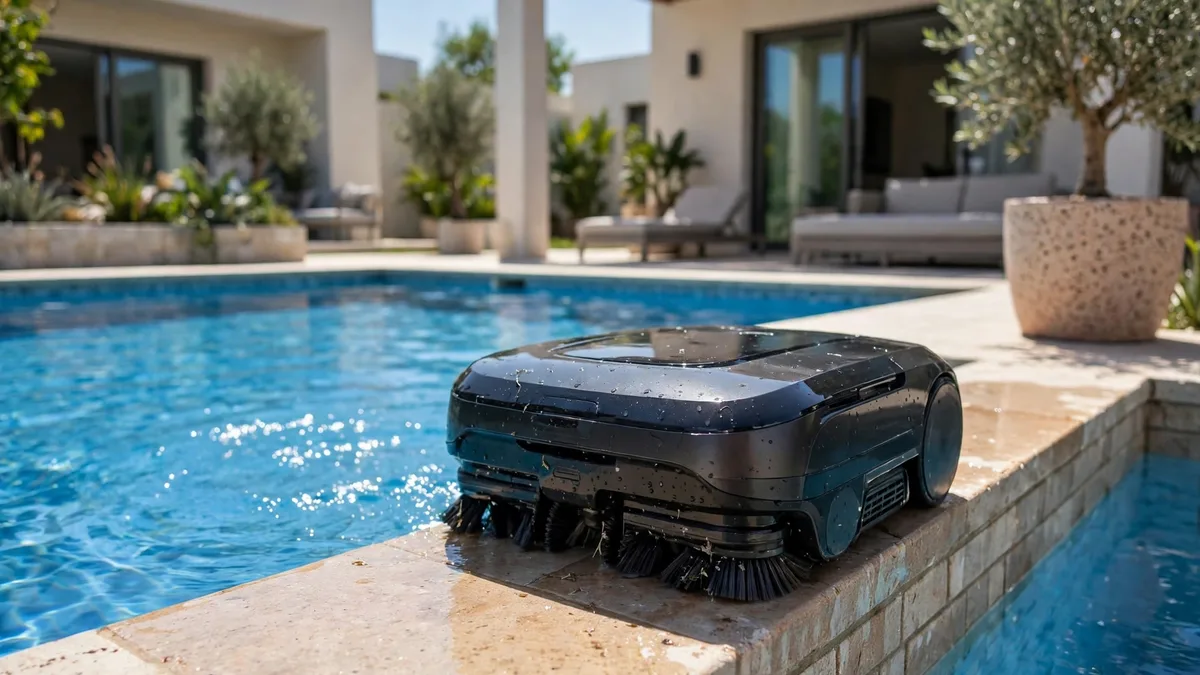
That machine is a luxury robot pool cleaner, and it is a long way from the simple suction cleaners that used to rattle around the bottom of a pool on a hose. The luxury versions are self-contained robots with their own motors, their own filters, their own mapping brains and batteries or power supplies that let them work alone.
How It’s Made
Step 1: Moulding a hull that can live underwater
Every robot pool cleaner starts with its hull, a tough shell that has to keep water out of the electronics while spending its whole working life submerged. The shell is injection moulded from a hard, UV-resistant plastic, often a reinforced polymer that can take knocks against concrete steps and stone coping without cracking.
The hull is made in two halves, top and bottom, with a rubber gasket seated in a channel between them. That gasket is the machine’s lifeline. Builders test the seal by assembling an empty hull, pressurising it slightly and watching for the tiniest drop in pressure, a test that takes minutes but saves a machine that is meant to last for years.
Step 2: Fitting the drive motors and tracks
With the hull ready, the builders fit the drive system, usually two or three small electric motors that turn rubber tracks or wheels. Tracks are the luxury choice, because they grip the pool floor and climb walls without slipping, even on smooth tiles. Each motor is sealed in its own waterproof housing and filled with a special grease that keeps water out even if a seal wears with age.
The motors are geared down hard, trading speed for torque, so the cleaner crawls slowly and deliberately rather than racing around. The same thinking that shapes electric drive systems on land applies here at a smaller scale, and the way a luxury electric quad bike is made shows how much care goes into sealing motors that have to work in mud, dust and water.
Step 3: Adding the brushes and the suction pump
Next come the working parts: the brushes and the suction pump. Luxury cleaners carry rotating brushes, usually made from a foamy polymer that grips algae and fine dirt without scratching tiles or vinyl.
Behind the brushes sits the suction pump, a compact impeller that pulls water and debris through the machine and into the filter. The pump has to be powerful enough to lift sand and leaves, yet gentle enough not to disturb the pool’s chemistry or suck up small tiles. Builders tune it by running the cleaner in a test tank full of sand, leaves and fine dust, then checking how much it collects in a single pass.

Step 4: Building the filtration system
Filtration is where luxury cleaners earn their price. Instead of a simple mesh bag, they carry a fine filter basket or cartridge that traps particles down to a few microns, fine enough to catch pollen, dust and the cloudy haze that makes a pool look tired. Some models carry two stages, a coarse basket for leaves and a fine cartridge for the invisible dirt.
Builders check the seal around the housing carefully, since dirty water that bypasses the filter goes straight back into the pool, undoing the cleaner’s work in seconds.
Step 5: Teaching it to navigate
A luxury robot pool cleaner does not wander. It maps. Inside the hull sits a small computer with gyroscopes, accelerometers and sometimes a pressure sensor that tells it how deep it is. On its first run, the cleaner learns the shape of the pool, the position of the steps, the slope of the floor and the location of the main drain, then plans a route that covers the whole surface without wasting time on the same patch twice.
The navigation board is tested in pools of different shapes, round, rectangular, kidney-shaped and freeform, because a cleaner that only works in a rectangle is useless in a real villa garden. The battery and power thinking behind these machines has much in common with bigger electric machines, and the way a luxury electric UTV is made shows how engineers protect a battery and its wiring from water, dust and hard knocks.
Step 6: Sealing, testing and the final swim
The last stage is sealing and testing. The two hull halves are bolted together over the gasket, every cable entry is sealed with a rubber gland, and the whole machine is lowered into a test pool. It runs a full cleaning cycle while engineers watch for bubbles, which betray a leak, and check that it climbs the walls, scrubs the waterline and returns to its starting point.
Only then does the cleaner get its finishing touches: a floating cable or a charging dock, a carry handle, and a final polish. Every machine that passes is dried, polished and packed for its new home. The sensor and control work inside a small machine like this is a close cousin of the systems in other electric vehicles, and the way a luxury electric tricycle works shows how much of a modern electric machine is really software, sensors and careful sealing rather than raw power.
| Specification | Typical luxury model |
|---|---|
| Size | Around 45 cm long, 40 cm wide, 30 cm tall |
| Weight | About 10 to 14 kg out of the water |
| Cleaning cycle | 1.5 to 3 hours, depending on pool size |
| Pool size covered | Up to about 15 m long, floor, walls and waterline |
| Filtration | Dual-stage basket and fine cartridge, down to a few microns |
| Navigation | Gyroscope and accelerometer mapping, wall and step sensing |
| Control | Phone app, scheduling and remote start |
| Cable or battery | Mains-powered floating cable, or cordless battery models |
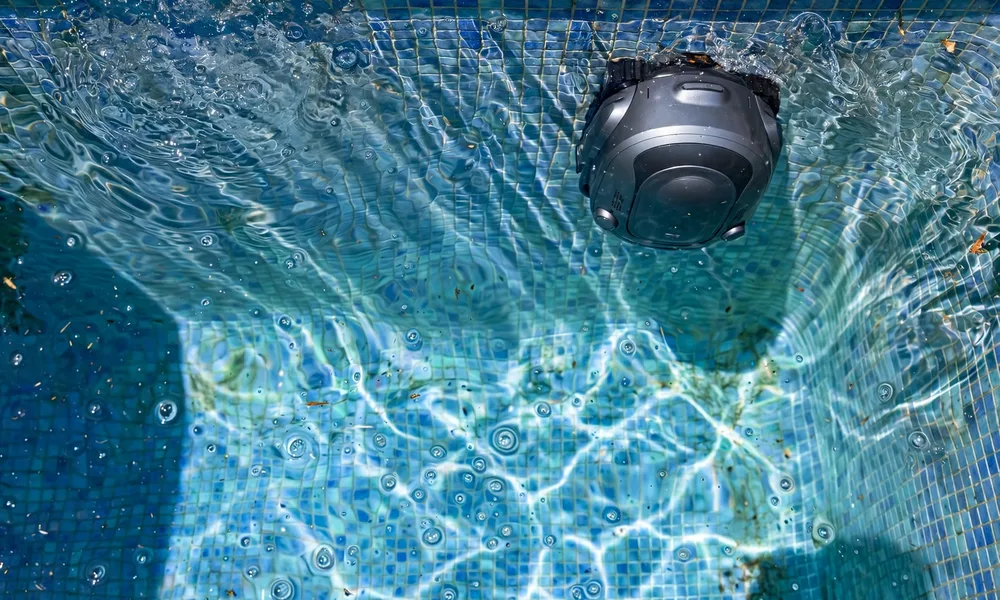
A luxury robot pool cleaner is an estimate of $2,500 to $6,000, with the top models reaching higher when they add cordless batteries, finer filtration and smarter mapping. That is many times the price of a basic suction cleaner, but it buys a machine that works alone, cleans the walls and the waterline, and keeps a pool ready every morning without a visit from a pool service.
Here is a rare fact worth knowing. Some luxury pool cleaners can sense the difference between a leaf and a grain of sand, and they slow down over the fine dirt so the suction has time to lift it, then speed up again over clean floor. The earliest robot pool cleaners, built in the late twentieth century, had no mapping at all and simply bounced around at random, sometimes cleaning the same corner five times and missing the deep end entirely. The modern machine that maps your pool, remembers its shape and scrubs the waterline on its own is the quiet result of thirty years of small, stubborn improvements, all hidden inside a box that spends its life underwater.