In a dry dock in northern Europe, a propeller the size of a small house hangs from a crane, turning slowly in the morning light. It is cast from a single pour of bronze, it weighs more than a family car, and it will spend its life underwater, unseen, pushing a luxury ship across oceans. The people who made it will never see it work, and the people who sail behind it will never see it at all.
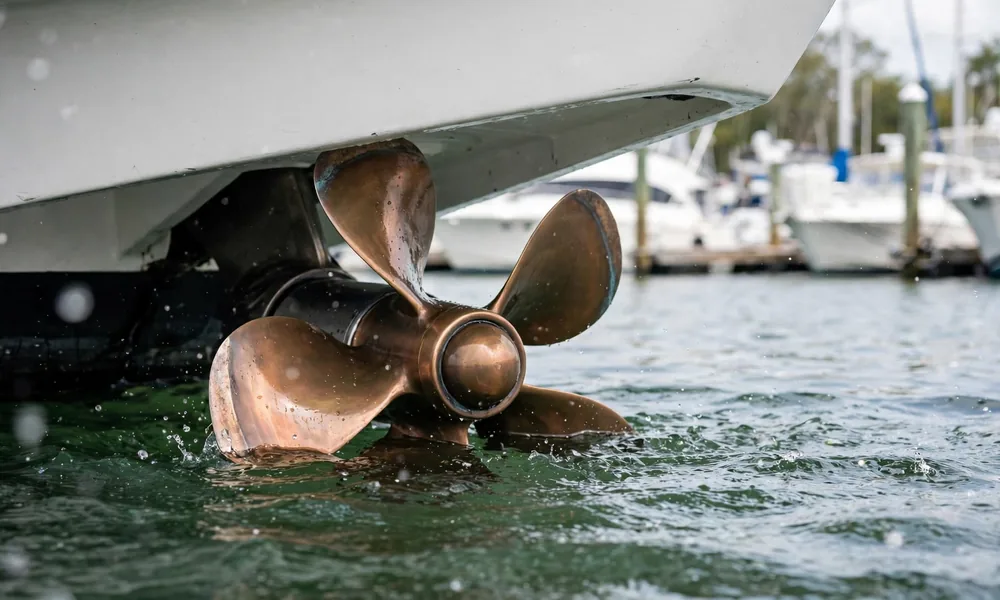
A propeller looks simple, a few curved blades on a hub, but it is one of the most demanding objects a shipyard ever makes. Every blade must be exactly the same shape, exactly the same weight, and polished to a shine, or the ship will shake, waste fuel and wear out its bearings. Making one takes weeks of foundry work, machining and hand finishing, and this is how it is done.

How It Is Made
Step 1: The pattern and the mould
Everything starts with a pattern, a full-size model of the propeller made from wood or resin, built to the exact shape the naval architect drew. The pattern is pressed into specially prepared sand inside a huge steel box, and when it is lifted out it leaves a perfect hollow in the shape of the propeller. Channels are cut into the sand for the molten metal to flow through, and the mould is dried and checked, because a single crack in the sand would ruin the casting before it even begins.
Step 2: The bronze is poured
The metal is a bronze alloy, mostly copper with aluminium and nickel, chosen because it resists seawater and stays strong for decades. It is melted in a furnace until it glows white-hot, then ladles carry it across the foundry floor and tip it into the mould in one continuous pour. The pour must not stop or hesitate, because a pause would leave a cold seam inside the metal, and the whole casting would have to be scrapped and started again.
Step 3: The casting cools and is stripped
Once the mould is full, the bronze is left to cool for days, shrinking slightly as it hardens. When it is cool enough, the sand is broken away and the rough propeller appears, dull and lumpy, with the pouring channels still attached like extra limbs. Workers cut those channels off, grind the surface back, and inspect the casting with ultrasound and dye, looking for hidden bubbles or cracks inside the metal that the eye cannot see.

Step 4: The blades are machined
The rough casting is bolted to a huge milling machine, one of the largest machine tools in the shipyard, and a computer guides the cutters across each blade. Millimetre by millimetre, the blades take on their final shape, with a precise twist from root to tip that lets them bite the water cleanly. Each blade is measured against the design with a laser scanner, and any blade that is even slightly out of shape is machined again until all of them match.
Step 5: The propeller is polished by hand
Machining leaves a good surface, but a luxury propeller needs a mirror finish, and that can only be done by hand. Polishers work over every blade with finer and finer abrasives, feeling for the smallest ripple with their palms as much as their eyes. A smooth blade slides through the water with less drag, which means less fuel burned and less noise in the cabins above, so the hours of polishing are not vanity, they are engineering.
Step 6: It is balanced and fitted
Before it leaves the yard, the propeller is mounted on a balancing machine and spun, and tiny amounts of metal are ground away until it runs perfectly true, with no wobble at all. Then it is carried to the dry dock, lifted onto the propeller shaft, and bolted in place with a tapered fit so tight that it needs hydraulic pressure to seat. The dock is flooded, the ship floats, and the bronze giant finally goes to work, exactly as it was made to.
| Specification | Typical figure |
|---|---|
| Material | Nickel-aluminium bronze, chosen for strength and seawater resistance |
| Diameter | Around 2 to 4 metres on a large luxury ship, larger on the biggest yachts |
| Weight | An estimated 2,000 to 8,000 kg, depending on the size of the ship |
| Blades | Usually five blades, sometimes four or six, each twisted from root to tip |
| Pitch | The twist of the blades is set to match the ship’s speed and engine power |
| Time to make | Several weeks from the first mould to the final polish and balance |
The real test of a propeller is not how it looks in the yard but how it behaves at sea, and the enemy is a phenomenon called cavitation. When a blade turns too fast, the pressure on its back drops so low that the water itself boils into tiny bubbles, and those bubbles collapse against the metal with enough force to pit it over time. A good propeller is designed so that cavitation stays small and harmless at cruising speed, and the polishers’ mirror finish helps, because smooth metal gives the bubbles less to grip. Owners of luxury ships care about this for a second reason too: cavitation is noisy, and noise travels through the hull into the cabins. A well-made propeller is quiet, and quiet is one of the things a luxury ship sells. Every few years, at refit, the propeller comes off, is inspected, polished again and rebalanced, and a ship that has been properly looked after will keep the same propeller for decades.
What One Costs
A single large luxury ship propeller typically costs an estimated $150,000 to $600,000, and the price is set mostly by its size, the bronze alloy and the hours of hand finishing. The casting and machining take specialist yards and enormous machines, so there are only a few places in the world that can make one. The difference from why a luxury ship propeller costs so much is worth knowing, because that article is about the price itself, while this one is about the work, and how the luxury ship engine room works explains the engines that turn it.
A Rare Fact
A rough propeller blade can cost a ship a surprising amount of fuel. Even a thin layer of roughness or marine growth on the blades makes the water drag harder, and on a large ship that can add several percent to fuel burn over a season. That is why crews polish propellers during refits and why divers sometimes clean them underwater, a job that looks simple from the surface and is anything but simple twenty metres down.
A luxury ship propeller is a strange kind of luxury: enormous, expensive and completely invisible for its whole working life. It is made by foundry workers, machinists and polishers who will never sail on the ship it pushes, and it is judged only by what the ship does not do, it does not shake, it does not waste fuel, it does not fail. For the smaller boats that share the same waters, how a luxury ship lifeboat is made shows a very different kind of marine craft, built for rescue rather than for speed.