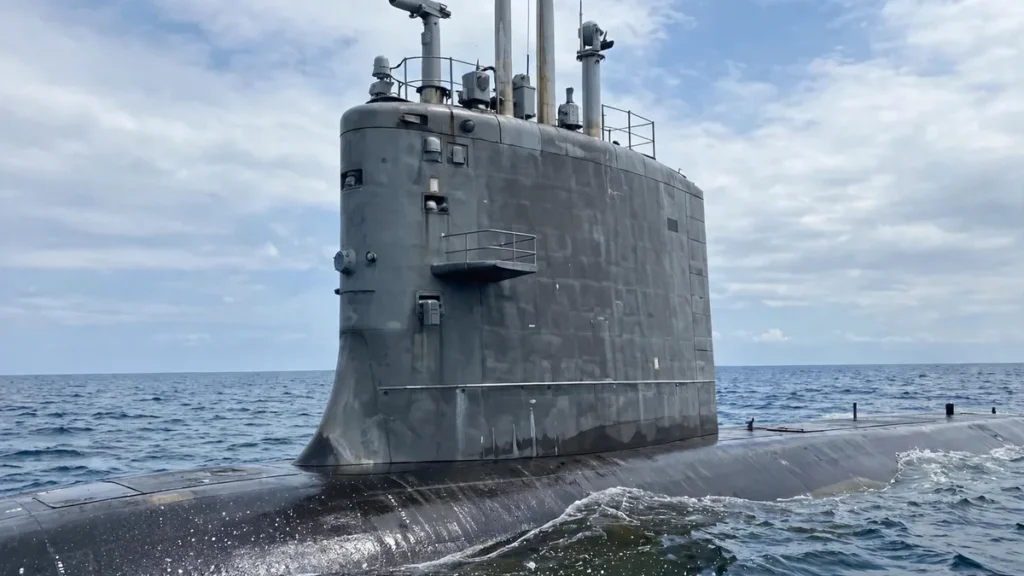
From the deck of a harbour boat, a submarine looks almost featureless: a long grey hull slipping through the water, low and quiet, with nothing above it but a single fin rising from the middle like the dorsal fin of a whale. That fin is the conning tower, and it is the one part of a submarine that still lives partly in the open air.
Inside that fin are the eyes, the ears and the lungs of the boat. It holds the periscopes, the masts, the hatch the crew climb through, and the small bridge where the captain stands when the boat is on the surface. This is how a luxury submarine conning tower is made.

How It’s Made
Step 1: Shaping the steel sail
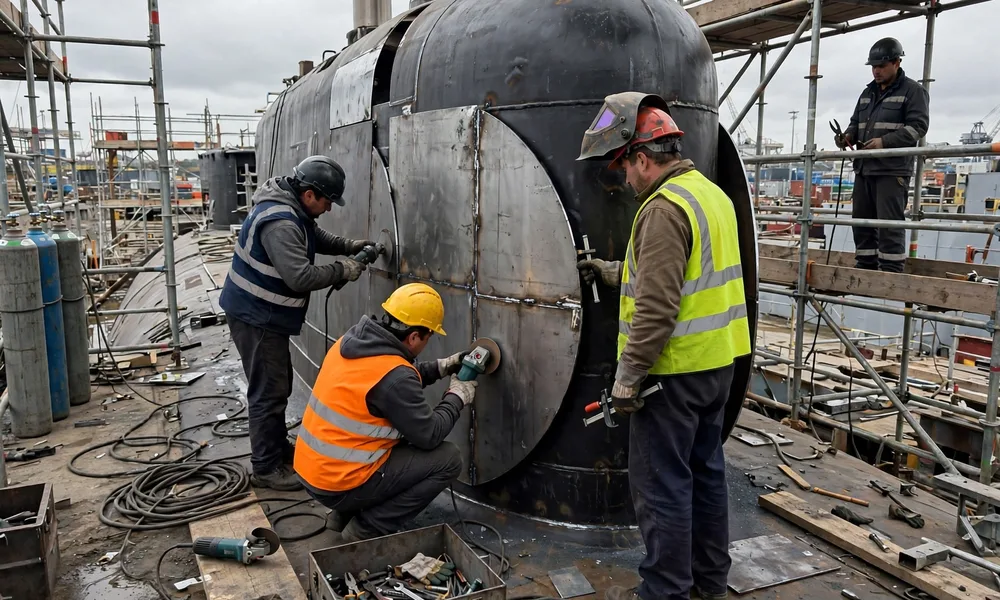
The conning tower starts as flat plates of high-strength steel, cut to shape and rolled into gentle curves. The plates are thicker than the hull plating of an ordinary ship, because the tower must survive the same crushing pressure as the hull below it, and because it takes the full force of the sea when the boat runs on the surface.
The curves are not there for looks. A smooth, rounded tower lets water flow past cleanly when the boat is submerged, and it keeps the boat quiet, because every sharp edge makes noise that can be heard.
Step 2: Building the pressure hull inside
Inside the outer sail sits a smaller pressure hull, a steel cylinder that carries the crew up from the main hull to the bridge. This inner tube is welded with the same care as the main pressure hull, and every weld is tested, because it must hold back the sea at depth just as the hull does.
The space between the inner tube and the outer sail is not wasted. It holds ballast pipes, cables, antennas and the masts when they are lowered, all of it packed tightly so that nothing rattles and nothing sticks out into the flow of water. The whole tower is built around this hidden spine, and the way a luxury submarine periscope is made shows the same care at a smaller scale, where a slender tube must stay perfectly straight and watertight.
Step 3: Cutting the hatch and the bridge
At the top of the tower, the builders cut the opening for the main hatch, the round door the crew climb through to reach the bridge. The hatch is a thick steel disc with a rubber seal and a wheel that clamps it shut, and it must close in seconds, because a submarine that cannot seal its hatch cannot dive.
Around the hatch they build the bridge, a small open platform with a low windscreen and room for two or three people to stand and look out. The bridge is fitted with a compass, a voice pipe down to the control room, and rails to hold on to in a rough sea, and everything on it is made to be used with gloves on in the dark.
Step 4: Fitting the masts and periscopes
Through the roof of the tower run the masts: the periscopes, the radar mast, the radio antennas and the snort mast that lets the engines breathe while the boat is just below the surface. Each mast slides up and down through a sealed tube, raised when it is needed and lowered flush when the boat dives deep.
The periscope is the most delicate of them all, a long optical tube with prisms and lenses that must stay perfectly aligned even as the boat rolls and pitches.
Step 5: Painting, silencing and sea trials
Once the tower is built, it is painted with a special dark coating that absorbs sound and resists the salt sea. The coating is sprayed on in thin layers and left to cure, and any bump or bubble is sanded out, because a rough surface makes noise and a noisy submarine is a submarine that can be found.
Then the boat goes to sea for trials. The tower is tested on the surface in rough weather and below it at depth, the hatch is opened and closed a hundred times, the masts are raised and lowered until they run smoothly, and the crew climb up to the bridge to see how she handles. Only when every test passes is the tower signed off, and the way a luxury submarine hatch works shows the same obsession with sealing, where a single door must hold back the whole ocean.
Step 6: The finishing and the fitting out
The last step is the fitting out, when the tower gets its handrails, its lights, its ladders and its small comforts. A ladder runs down the inside of the tower from the bridge to the control room, with a resting platform halfway down so a tired sailor can pause on the climb.
The outside is fitted with fairings that smooth the flow of water around the masts, and the inside is painted a pale colour so the crew can see what they are doing in the dim light. It is unglamorous work, but it is what turns a steel fin into a place where people can live and work.
| Spec | Detail |
|---|---|
| Structure | High-strength steel sail around an inner pressure-hull tube, curved to keep water flow smooth and quiet |
| Hatch | Thick steel disc with a rubber seal and clamping wheel, closing in seconds so the boat can dive |
| Masts | Periscopes, radar, radio antennas and snort mast, each sliding up and down through sealed tubes |
| Bridge | Small open platform with a windscreen, compass and voice pipe, built to be used with gloves in the dark |
| Coating | Dark sound-absorbing coating in thin sprayed layers, sanded smooth so the tower stays quiet underwater |
| Access | Internal ladder from the bridge down to the control room, with a resting platform halfway down |
What One Costs
A luxury submarine conning tower is an estimated 5,000,000 to 25,000,000 dollars as part of a finished submarine, depending on the size of the boat, the number of masts and how much of the tower is custom built. The steel is only part of the price; the periscopes, the seals and the sound-absorbing coating all cost far more than they look, and the testing at depth adds up too. A small tower for a private submarine sits near the bottom, while a great tower for a long-range boat, with many masts and a tall sail, costs far more.
A Rare Fact
On some submarines the conning tower is called the sail, and early boats really did carry a small sail on it, a canvas sail that could be hoisted when the engines failed so the boat could limp home on the wind. The name stuck long after the canvas was gone, and sailors still call the tower the sail today.
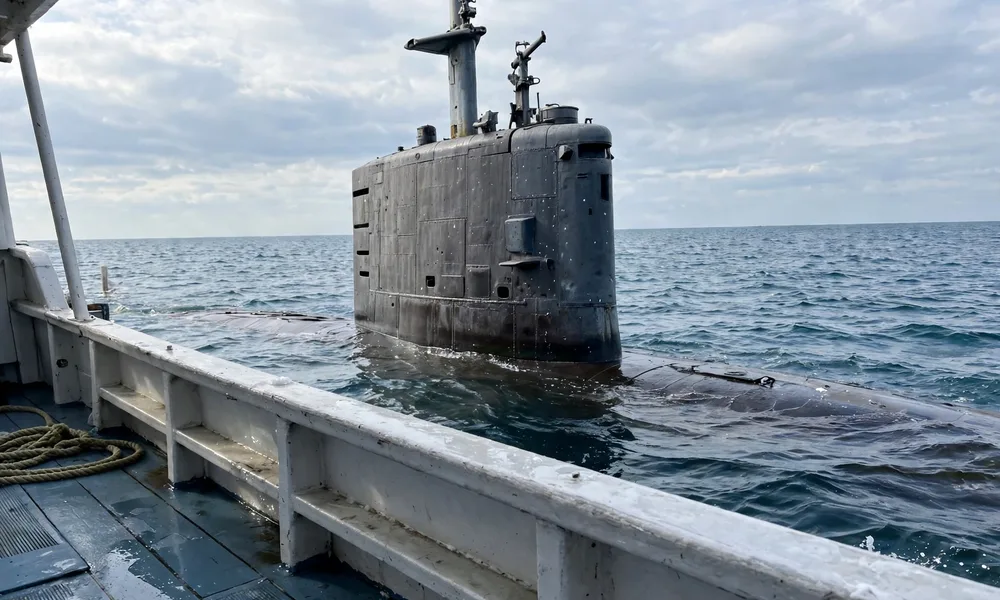
A luxury submarine conning tower is a small building balanced on top of a boat that spends most of its life underwater: steel plates and a pressure tube, a hatch and a bridge, masts that rise and fall, and a coating that keeps it quiet. It is the one part of the submarine that a sailor can stand on in the open air, and the reason a luxury submarine sonar is so expensive shows the same truth from below, where the boat listens to the sea because it cannot always look at it.