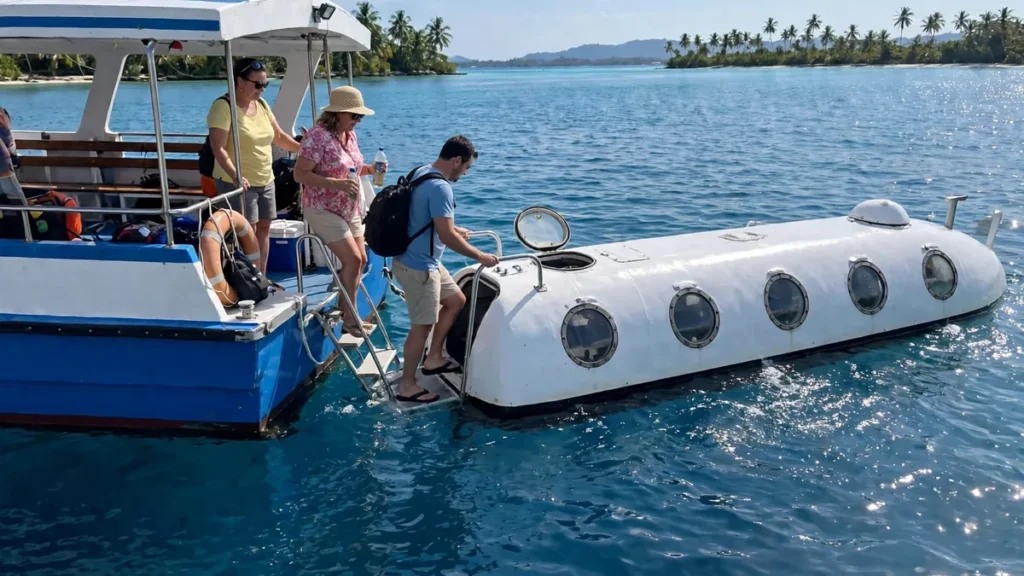
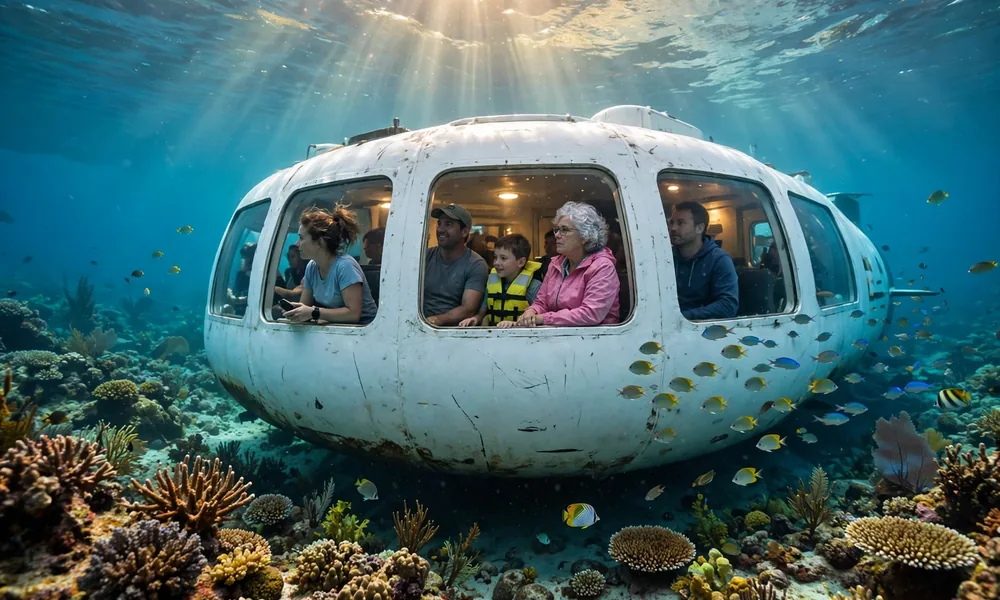
Below the surface of a clear tropical sea, a small white submarine drifts slowly over a coral reef. Inside, a dozen passengers sit in comfortable chairs, and nobody is wearing a mask or a tank. Nobody inside is wet, nobody is cold, and the reef is only an arm’s length away. It feels like magic, but it is engineering, and the submarine was built for exactly this.
A luxury tourist submarine is a small vessel that carries ordinary people, people with no diving training at all, down into the sea and brings them back up again in safety and comfort. The guide to how a luxury tourist submarine works explains what its systems do once it is underwater, and this article follows the build itself, in six steps: the pressure hull, the windows, the life-support systems, the motors and controls, the passenger cabin, and the harbour trials that prove the submarine is ready for its first guests.
Step 1: Building a hull that can take the pressure
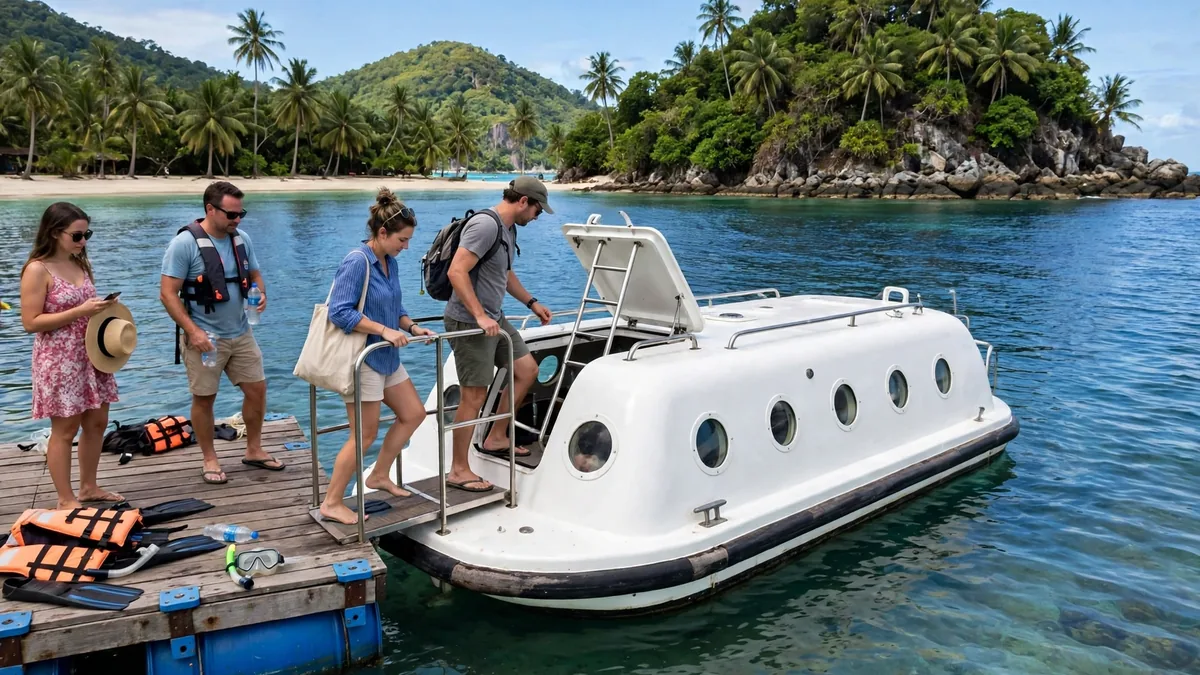
A tourist submarine begins with a pressure hull, a strong steel or titanium tube that keeps the sea out and the air in. The metal is rolled into rings and welded together by specialists, because a single weak weld at depth is a danger no builder will accept, and the whole hull is tested in a pressure chamber that squeezes it harder than the sea ever will. The hull is round or nearly round, because a round shape spreads the pressure of the water evenly, and every hatch and fitting is sealed with double gaskets, so that even if one seal fails, the second still holds.
Step 2: Making the windows that let guests see out
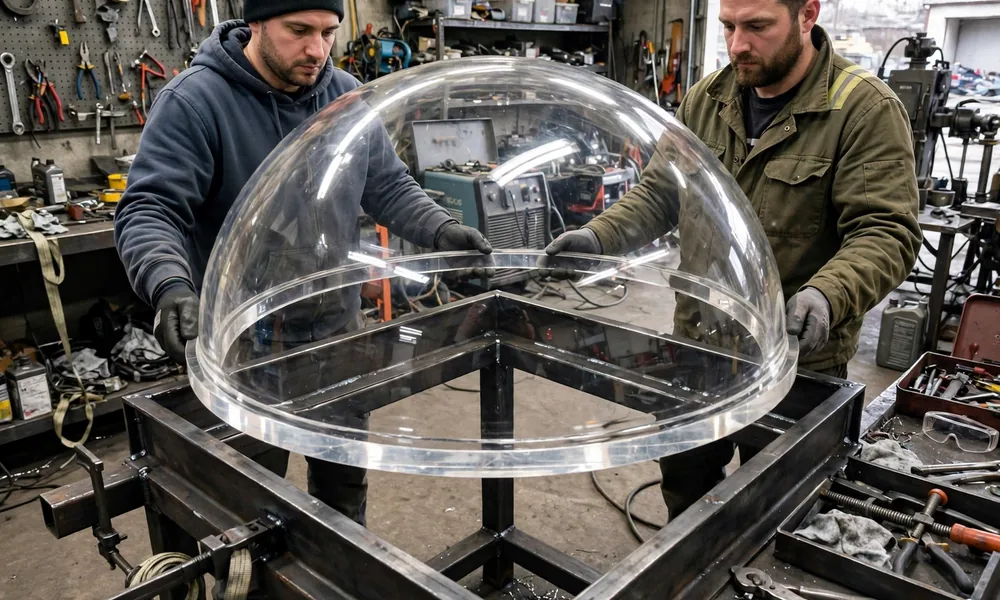
The windows are the heart of a tourist submarine, and they are the hardest parts to make. Each window is a thick disc of acrylic, many centimetres thick, polished until it is perfectly clear and then tested under pressure, because a window that clouds or cracks at depth would end the dive at once. The windows are set into steel frames that are bolted through the hull, and the gap between window and frame is sealed with a flexible compound that stays watertight as the hull flexes under pressure. The guide to how a luxury submarine is made follows a larger submarine through a similar yard, where the same care goes into a hull that must dive far deeper and stay down far longer.
Step 3: Fitting the air and life-support systems
Once the hull and windows are in, the submarine is fitted with the systems that keep its passengers breathing. Compressed air tanks feed fresh air into the cabin, while scrubbers remove the carbon dioxide that people breathe out, and oxygen is added in small, carefully measured amounts to keep the air fresh for the whole dive. Sensors watch the air constantly, and alarms sound if anything drifts out of range, while a backup supply sits ready in case the main system ever fails. Every valve and gauge is labelled in plain language, so that the crew can find what they need quickly, even in the dark.
Step 4: Adding motors, batteries and controls
A tourist submarine moves on quiet electric motors, powered by batteries, because a diesel engine underwater would need air that the submarine cannot spare. The motors drive small propellers at the back, and the submarine steers with rudders and with small thrusters that can push it sideways, so it can hover over a reef without drifting onto it. The pilot sits at the front with a simple set of controls, a joystick and a few screens showing depth, speed and battery level, and the whole submarine is designed to rise gently to the surface on its own if the power ever fails, because a tourist submarine must be safe even when things go wrong.
Step 5: Fitting the passenger cabin
The cabin of a tourist submarine is built to feel like a small cinema that happens to be underwater. Comfortable chairs face the windows, each with a good view, and the floor is carpeted so that footsteps are quiet, while the walls are lined with pale panels that make the small space feel bright. The hatch is wide and easy to climb through, because guests include children and older people, and the whole cabin is kept spotlessly clean, because a smudge on a window or a stain on a seat would spoil the view that everyone came to see.
Step 6: Harbour trials, before the first real dive
Before it carries its first passengers, the submarine spends weeks in harbour trials. The crew takes it down a few metres at a time, checking every seal, every window and every gauge, and then to its full diving depth, where the hull is watched for any sign of strain. Only when every test has passed, and the local maritime authority has signed the papers, is the submarine washed, polished and opened to the public, ready for its first crowd of wide-eyed passengers. The guide to how a luxury submarine works shows how a deeper-diving submarine handles the same problems at a far greater depth, where the pressures are many times higher.
The luxury tourist submarine at a glance
| Part | Typical luxury figure | What it tells you |
|---|---|---|
| Hull | Steel or titanium pressure hull, round section | How safely it holds back the pressure of the sea |
| Windows | Thick acrylic discs, pressure-tested | How clearly passengers see the reef |
| Diving depth | Around 30 to 50 metres below the surface | How deep the reef dives go |
| Passengers | Around 12 to 24 guests, plus pilot and guide | How many people dive at once |
| Power | Electric motors, rechargeable batteries | How quietly it moves over the reef |
| Dive time | Around 45 minutes to an hour underwater | How long guests spend below the surface |
| Build time | Around 12 to 18 months in the yard | How much hand work goes into each submarine |
What it costs
A luxury tourist submarine typically costs an estimated $2 million to $5 million, depending on its size, the number of passengers it carries and the thickness of its windows, and the estimate covers the submarine alone, not the shore base, the crew or the running costs, which are high because the vessel must be inspected and recharged after every day of diving.
A rare fact
One detail few passengers ever learn is that the air inside a tourist submarine is often fresher than the air on the deck of the boat that brought them there, because the scrubbers and filters clean it constantly, and the temperature is held steady no matter how hot the tropical sun is above.
Follow the six steps in order, hull first, then windows, air, motors, cabin and trials, and a luxury tourist submarine stops looking like a small boat that sinks on purpose and starts looking like what it is: a quiet, comfortable room that takes people who will never dive down to meet the reef face to face, dry, cool and safe, while the sea goes about its business just outside the glass.