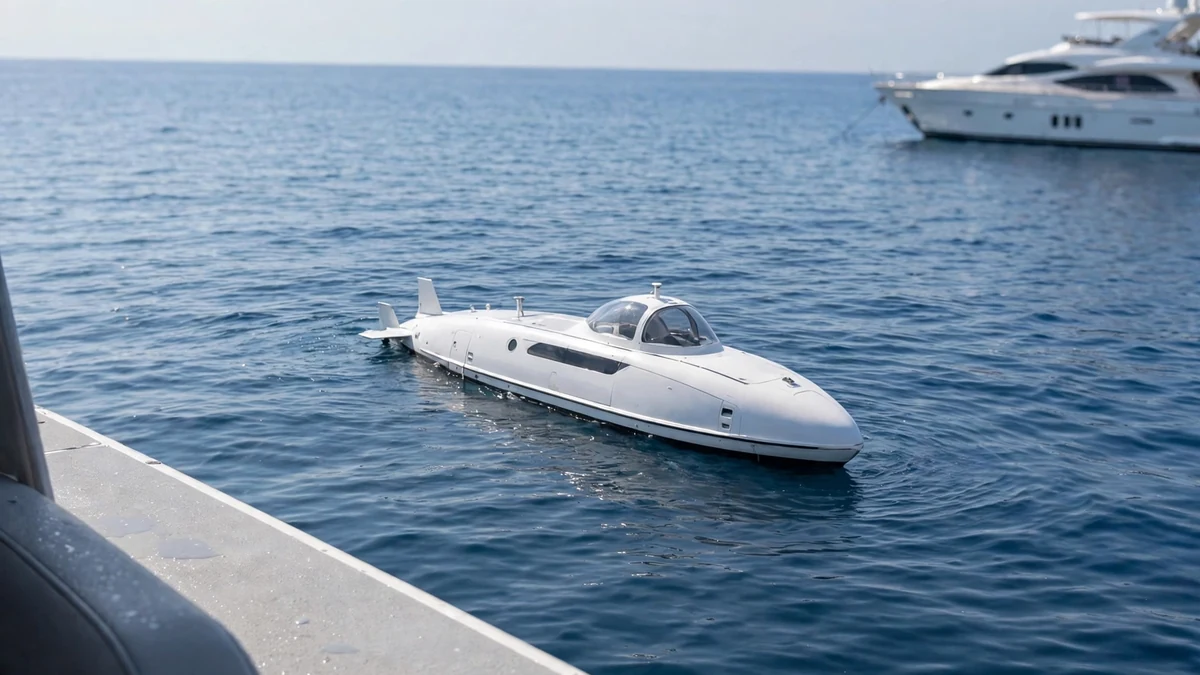
From the surface, the sea looks empty. Then a dark shape breaks the water, slow and silent, and a vessel longer than a city block rises into the light. There are no sails, no smokestack, no sign of the world inside it. A luxury submarine is a private world that happens to travel underwater, and it is one of the strangest machines ever built for pleasure.
It must do what no yacht can: sink on purpose, stay down for hours, and come back up safely, all while its guests eat dinner in a warm, dry cabin. That takes a careful balance of steel, air and power. This is how a luxury submarine works, at a general level, from diving to surfacing.
Step 1: The pressure hull keeps the sea out
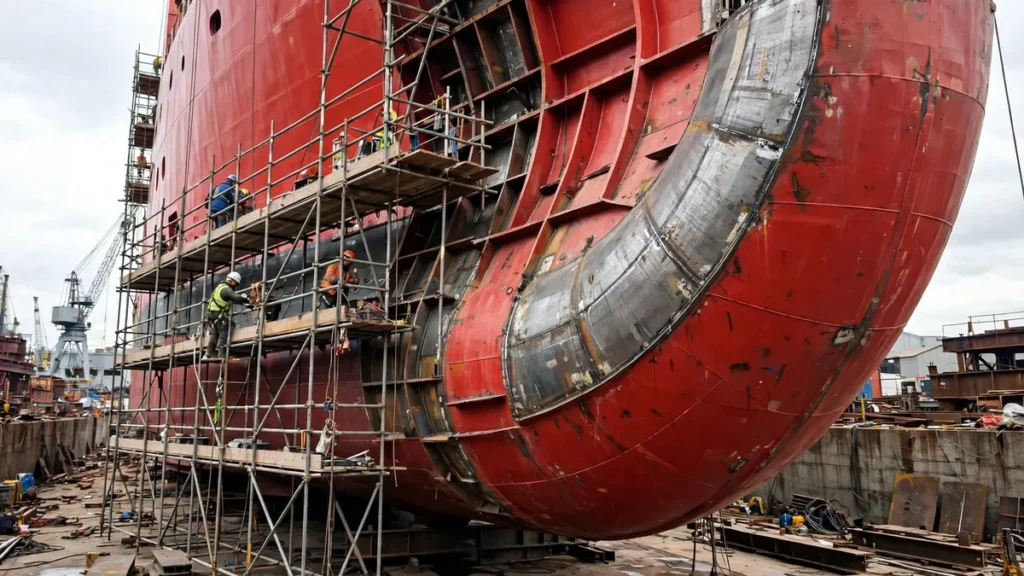
At the centre of a submarine is the pressure hull, a strong steel cylinder that holds the people and the air. It is built round because a round shape spreads the pressure of the water evenly, and it is made from thick steel plate, welded and tested until it can hold back the weight of the sea at the submarine’s full diving depth.
Everything the crew and guests need sits inside this hull: the control room, the cabins, the galley and the viewing areas. Hatches seal it tight, and windows, where they exist, are made from thick acrylic, many centimetres deep, set into the steel. The hull is the one part of the boat that must never fail, and it is inspected and pressure-tested long before the submarine ever goes to sea.
Step 2: Ballast tanks make it sink and rise
A submarine dives by changing its weight, not by pushing itself down. Between the pressure hull and the outer hull sit ballast tanks, and on the surface those tanks are full of air, so the boat floats like any other vessel. To dive, valves open and seawater floods in, pushing the air out through vents, until the boat is exactly as heavy as the water it displaces.
At that point it hangs in the water, neither sinking nor rising, and small trim tanks at each end fine-tune the balance. To surface, compressed air is blown into the ballast tanks, forcing the water out, and the boat becomes light again and rises. The deep-sea research vessels that dive far deeper use the same idea, as the guide to how a deep-sea submersible works explains, and the luxury submarine follows the same gentle physics.
Step 3: Electric propulsion moves it in silence
Underwater, a luxury submarine runs on electricity. Large battery banks, charged from the surface or from a support yacht, drive an electric motor that turns a propeller at the stern. There is no engine noise and no exhaust, which is why a submarine can glide past marine life without disturbing it, and why its guests hear little more than a soft hum.
The propeller is often shrouded in a ring that makes it quieter and protects it from damage, and the motor can run forwards or in reverse for fine control. Different ways of driving a boat underwater are compared in the guide to the best submarine propulsion systems compared, and the luxury boats favour the quietest electric option, trading top speed for silence.
Step 4: Sonar and cameras see what eyes cannot
Underwater, light fades quickly and the crew cannot simply look out of the window. Sonar does the seeing instead: it sends out sound pulses and listens for their echoes, building a picture of the seabed, the distance to the surface, and anything nearby. Cameras and lights help at close range, especially when the submarine is near a reef or a wreck.
The control room brings all of this together on screens, showing depth, speed, heading and the shape of the water around the boat. The crew steers with planes, small wings near the bow and stern, that tilt the boat up or down like an aircraft, and a rudder that turns it. Unmanned boats use the same sensing and steering ideas without anyone aboard, as the guide to how an autonomous submarine is made shows, and the crewed luxury boat adds human judgement on top.
Step 5: Air, power and comfort inside
Inside the pressure hull, life support keeps the air fresh. Oxygen is carried in tanks or made from stored supplies, carbon dioxide is removed by scrubbers, and the air is circulated and cooled so the cabins stay comfortable.
Guests sit in a viewing lounge with large acrylic windows, watching fish and reefs drift past, while the crew works in the control room nearby. Lighting is soft, the cabins are small but finished to yacht standard, and every system has a backup, because there is no stepping outside for fresh air when something goes wrong. Comfort and safety are designed together, never one without the other.

Step 6: Surfacing, testing and going home
When a dive ends, the submarine blows its ballast tanks and rises slowly, watched by the support crew on the surface. It breaks the water gently, vents its tanks, and is recovered by crane or towed back to its yacht or base. Every dive is logged, and the hull, seals and batteries are checked before the next one.
Testing never stops. Pressure hulls are inspected on a strict schedule, ballast valves are exercised and tested, and the crew trains for emergencies again and again.
Specifications at a glance
| Feature | Typical luxury figure |
|---|---|
| Length | About 6 to 12 metres for a private boat |
| Pressure hull | Steel cylinder with thick acrylic windows |
| Propulsion | Electric motor with battery banks |
| Diving depth | About 100 to 300 metres for a luxury boat |
| Time underwater | About 6 to 12 hours per dive |
| Guests | About 2 to 8, plus crew |
| Top speed underwater | About 3 to 6 knots |
What it costs
A private luxury submarine typically costs between about $2 million and $10 million, and these are estimates, not fixed prices. The price rises with size, diving depth and the finish of the interior, and many owners buy a submarine as part of a yacht package, with a support vessel and a trained crew. Running costs are large too: maintenance, inspections, insurance and crew can cost a great deal each year, and buyers pay for an experience no yacht on the surface can offer.
A rare fact
A submarine can hover underwater without moving at all, hanging perfectly still in the water while fish swim past its windows. It does this by balancing its ballast so precisely that it weighs exactly the same as the water around it, and then trimming itself with tiny adjustments. It is the underwater version of floating, and it is the moment guests remember most: the boat stops, the hum fades, and the sea carries on around them in silence.
From ballast tanks to viewing windows, a luxury submarine works by turning the sea’s own rules to its advantage. Water lets it sink, air lets it rise, and electricity lets it move without a sound, all inside a steel hull that keeps its guests warm, dry and amazed.