Drop the anchor on a calm evening and a yacht settles as if rooted. Nothing visible holds it: no ropes to the shore, no engines running, just a length of steel chain disappearing into the water. Yet the boat stays put through the night, through a change of wind and the turn of the tide. The chain does the work, quietly and without fuss.
A luxury yacht anchor chain is the heavy steel chain linking the anchor on the seabed to the yacht above, holding the boat in place by its weight and its curve. It works with the anchor and the windlass as one system: the chain is paid out, the anchor digs in, and the curve of the chain absorbs every pull of wind and wave. This is how that system works, from the windlass to the seabed.
How It Works
Step 1: The windlass lets the chain go
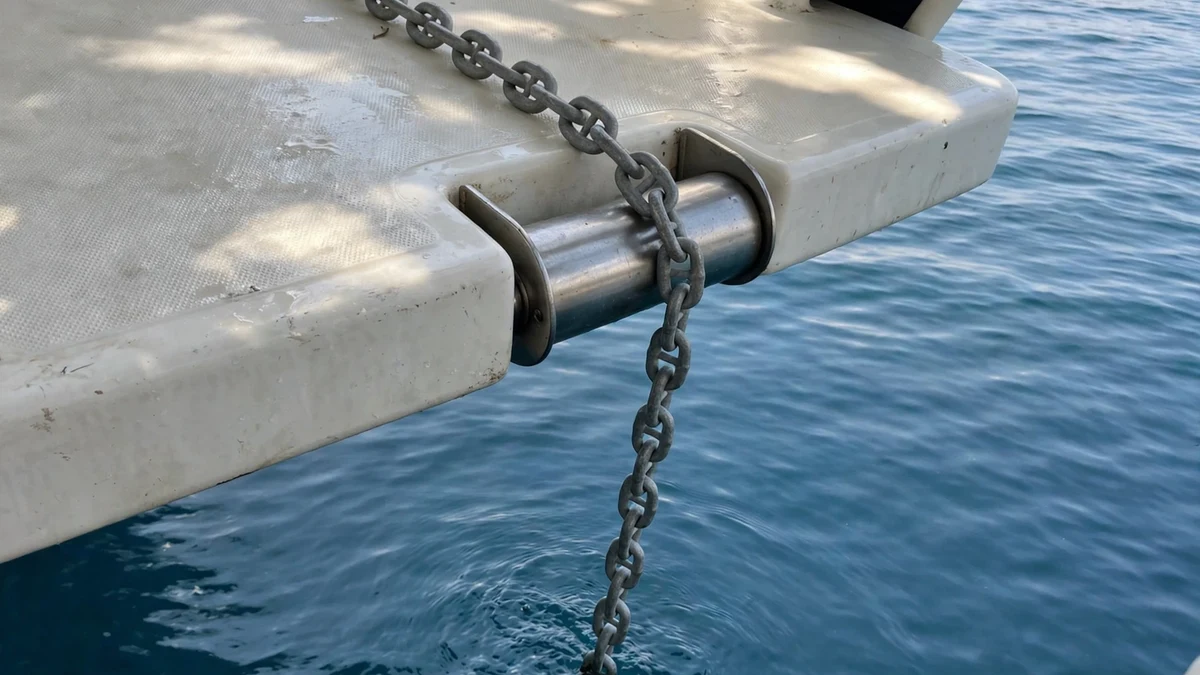
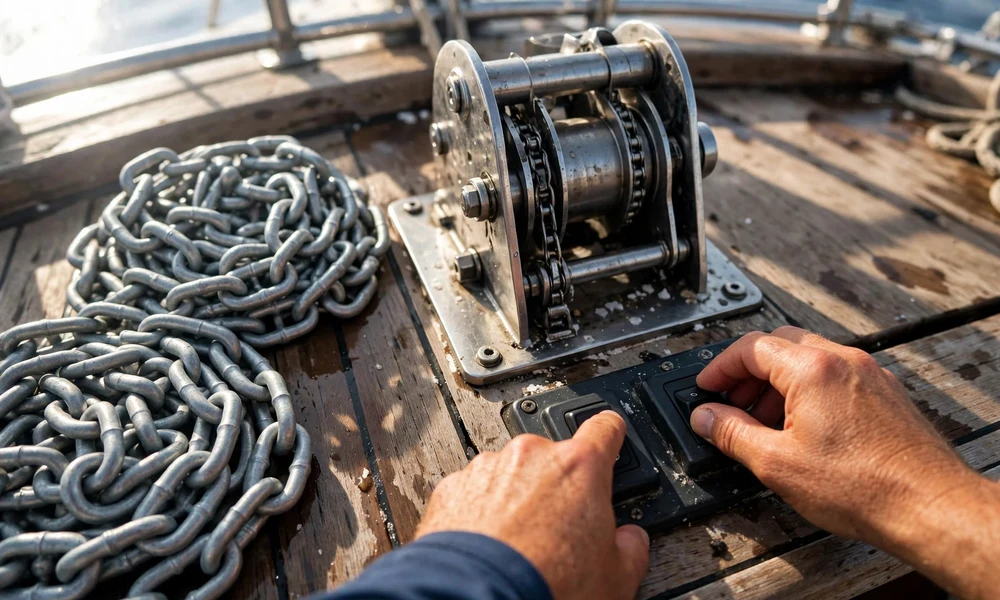
Anchoring starts at the windlass, the winch on the foredeck that holds the chain. The crew release the brake and the chain runs out through the bow roller, link by link, pulling the anchor with it. The crew watch the marks painted on the links to know how much is out. The crew pay the chain out slowly, so it lands in a neat pile on the seabed instead of tangling around the anchor. The anchor windlass is built for this job, strong enough to hold the whole weight of the chain and the anchor while the boat is under way.
Step 2: The anchor digs in and sets
Once the anchor touches the bottom, the boat drifts back and the chain pulls tight. The anchor tips over, its flukes bite into the sand or mud, and it digs itself deeper with every pull. The crew feel the moment it sets: the chain goes from slack to firm, and the boat stops drifting. They test the set by putting the engine gently into reverse, pulling against the anchor. A well-set anchor can hold many times its own weight, because the seabed grips the flukes harder the more the chain pulls. If it drags instead, the crew haul it up and try again in a better spot.
Step 3: The chain hangs in a curve
With the anchor set, the chain does its cleverest work. It does not run straight from bow to anchor: it hangs in a deep curve called a catenary, most of its length lying along the seabed. When a gust pushes the yacht, the curve straightens a little, lifting links off the bottom. Each link lifted takes energy, and that steadies the boat: the chain acts like a spring, soaking up the gusts instead of passing them to the anchor. This is why chain holds better than rope. Rope stretches but has little weight, while chain is heavy, and its weight keeps the pull on the anchor low and level, exactly the direction the anchor holds best.
Step 4: Scope, the ratio that matters
The crew choose how much chain to pay out by a rule called scope: the ratio of chain length to water depth. In calm weather, five times the depth is common; in a blow, seven times or more. More chain means a flatter pull on the anchor and more weight on the seabed, both of which help it hold. Too little chain and the pull comes from above, lifting the anchor out of the bottom. The yacht anchor chain is made to be measured this way, with coloured marks every ten metres so the crew can count the scope at a glance. In a crowded anchorage the crew also think about swinging room, because a yacht on a long chain wanders in a wide circle as the wind shifts.
Step 5: Riding out wind and tide
Through the night, the yacht rides on its chain. The wind rises and falls, the tide turns, and the boat swings slowly around the anchor, the chain dragging gently across the bottom. The crew keep an anchor watch, looking at fixed marks on the shore to make sure the boat has not moved, and listening for the rumble of the chain that says the wind is rising. If the wind freshens, they may pay out more chain, lengthening the catenary and easing the load on the anchor. The chain needs no power and no attention through the night: it simply hangs there, heavy and patient, while the crew sleep.
Step 6: Weighing anchor and coming home
Leaving is the reverse of arriving. The crew start the engine, motor slowly forward over the anchor, and the windlass hauls the chain in, link by link, washing the mud off. As the chain shortens, the pull on the anchor turns upwards and the flukes break free of the seabed. The anchor rises, dripping, and the crew guide it into its roller and secure it for the passage. The best yacht anchor chains are ranked for how they hold and how they handle, and a chain that comes up cleanly, without kinks or jams, is worth its price on a morning like this. The locker is checked, the windlass is secured, and the yacht is under way again.
A yacht anchor chain is the least glamorous part of the boat and one of the most important. It has no engine, no screen and no moving parts beyond its own links, yet it holds a yacht worth millions through the night. The secret is not the strength of the steel, though that matters. It is the weight of the chain, the curve it hangs in and the anchor it serves, working together so quietly the crew can forget they are there.
Yacht Anchor Chain Specifications
| Feature | Typical Detail |
|---|---|
| Chain size | 8 to 13 mm links, by yacht size |
| Length aboard | 50 to 100 m, marked every 10 m |
| Steel grade | High-tensile galvanised steel |
| Scope, calm | About 5 times the water depth |
| Scope, heavy weather | About 7 times the water depth or more |
| Windlass | Electric, with manual backup |
| Chain locker | Self-stowing, drained, below the foredeck |
How Much Does a Yacht Anchor Chain Cost?
Prices are estimates and vary with the length, the link size and the steel grade. A full anchor chain for a luxury yacht typically costs an estimated $3,000 to $15,000, with the longest and heaviest chains at the top of that range. The chain itself is the largest cost, but the windlass, the bow roller and the fitting add to the bill. A chain lasts many years if it is washed and re-galvanised when the coating wears thin, so owners buy the best they can afford. It is a quiet expense, but it keeps the yacht where the crew left it.
A Rare Fact About Yacht Anchor Chains
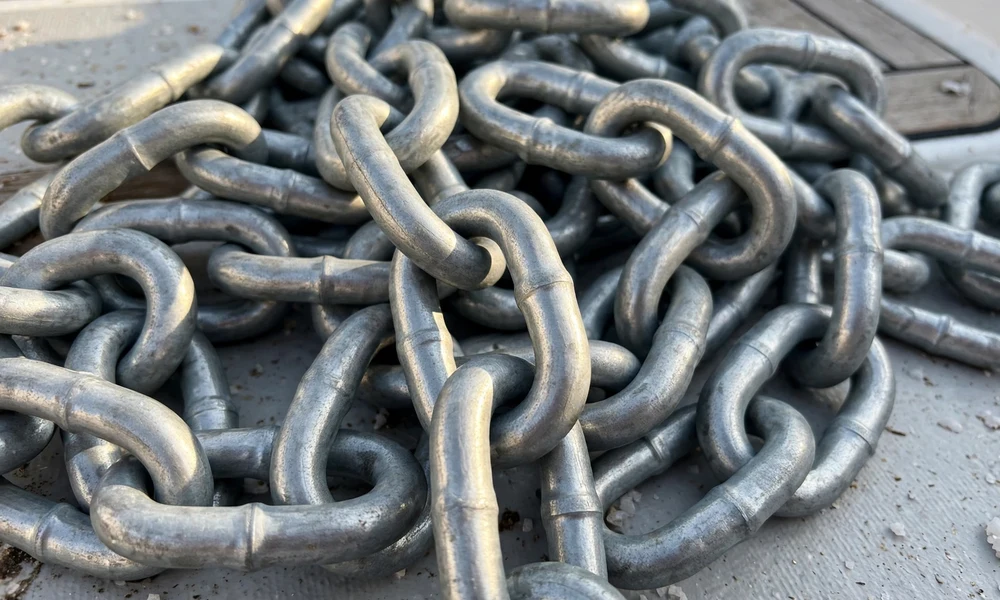
Here is a detail most people never hear: in very deep anchorages, a yacht can hang entirely from the weight of its own chain, the anchor barely doing any work at all. When the water is deep and the chain is long, the sheer weight of steel hanging in the catenary holds the boat against a moderate wind, and the anchor simply stops the chain sliding along the bottom. Old sailors called this riding to the chain, and they trusted it where the bottom was too rocky for an anchor to bite. It is a reminder that the chain is not just a rope made of steel: it is an anchor in its own right, and on a deep, calm night it does most of the holding all by itself.


