There is a quiet moment at the end of every day at anchor when the captain presses a button on the foredeck and the whole yacht seems to wake up. A chain rattles, water pours off the links, and an anchor the size of a suitcase rises out of the sea and swings home into the bow. Nobody on board lifts a thing, and that is the point: the winch does the lifting.
A luxury yacht anchor winch works by hauling tonnes of chain through a grooved wheel, letting one person raise an anchor that weighs more than a car. Here is how it all works, from the motor to the chain locker.
How It Works
Step 1: The motor turns the gypsy wheel
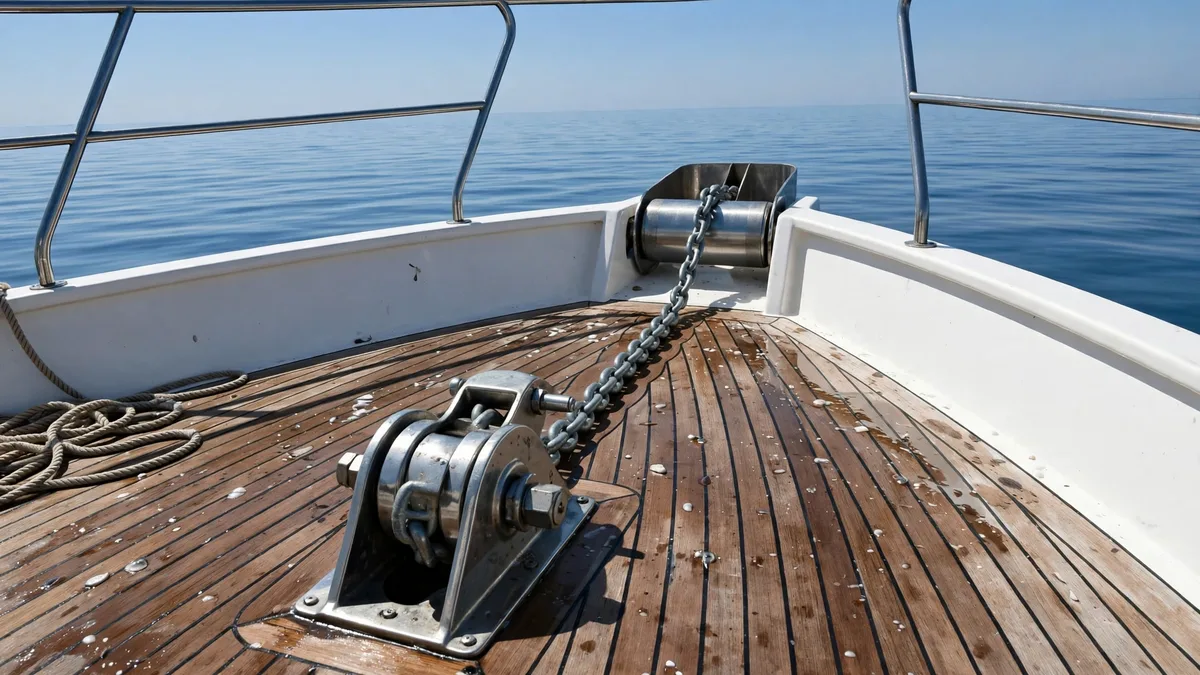
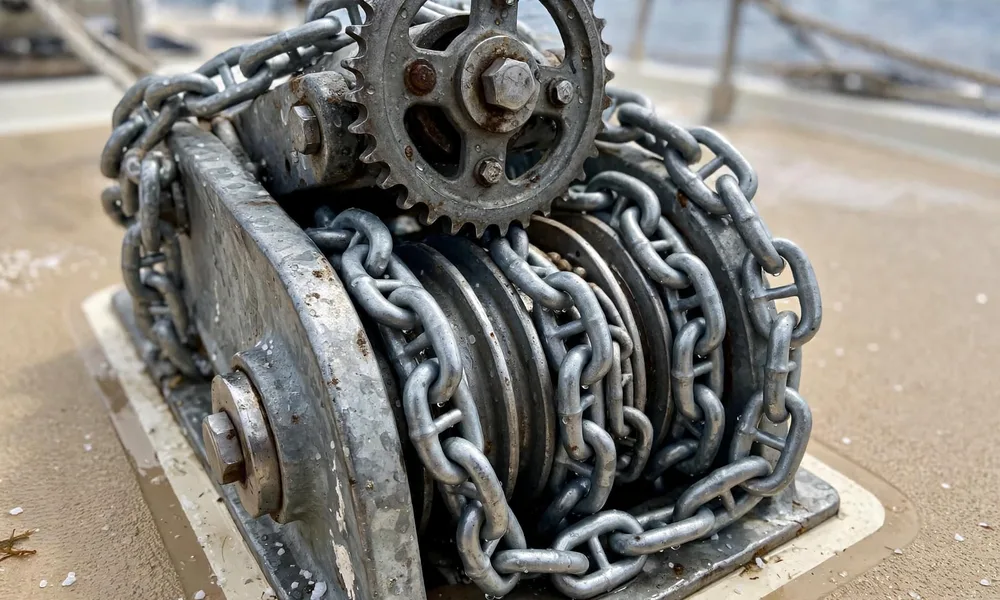
At the heart of the winch is the gypsy, a grooved wheel shaped to grip the links of the anchor chain, and it is turned by a powerful electric or hydraulic motor mounted below the deck. When the captain presses the button, the motor turns the gypsy, and the grooves catch each link in turn, pulling the chain in link by link with a force no crew could match by hand. The motor is geared down heavily, trading speed for strength, so the winch pulls slowly but with enormous force. The whole unit is sealed against seawater, because it lives on the most exposed part of the boat.
Step 2: The chain is gripped link by link
The gypsy grips the chain because its grooves are cut to match the exact size and shape of the links, and the chain is made to the same standard, so each link seats cleanly in turn. As the wheel turns, the links are lifted out of the water, pulled over the bow roller, and fed down through a hole in the deck into the chain locker below. A stripper arm knocks any link that sticks out of the groove, and the chain runs smoothly as long as it is the right size for the wheel. If the wrong chain is fitted, the winch will jam, which is why the chain and the gypsy are always matched as a pair.
Step 3: The anchor breaks free from the seabed
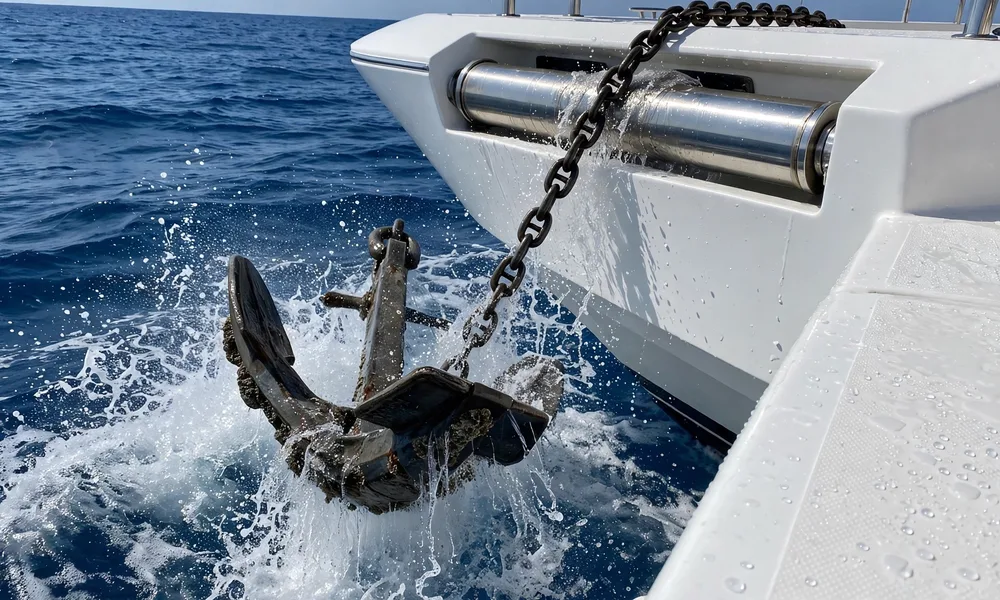
Raising the anchor is the hardest part of the winch’s job, because the anchor is buried in the seabed and the chain is hanging in a curve through the water. The winch first pulls the yacht forward until the chain is straight up and down, then keeps pulling until the anchor breaks out of the mud or sand with a shudder the whole boat can feel. The winch is not meant to drag the yacht to the anchor; the engines do that, and the winch only takes up the slack. Once the anchor is free, the winch hauls it up steadily until it reaches the bow roller and seats home. A wash-down hose on the foredeck sprays the chain as it comes in, so mud from the seabed is washed off before it reaches the locker, and the crew watch the chain markings to know when the anchor is nearly home.
Step 4: The chain is stowed in the locker below
As the chain comes in, it falls through the deck into the chain locker, a deep compartment in the bow where the chain piles up in a cone. The locker is shaped so the chain falls freely and does not tangle, and a drain at the bottom lets the seawater that comes up with the chain run out again. The weight of the chain in the locker matters: it sits low in the bow and helps the yacht ride level, and the crew keep the locker clean and the chain washed, because mud and salt left in the locker will corrode the links. A yacht of this size carries fifty metres of chain or more, weighing several hundred kilos. The locker is ventilated so the chain dries between uses, and the bitter end of the chain is tied off inside the locker so it can be cut free in an emergency if the anchor ever has to be abandoned.
Step 5: The brake holds the anchor when not in use
When the anchor is home and the yacht is underway, the winch is not doing the holding: a brake does that. The brake is a band or disc that clamps the gypsy so it cannot turn, taking the weight of the anchor and chain off the motor and the gearbox. A chain stopper, a strong fitting on the deck, takes the load as well, so the anchor cannot drop if the brake slips. The captain checks both before leaving harbour, because an anchor dropping at speed would be dangerous and expensive. The winch is a lifting machine; the brake is what makes it safe to leave alone.
Step 6: The winch also lowers the anchor under control
The winch works in reverse too, and lowering the anchor is just as carefully controlled. The captain releases the brake and lets the gypsy turn, paying the chain out at a steady speed while the anchor sinks to the seabed. The winch can be run in reverse under power, or the chain can be allowed to run free with the brake controlling the speed, and the crew watch the markings on the chain to know how much is out. Too little chain and the anchor will drag; too much and the yacht will swing in a wide circle. Once the right length is out, the brake is set, the chain stopper is engaged, and the yacht is at anchor for the night. The crew then check that the yacht is holding by watching a fixed point ashore, and if the boat drifts they know the anchor has dragged and must be set again.
Luxury Yacht Anchor Winch Specifications
The figures below describe a typical anchor winch on a luxury yacht of about 60 feet. Smaller and larger yachts differ, but the way the winch works is the same.
| Specification | Typical value |
|---|---|
| Pull capacity | About 1,000 to 2,000 kg |
| Chain size | About 10 to 13 mm |
| Chain length | About 50 to 75 metres |
| Motor | Electric, about 1,500 to 2,500 W |
| Hauling speed | About 10 to 15 metres per minute |
| Anchor weight | About 30 to 50 kg |
What It Costs
A yacht anchor winch of this size costs an estimated $5,000 to $25,000, depending on the pull capacity, the motor, and whether it is electric or hydraulic. Those are estimates, not quotes, and they reflect the geared motor and the matched gypsy rather than the deck fitting alone. The anchor it hauls is built to hold the whole yacht, as how a luxury yacht anchor is made explains.
A Rare Fact
Here is a detail most people never guess. Sailors still measure anchor chain in shots, with one shot equal to 90 feet, and the links are marked with paint or coloured ties so the crew can count the shots as the chain runs out. The first shot is marked one way, the second another, and an experienced crew member can tell at a glance how much chain is in the water just by watching the marks go by. The hull the winch is bolted to is a feat of its own, as how a luxury carbon-fibre yacht hull works shows, and the finished boat handles that weight with ease, as how a luxury flybridge yacht works explains.