Dinner is served at eight, the yacht is anchored off a quiet island, and twenty guests are waiting in the dining room. Downstairs, in a kitchen no bigger than a small flat, a chef is plating the third course, the steward is loading glasses, and nobody is bumping into anybody else. That is the luxury yacht galley doing its job.
A luxury yacht galley is a professional kitchen squeezed into a moving ship, and it has to cook restaurant food while the boat rolls, the power is limited and the nearest shop is hours away. It works because everything is planned: the layout, the storage, the cooking, the cleaning and the way the food travels from the galley to the table.

How It Works
Step 1: Laying out a kitchen that fits the boat
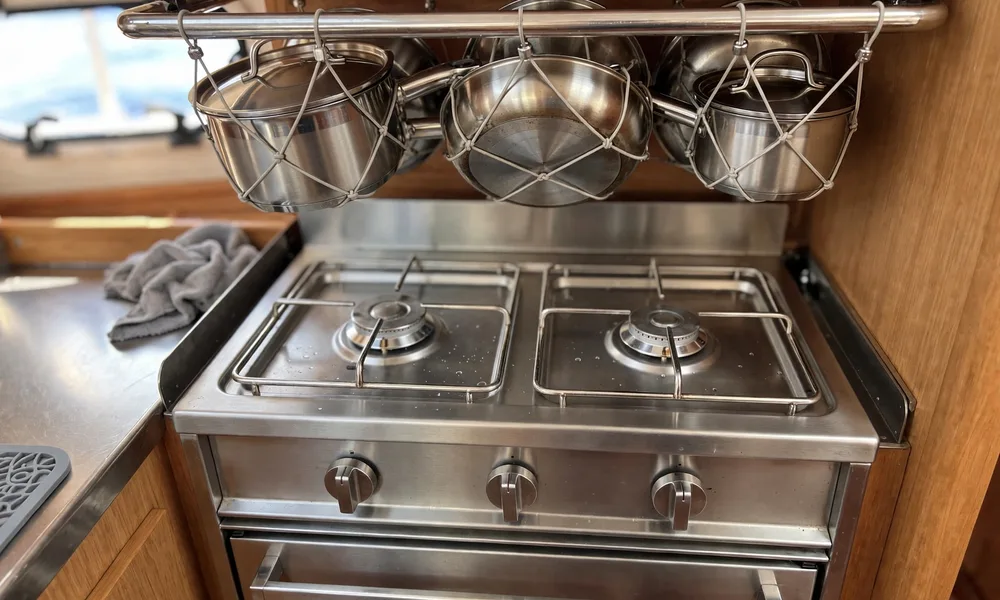
A yacht galley is laid out so the chef can reach everything without walking far. The hob, the sink and the fridge form a tight triangle, the counters are at a height that works while the boat moves, and every surface has a raised edge or a rail so pots and plates do not slide off in a swell. The floor is non-slip, the cupboards latch shut, and the whole room is built to be hosed down at the end of the day.
The galley is usually tucked below deck, close to the dining room but out of sight, with a dumb waiter or a short stairway for carrying food up. The same care with a working space planned around its crew appears elsewhere on a ship, and the way a luxury ship engine room is specified shows how a busy technical room is laid out for the people who work in it.
Step 2: Cooking on induction and steam
Most luxury yacht galleys cook with induction hobs, because they are fast, they stay cool to the touch, and they do not fill the small room with heat or flame. A pan heats in seconds, the hob switches off the moment the pan is lifted, and the chef can hold a sauce at a steady simmer without it catching. Steam ovens are common too, because they cook fish and vegetables gently and can warm plates and bread at the same time.
The induction hobs are wired to the yacht’s generators, and the chef learns to manage the power, staggering the ovens and the hobs so nothing trips the breakers in the middle of dinner.
Step 3: Keeping food cold and fresh at sea
Keeping food fresh is the hardest part of cooking at sea. The galley has several fridges and freezers, each set to a different temperature: one for meat, one for fish, one for vegetables and dairy, and a deep freezer for the long passages between ports. The fridges are built to keep working when the yacht heels, with latches on the doors and shelves that hold the food in place.
Provisioning is planned before the yacht leaves port, with fresh food for the first days and frozen and preserved food for later. The chef checks the stores every morning, plans the menu around what will spoil first, and wastes almost nothing.
Step 4: Moving food to the guests
Getting hot food from the galley to the dining room is a race against time, especially when the dining room is a deck above. The plates are warmed so the food does not cool on the way, the dishes are covered, and the steward carries them up in a set order, so the first guest and the last guest are served within minutes of each other. On larger yachts a dumb waiter carries the plates, and the steward only has to load and unload it.
The timing is planned with the captain, because a meal served while the yacht is turning into a swell will arrive shaken. The chef watches the sea as much as the clock, and the courses are timed to the calmest part of the anchorage. It is a small detail, but it is the difference between a plate that arrives perfect and one that arrives sliding.
Step 5: Washing up and keeping the galley clean
After the meal, the galley must be cleaned fast, because the next meal is only hours away. A compact commercial dishwasher handles the plates, while pots are washed by hand in a deep sink with a spray hose. Every surface is wiped down, the floor is mopped, and the bins are emptied into sealed containers, because food waste cannot be thrown overboard near the coast.
Water is precious on a yacht, so the galley is built to use as little as possible. The same discipline of running a tight, clean operation in a small space appears in other parts of a ship, and the way a luxury ship keel works shows how a vessel’s hidden systems keep it steady and safe.
Step 6: Running the galley on a long voyage
On a long voyage, the galley becomes the heart of the yacht. The chef bakes bread every morning, because fresh bread makes a small cabin feel like home, and the menu changes with what is left in the stores. The crew eats from the same galley, at a different time, and the chef plans their meals too, because a tired crew cooks badly and a hungry crew works badly.
The galley is also where the yacht’s routines are set. The day starts with coffee and the weather forecast, the evening ends with the last plates washed and the fridges checked, and the chef’s list for the next port is written before anyone sleeps. It is a small room with a big job, and when it works well, the guests never think about it at all. The link between a well-run galley and the instruments that guide the boat matters too, and the way a luxury yacht navigation display works shows how the crew keeps the whole vessel on course while the galley keeps everyone fed.
| Specification | Typical luxury yacht galley |
|---|---|
| Location | Below deck, close to the dining room |
| Cooking | Induction hobs and steam ovens, usually no open gas flame |
| Cold storage | Several fridges and freezers at different temperatures |
| Counters | Stainless steel with raised edges and rails |
| Water use | Low-flow taps and a water-saving dishwasher |
| Food service | Warmed plates, covered dishes, dumb waiter on larger yachts |
| Crew | A chef, often with a steward helping at service |
| Capacity | Restaurant meals for up to about 20 guests |

A luxury yacht galley is an estimate of $200,000 to $800,000 to fit out, depending on the size of the yacht, the quality of the appliances and whether a dumb waiter is fitted. The price covers the hobs, ovens, fridges, counters, dishwasher and ventilation, and it is a small part of the cost of a superyacht that feeds twenty guests in style.
Here is a rare fact worth knowing. Some yacht chefs keep a small herb garden in the galley, in pots wedged into a sunny corner near a window. Basil, mint and rosemary grow happily at sea, and a chef who can snip fresh herbs into a dish at anchor is cooking with something no shore restaurant can copy: herbs that were picked minutes before dinner, on a boat, in the middle of the sea. It is a tiny garden, but it is one of the most loved corners of the whole yacht.


