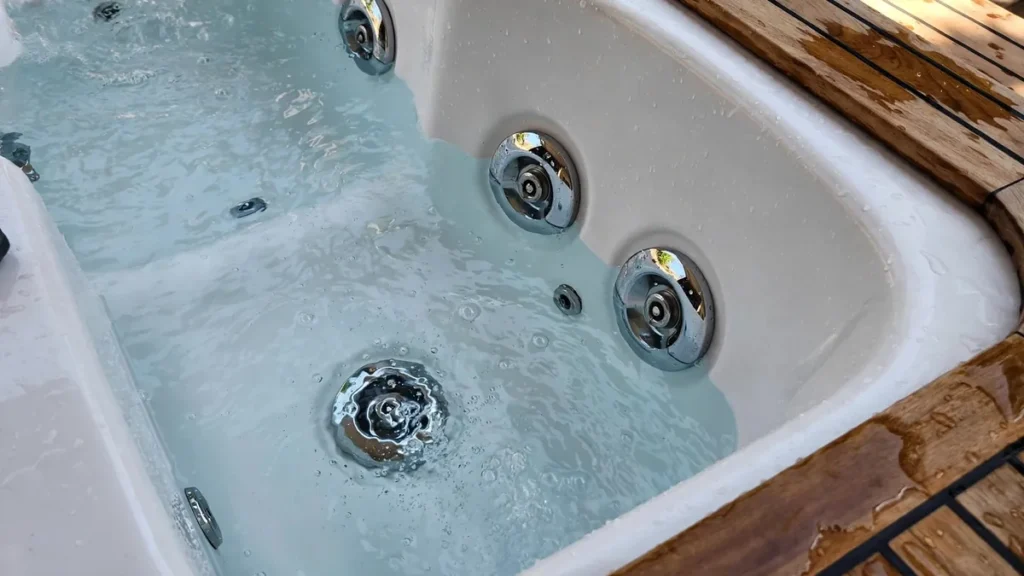
There is a small round pool on the deck of many superyachts, and on a cold evening it is the warmest place on board. The water bubbles, the steam rises into the sea air, and the people in it are looking out at the horizon.
It looks like a simple hot tub, but it is a piece of marine engineering. The tub has to stay full while the deck moves, stay hot without wasting power, and stay clean without the smell of a swimming pool. This is how a luxury yacht jacuzzi works, from the heater below deck to the last bubble on the surface.

How It Works
Step 1: The tub is set into the deck
Everything starts with the tub itself. A yacht jacuzzi is a moulded shell of fibreglass or stainless steel, set into a well cut in the deck and ringed with teak, so the rim sits almost level with the deck and nobody trips over it in the dark. The shell is shaped with seats moulded into its sides, so each person has a place to sit with the water at chest height.
The tub is bolted to the deck structure, because a tub full of water is heavy, and a heavy tub that can move in a swell would crack its own plumbing. The space beneath it is left open for the pipes and pumps, and a drain in the well carries away any water that splashes over the rim.
Step 2: The heater warms the water
Below deck, the heater does its work. A marine heater warms the water to around thirty-eight degrees, drawing power from the yacht’s generators or, on some yachts, heat from the engines themselves, so the tub is hottest after a day of cruising, when the engines have been running for hours.
The heater is controlled by a thermostat in the tub, and it keeps the water at the set temperature all day, so the jacuzzi is ready whenever a guest wants it. A cover goes over the tub when it is not in use, keeping the heat in and the spray out.
Step 3: The jets make the bubbles
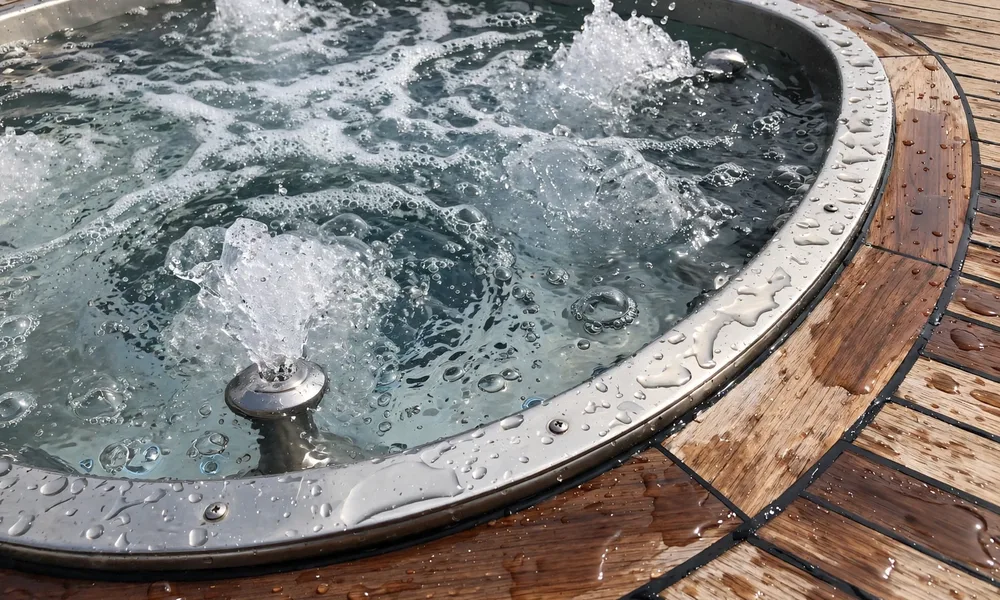
The bubbles are the heart of the jacuzzi, and they come from the jets. Small nozzles set into the sides of the tub push a mix of water and air into the pool, and the air is drawn in through a vent on the deck, so the jets need no separate air pump, only the pressure of the water pump behind them.
Each seat has its own set of jets, aimed at the back, the shoulders and the feet, and the flow to each seat can be turned up or down with a small dial on the rim. The pump that drives them sits below deck in a dry compartment, and it is sized to run all the jets at once without losing pressure at the far end of the tub.
Step 4: The pump and filter keep it clean
Clean water is the quiet work of the jacuzzi. A circulation pump draws water out of the tub, pushes it through a filter that catches hair, skin and grit, and returns it to the tub, turning the whole volume over several times an hour. The filter is checked and rinsed daily, because a dirty filter makes the water cloudy.
The water is treated as well, but gently. A small dosing unit adds just enough sanitiser to keep the water safe, far less than a public pool, and the level is tested with a simple kit each morning. The crew also balance the water, keeping it soft enough not to leave marks on the steel and the teak around the rim.
Step 5: The controls put guests in charge
Then comes the part the guests actually touch. A waterproof panel on the rim of the tub, or a small remote kept in a dry box nearby, lets anyone turn the jets on and off, raise or lower the temperature, and switch on the underwater lights that make the water glow blue after dark.
The controls are deliberately simple, with big buttons that work with wet hands, and they are wired to a timer that turns the jets off after half an hour, so the pump never runs all night by mistake. A separate switch on the bridge lets the crew shut the whole system down from inside.
Step 6: The crew drain, clean and refill it
The last step is the routine nobody sees. Every few days, or after a busy evening, the crew drain the tub completely, scrub the shell with a soft brush, rinse the jets and refill it with fresh water from the yacht’s tanks, a job that takes an hour and is usually done early in the morning.
Then the heater and the pump are run through a full cycle, the water is tested, and the cover goes back on until the guests return. A jacuzzi that is cleaned on schedule stays clear and sweet-smelling for years, while one that is left too long turns cloudy and starts to stain the teak around it.
| Spec | Detail |
|---|---|
| Tub | Moulded fibreglass or stainless steel shell set into the deck, teak surround, moulded seats |
| Heating | Marine heater to around 38 degrees, thermostat controlled, heat-retaining cover |
| Jets | Water and air nozzles at each seat, dial control on the rim, single pump below deck |
| Cleaning | Circulation pump and filter turning the water over hourly, gentle sanitiser dosing |
| Controls | Waterproof rim panel or remote, half-hour jet timer, bridge shut-off, low-water cut-out |
| Upkeep | Full drain, scrub and refill every few days, daily filter check, morning water test |
The hardest part of a yacht jacuzzi is the movement. The tub has to keep its water, its heat and its bubbles while the deck beneath it rolls, and the plumbing has to flex with the hull without leaking, which is why every pipe is clipped loosely and every joint is built to move a little.
What One Costs
Fitting a luxury yacht jacuzzi typically costs an estimated $60,000 to $250,000, set mostly by the size of the tub, the heater and the jets. A simple round tub sits near the bottom, while a large tub with custom seats, underwater lights and engine-heat recovery costs far more. The tub sits at the edge of the deck, and how a yacht swim platform works explains the deck below it, while how a luxury yacht spa is made covers the room built for the same kind of unwinding indoors.
A Rare Fact
Some superyacht jacuzzis are filled with seawater that has been heated and filtered, rather than fresh water, because the crew can refill the tub straight from the sea at anchor, and the salt water is kinder to the skin than the chemicals of a chlorinated pool.
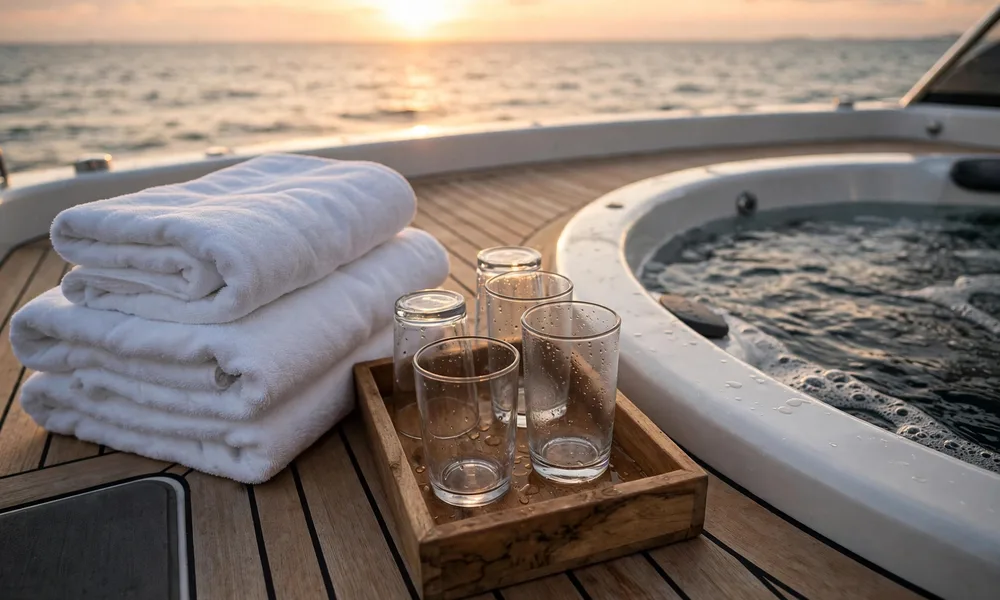
A luxury yacht jacuzzi is a moulded shell set into the deck, a heater below, jets at every seat, a filter turning the water over hourly and a simple panel on the rim, all cleaned and refilled on a quiet morning schedule. It is the warmest place on a cold evening at anchor, and the simplest luxury on board. The costliest use of water on the yacht is the room where it runs hottest, and why a yacht bathroom costs so much explains what makes it so dear.