In a quiet laboratory in Japan, an engineer once did something unthinkable a decade earlier: she took a fully charged battery cell, drove a steel nail straight through it, and waited. In an ordinary lithium-ion cell, that nail would have shorted the electrodes, boiled the liquid inside, and vented flame. Here, nothing happened. No smoke, no fire, no drama. The nail simply sat there, embedded in a wafer of ceramic and metal, while the instruments showed the cell still holding its charge. That single, uneventful moment is the whole promise of the solid-state battery: the same energy, without the flammable liquid that has haunted batteries since they were invented.
For years, solid-state batteries were the technology that was always five years away. Startups showed prototypes, car makers announced partnerships, and headlines promised thousand-kilometre ranges and ten-minute charging. Now the promises are turning into production lines: pilot plants in Japan, Korea, China and the United States press out real cells by the thousand, and the first cars carrying them are on the road in small numbers. The battery is no longer a laboratory curiosity but a manufactured object.
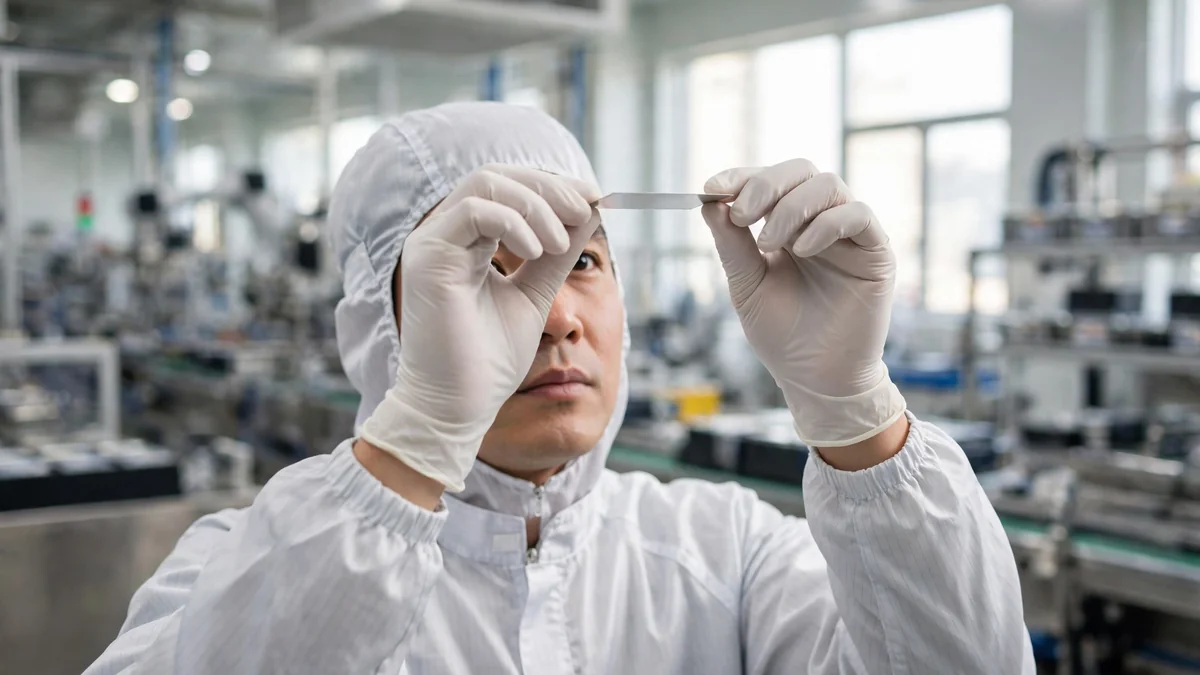
What makes a solid-state battery different is easy to say and hard to build. A conventional battery is a sandwich: a graphite anode, a liquid electrolyte in a separator, and a metal-oxide cathode. The liquid carries lithium ions back and forth, but it can catch fire. A solid-state battery replaces it with a solid layer — ceramic, glass or sulphide — that does the same job without burning. The solid layer also allows a lithium-metal anode, which stores far more energy in the same space. The prize is a denser, safer, faster-charging battery. The catch is that solids do not flow: every layer must touch its neighbour perfectly, for the life of the battery. Making that happen, millions of times over, is what the factory is for.
How It’s Made
Step 1: Mixing the solid electrolyte
Everything starts with a powder. The solid electrolyte — often a sulphide compound of lithium, phosphorus and sulphur, or an oxide ceramic — is made by mixing raw chemicals in exact proportions and firing them in a furnace. The result is a fine powder, uniform to within a few micrometres. Some makers mill it in argon-filled chambers, because sulphide electrolytes react with moisture in ordinary air, releasing a gas that smells of rotten eggs and ruins the material.
Step 2: Casting the electrolyte into a sheet
Next, the powder becomes a sheet thinner than a human hair. Mixed with a little binder and solvent into a slurry, it is spread onto moving foil by a blade — a process called tape casting — then dried in a long oven, emerging as a flexible film roughly 20 to 30 micrometres thick. Workers check it for pinholes, cracks and thin spots, because the electrolyte is also the separator: any hole is a direct path for a short circuit.
Step 3: Coating the cathode
Meanwhile, the cathode is made on a parallel line. Nickel-manganese-cobalt oxide powder is blended with a little solid electrolyte and a conductive additive, then coated onto aluminium foil and dried. The trick is the blend: in a liquid battery, electrolyte soaks into every pore of the cathode, but in a solid-state cell the solid electrolyte must be mixed in during coating, so ions reach every grain of active material. The coated foil is rolled under enormous pressure — calendering — to crush the particles into contact.

Step 4: Adding the lithium-metal anode
The anode is where the energy density is won. Instead of graphite, most solid-state designs use a thin foil of pure lithium metal, sometimes under 20 micrometres thick. Lithium is soft, sticky and reacts with almost everything, including the nitrogen in air, so machines handle it in dry rooms, not hands. The foil is laminated onto a copper current collector and pressed against the electrolyte sheet.
Step 5: Stacking, pressing and sealing
Now the layers come together. Cathode, electrolyte and anode sheets are cut and stacked — sometimes dozens of layers high — and pressed under tonnes of force in a heated press. Heat and pressure weld them into a single solid block, closing the microscopic gaps that would otherwise block the ions. The stack is sealed inside a pouch or metal can, filled with inert gas and fitted with terminals. Inside, the layers are held together by pressure alone, which is why the casing is part of the engineering, not just packaging.
Step 6: Formation, ageing and testing
A new cell is not ready to use. It goes through formation: a slow first charge and discharge that builds the interfaces between the layers and reveals defects. Then it rests for days in an ageing room, its voltage watched for the slightest drift — a falling voltage means a hidden short, and the cell is rejected. Finally, each cell is cycled, weighed and X-rayed, with samples nail-tested, before it is graded and matched with its neighbours. The same obsession with heat that shapes an electric motor’s cooling matters here too: a battery that cannot shed heat cannot charge fast, however clever its chemistry.
Specs
| Specification | Solid-state (pilot scale) | Lithium-ion (typical) |
|---|---|---|
| Energy density | 400–500 Wh/kg (claimed, pilot cells) | 250–270 Wh/kg |
| Electrolyte | Solid ceramic, glass or sulphide | Flammable liquid |
| Anode | Lithium metal (or anode-free) | Graphite |
| Fast charging | 10–80% in around 10–15 minutes (target) | 10–80% in around 20–30 minutes |
| Cycle life | 800–1,000+ cycles (pilot claims) | 1,000–2,000 cycles |
| Operating temperature | Wider range; less cooling needed | Narrower; needs thermal management |
| Fire risk | Much lower; no flammable liquid | Present; thermal runaway possible |
These are pilot-scale claims and targets, not guarantees for any car you can buy today. Energy density is the headline, but the quieter win may be packaging: safer cells allow simpler cooling and tighter packs, and the same chemistry could stretch the range of an e-bike beyond what its battery size alone suggests. The motor still has to turn that stored energy into motion — see how an electric motor works.
Price
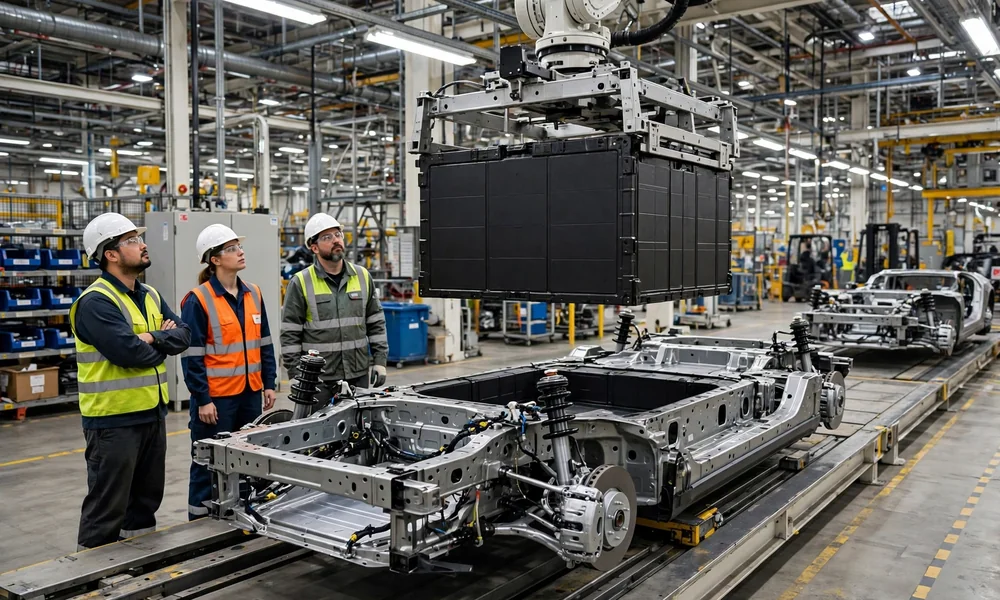
There is no mass-market price for a solid-state battery yet, because no mass-market car uses one. The first vehicles carrying solid-state or semi-solid-state packs are low-volume models and demonstration fleets, and their makers publish no per-kilowatt-hour price. Pilot-scale cells are expensive to make: the dry rooms, the lithium foil and the slow pressing steps all cost more than a mature lithium-ion line. Industry estimates put early solid-state packs at a clear premium over lithium-ion, with costs expected to fall sharply once gigafactories run at volume — but those figures are estimates, not list prices, and they vary widely between makers.
A Rare Fact
The idea of a solid electrolyte is far older than the electric car. In the 1830s, Michael Faraday — the same Faraday behind the electric motor — discovered that certain solids, like silver sulphide, could conduct electricity when heated. He had found the first solid electrolytes nearly two centuries before anyone tried to build a battery from them. The battery in tomorrow’s car is, in a sense, a Victorian discovery finally given a factory to live in.


