A headrest looks like the simplest part of a car seat. It is a small cushion on two metal posts, and most drivers never think about it until a long drive leaves their neck aching or a rear-end shunt snaps their head backwards. The specification sheet for a luxury headrest tells a different story. Behind that cushion sit numbers for height, tilt, foam density, whiplash geometry and heating, and each one decides whether the headrest will protect your neck in a crash or merely decorate the top of the seat.
Most of those numbers are easy to misread. A taller headrest sounds better until you learn it blocks the rear view. The figures matter, but only when you know what each one is actually measuring.
This guide walks through the figures on a luxury car headrest specification sheet and explains what each one means in plain language, so the next time you compare two cars you will know which numbers deserve your attention and which ones are just decoration.
Luxury Car Headrest Specs at a Glance
| Specification | Entry Luxury | Mid Luxury | Flagship |
|---|---|---|---|
| Height adjustment | 60 mm, manual | 100 mm, powered | 140 mm, powered, memory |
| Tilt adjustment | Fixed, 2 positions | 20 degrees, manual | 30 degrees, powered |
| Backset to head | Under 70 mm | Under 55 mm | Under 40 mm, active |
| Foam | Single density | Dual density | Triple zone, gel layer |
| Whiplash rating | Good | Good, active posts | Best, crash sensing |
| Comfort extras | None | Heating | Heating, cooling, speakers |
Height and Tilt: Getting the Geometry Right
Height adjustment is listed in millimetres, and it is the first number to check. An entry luxury headrest moves about 60 millimetres up and down by hand, a mid luxury one moves about 100 millimetres on a small motor, and a flagship moves about 140 millimetres and remembers the position for each driver. The range matters because a headrest only works when its top sits level with the top of your head.
Tilt is the second number, listed in degrees. A fixed headrest offers one or two tilt positions, a mid luxury one tilts about 20 degrees by hand, and a flagship tilts about 30 degrees on a motor. Tilt decides how close the cushion sits to the back of your head, and closeness is what the safety engineers care about most. The gap between head and cushion is called backset, and the sheet lists it in millimetres: under 70 for entry luxury, under 55 for mid luxury, and under 40 for a flagship, where the posts move forward on their own when the car senses a crash coming.

Foam and Cover: What the Cushion Is Made Of
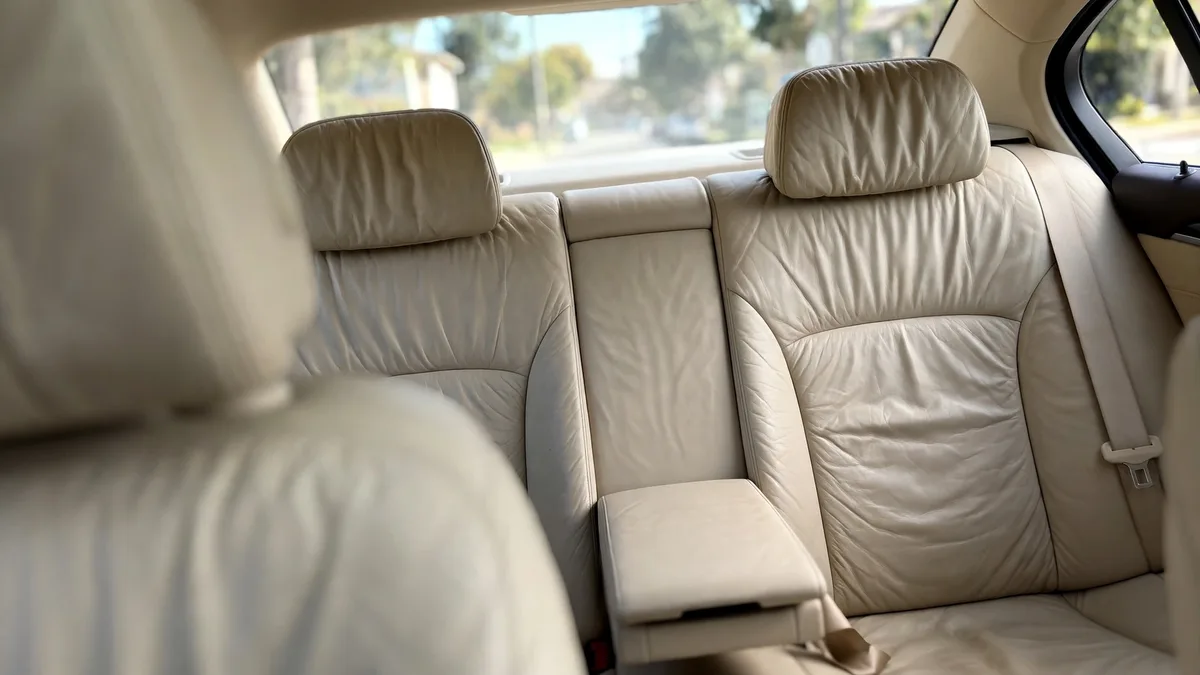
Foam is where comfort and safety meet, and the sheet usually describes it in plain words rather than numbers. An entry luxury headrest uses a single density foam, the same firmness all the way through. A mid luxury one uses dual density foam, firmer at the back where the posts anchor it and softer at the front where your head rests. A flagship adds a third zone and sometimes a thin gel layer that spreads pressure across the back of the head on a long drive. The way a luxury car seat is made shows how that foam is cut and glued to its frame, and the headrest follows the same craft at a smaller scale.
The cover is usually the same leather as the seat, and the sheet lists the hide grade and the stitching. The stitching is not decoration: a seam that runs across the cushion has to hold when a head strikes it at speed, so the thread is heavier than the thread on a jacket and the stitch length is checked on every unit.
Whiplash Protection: The Number That Matters Most
Whiplash protection is the reason the headrest exists at all, and the sheet usually records it as a rating rather than a measurement. Independent testers grade headrests as acceptable, good or best, and a luxury car should never score below good. The rating comes from a sled test that shoves the seat forward and measures how far the head whips back and how fast it moves. The test is run at the speeds of a town centre shunt, the crash most drivers are most likely to suffer.
The best headrests add active posts, and the sheet lists them as a separate line. In a rear impact the posts drive the cushion forward and up within a fraction of a second, closing the gap to the head before the head starts moving. The way a luxury car seat works explains the motors and sensors underneath the cushion, and the active headrest borrows the same crash sensing to move at exactly the right moment. A headrest without active posts can still earn a good rating, but only if its geometry is already close to the head, which is why backset and rating have to be read together.

Comfort Extras: Heating, Cooling and Sound
Comfort extras are where the flagship headrests earn their price, and the sheet lists them plainly. Heating is the common one, a small element inside the cushion that warms the back of the neck on a cold morning. Cooling is rarer, a fan that pulls air through tiny holes in the leather, and it appears only on the most expensive cars. Some flagships build small speakers into the headrest wings, so navigation prompts and phone calls sound as if they come from just behind your ears, and the sheet lists the speaker count and power.
Rear headrests get their own lines on the sheet, and they are worth reading. A good rear headrest folds flat so it does not block the mirror, slides down when nobody sits there, and still rises to full height for an adult passenger. The hypercar seat specifications show the same thinking taken further, where every gram and every millimetre is fought over, and a luxury saloon borrows that discipline for the seats its owners actually sit in.
A Rare Fact About the Headrest
Here is a detail that surprises people who think of the headrest as a pillow. Early cars had no headrests at all, and when they first appeared they were optional extras that many buyers refused, because they blocked the rear view and looked odd. The luxury headrest of today, with its motors and gel and speakers, is still doing the same job as that first awkward cushion: catching a head that is about to whip backwards.
What the Specs Mean for You
If you are comparing luxury cars, read the headrest sheet in this order: backset under 55 millimetres, a whiplash rating of good or better, height adjustment that reaches the top of your head, and tilt that brings the cushion close without pushing your chin down. Those four figures decide whether the headrest will protect you on the worst day of your driving life, which is the only day it truly matters.
Then look at the comfort extras, and judge them honestly. Heating is worth having if you drive in winter; cooling is a pleasure on a hot day; speakers are a delight if you take calls on the move. But none of them replaces geometry.