It is late on a Sunday evening, and the car in the garage is sitting at eleven percent. The owner plugs in a thick cable, hears a soft click, and walks inside. By breakfast the car is full. Nothing about that moment looks dramatic, and that is exactly the point. A luxury EV home charger is the quiet machine that makes owning a big-battery electric car feel effortless, and its spec sheet is where the difference between a good one and a great one hides.
Most buyers choose a charger the way they choose a kettle: they look at the price and the brand. That is a mistake, because the charger decides how fast the car fills, how safely it fills, and whether the house electrics cope at all. A cheap unit can leave a luxury EV half full on a cold morning, while a well-specified one can add hundreds of kilometres of range overnight without ever troubling the fuse box.
This guide reads a luxury EV home charger spec sheet line by line. It explains what each figure measures, what it means in the driveway, and what to look for before an electrician drills the first hole. It is the knowledge you need so that when the quotes arrive, you can tell a serious charger from a shiny box on the wall.
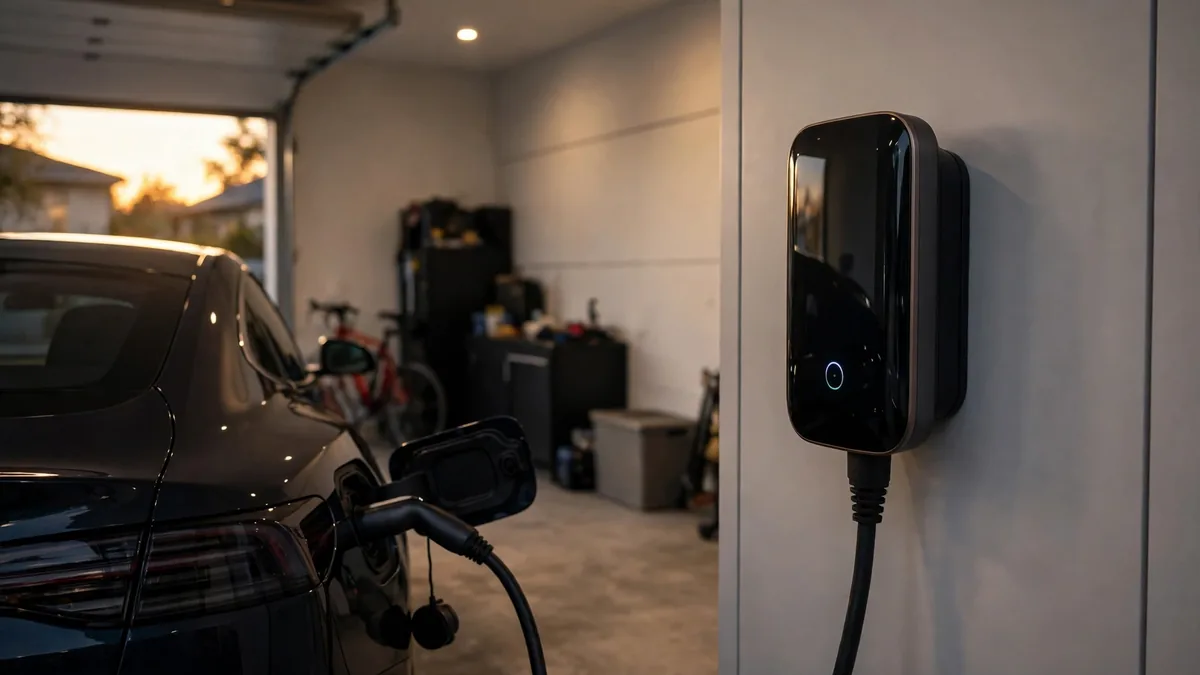
The Spec Sheet, Line by Line
1. Charging power in kilowatts
The headline number is the charging power, usually between 7.4 kW and 22 kW for a home unit. Power is speed: a 7.4 kW charger adds roughly 35 to 45 kilometres of range per hour to a large luxury EV, while an 11 kW unit adds roughly 55 to 65. A 22 kW unit is faster still, but only if the car can accept it, and many luxury EVs cap home charging at 11 kW.
2. Single-phase or three-phase supply
Behind the kilowatt figure sits the supply type. A single-phase home connection usually supports up to 7.4 kW, while a three-phase connection supports 11 kW or 22 kW. Many luxury homes already have three-phase power, but many do not, and upgrading the supply can cost more than the charger itself. The spec sheet will say which supply the unit needs, and a good installer checks the house first.
3. Cable length and connector type
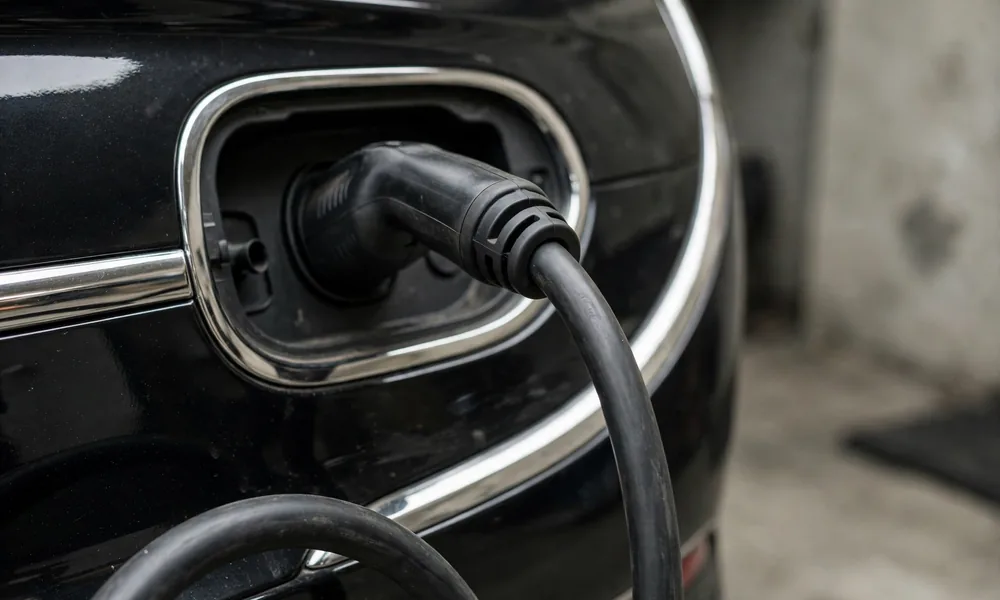
The cable is the part you touch every day, and the sheet gives its length, usually five to seven and a half metres, and its connector type. A longer cable reaches a car parked nose-in or nose-out, on either side of the garage, without stretching. The connector must match the car, and in most markets that means a Type 2 plug. Some chargers have a tethered cable fixed to the unit, which is convenient but means the cable cannot be swapped; others have a socket, so you use the cable that came with the car.
4. Smart charging and load balancing
A luxury charger is rarely a dumb switch. The sheet will list smart features, and the most important is dynamic load balancing: the charger watches how much power the house is using and trims its own draw so the main fuse never trips. On a winter evening, with the oven, the heat pump, and the car all running, that feature is the difference between a full battery and a dark house. Other smart features include scheduled charging, so the car fills on cheap overnight electricity, and solar matching, which feeds spare sunshine into the battery instead of back to the grid.
5. Weatherproofing and safety ratings
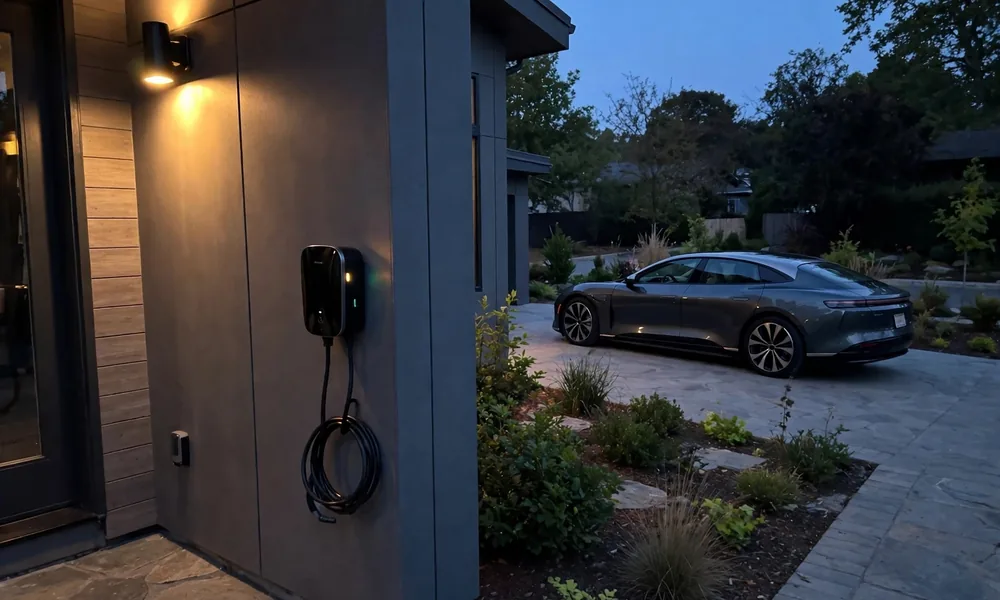
A charger lives on a wall, often outside, in rain, frost, and summer heat. The sheet gives an IP rating, and IP55 or higher is the mark of a unit built for the outdoors, while IK ratings describe resistance to knocks. Inside, the safety list matters more: residual current protection, over-temperature cut-off, and surge protection. A luxury charger should also carry proper certification for its market.
6. App, connectivity, and display
The last lines of the sheet cover connectivity: Wi-Fi, Bluetooth, and sometimes Ethernet or 4G, plus the app that shows charging status, energy used, and cost. A good app lets the owner start, stop, and schedule charging from the sofa, and lets a fleet of family cars share one charger fairly. Some units add a small display on the box itself, which is handy when the phone is upstairs.
Typical Specifications
| Specification | Typical Luxury Figure |
|---|---|
| Charging power | 7.4 kW single-phase, 11 kW or 22 kW three-phase |
| Range added per hour | About 35–45 km at 7.4 kW; about 55–65 km at 11 kW |
| Connector | Type 2, tethered or socketed |
| Cable length | 5–7.5 metres |
| Weatherproofing | IP55 or higher, rated for −30 °C to +50 °C |
| Smart features | Load balancing, scheduled charging, solar matching, app control |
| Safety | Residual current protection, over-temperature cut-off, surge protection |
| Connectivity | Wi-Fi, Bluetooth, optional Ethernet or 4G |
What It Costs
A luxury EV home charger itself typically costs an estimated $800 to $2,500 before installation, with premium units that offer 22 kW, solar matching, and a polished design sitting at the top of that range. Installation is usually an estimated $800 to $2,000 more, depending on the distance from the fuse box, whether the wall needs drilling, and whether the house supply needs upgrading. A three-phase upgrade, where needed, can add an estimated $1,500 to $4,000. All of these are estimates, and quotes vary widely by country and by electrician, but the shape of the bill is consistent: the box is often the smaller half of the cost.
Running costs are where the charger quietly earns its keep. Charging at home on an overnight tariff is typically far cheaper per kilometre than public fast charging, and a smart charger that only fills the car when electricity is cheapest can cut the bill further. Over a year of heavy driving, the difference between smart home charging and relying on public chargers can run into hundreds of dollars.
A Rare Fact
Here is something few owners realise: a home charger can also protect the battery itself. Luxury EVs with large batteries prefer slow, steady overnight charging to repeated blasts from a public fast charger, and battery engineers often say that gentle home charging is one of the kindest things an owner can do for long-term battery health. The humble wall box, in other words, is not just a fuel pump. It is a caretaker, quietly adding years to the most expensive part of the car while its owner sleeps.
Choosing a charger is therefore less about chasing the biggest kilowatt number and more about matching the unit to the car, the house, and the way the family actually drives. Read the sheet with the questions in this guide, ask the installer about the supply before the price, and the result is a small box on the wall that simply works, night after night, for years. That is what a luxury EV home charger really delivers: not speed for its own sake, but the certainty that the car will always be ready. Readers curious about how the electric machines that share the garage are built may enjoy our look at how a luxury electric quad bike is made, and the same care goes into how a luxury electric snowcat is made and how a luxury electric UTV is made.


