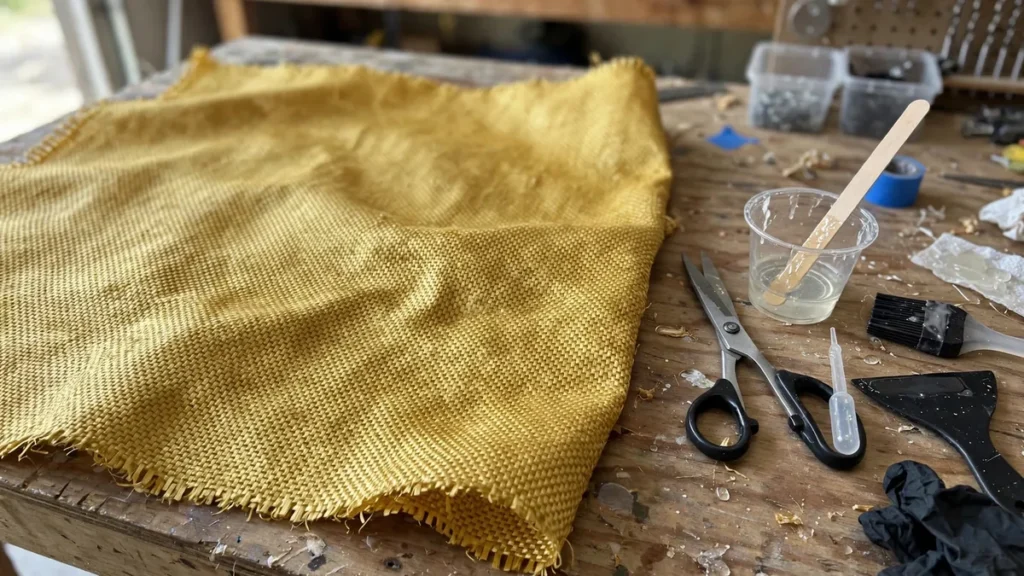
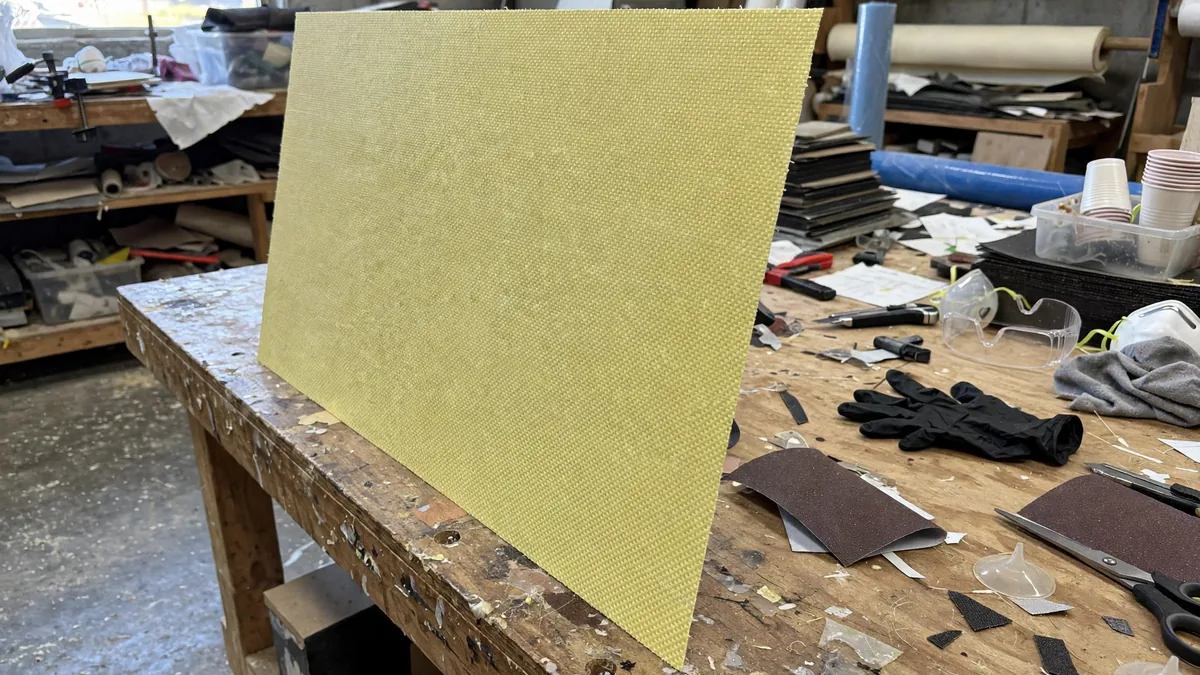
The panel looked like nothing at all. It was a flat sheet of pale yellow fabric, stiff as a board, about the size of a car door, and it sat on a trestle table in a workshop that smelled of resin and fresh paint. The engineer picked it up with both hands and tapped it with a knuckle. It rang, faintly, like a drum. Then he told the visitor what it was for: this single sheet, lighter than the steel door it would replace, could stop a bullet, survive a crash that would fold an ordinary panel in half, and still weigh less than the lunch the visitor had eaten that day. It was a luxury Kevlar panel, and it was woven, not made.
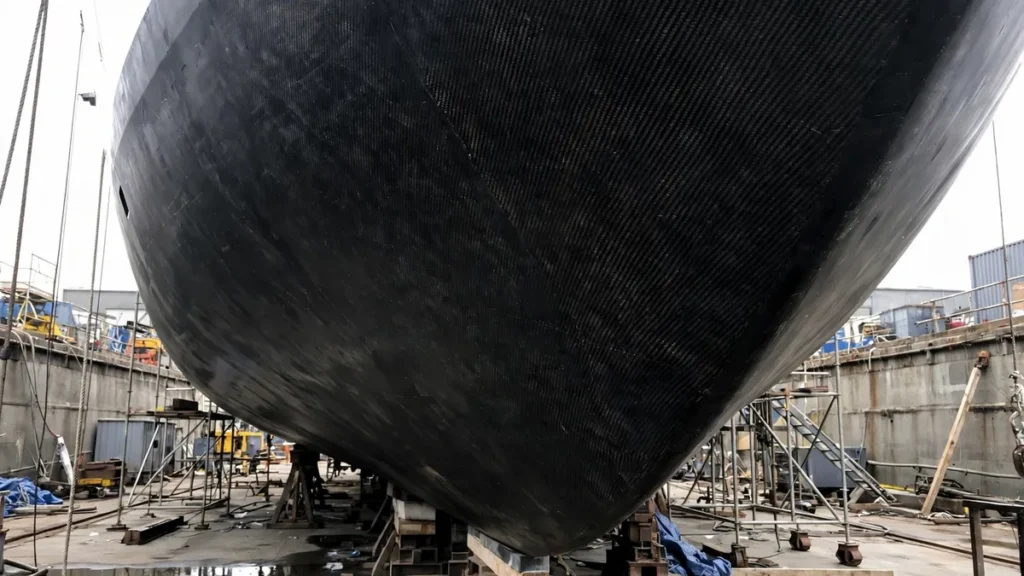
Kevlar is one of those materials that sounds like science fiction and behaves like it, too. It is a fibre five times stronger than steel by weight, spun into yarn, woven into cloth, and then pressed with resin into a rigid panel. It protects soldiers, racing drivers and astronauts, and at the luxury end it turns up in places you would never expect: the doors of armoured limousines, the hulls of racing yachts, the floors of hypercars. The panels are expensive, difficult to make, and almost impossible to repair, which is why understanding the specifications matters before anyone buys one.
The Numbers That Matter
| Specification | Detail |
|---|---|
| Fibre | Aramid fibre, sold as Kevlar, spun from a liquid polymer into yarns that are stronger than steel by weight |
| Tensile strength | Around 3,000 megapascals for the fibre itself, about five times the strength of steel at the same weight |
| Density | About 1.44 grams per cubic centimetre, lighter than fibreglass and far lighter than steel or aluminium |
| Weave | Plain or twill weave cloth, layered in many plies with the fibres running in different directions for strength in every direction |
| Panel thickness | Typically 3 to 12 millimetres for luxury vehicle and yacht panels, with ballistic panels thicker still |
| Resin | Epoxy or phenolic resin, cured under heat and pressure in an autoclave to bond the layers into a single rigid sheet |
| Weight saving | An estimated 30 to 50 percent lighter than an equivalent steel panel, and lighter than aluminium at the same strength |
| Impact resistance | Absorbs impact by stretching and spreading the force across the weave, rather than cracking like a rigid material |
| Temperature range | Keeps its strength up to around 400 degrees Celsius, and stays flexible in extreme cold |
| Price | An estimated $500 to $3,000 per square metre for a finished luxury panel, depending on thickness and certification |
How It Works
Step 1: The fibre is spun into yarn
Kevlar begins as a liquid polymer, forced through tiny holes in a spinneret to form fine golden fibres, which are then twisted into yarn. The spinning process lines up the molecules inside each fibre in the same direction, and that alignment is the secret of its strength: the molecules lock together along the fibre like a rope, resisting any force that tries to pull them apart.
Step 2: The yarn is woven into cloth
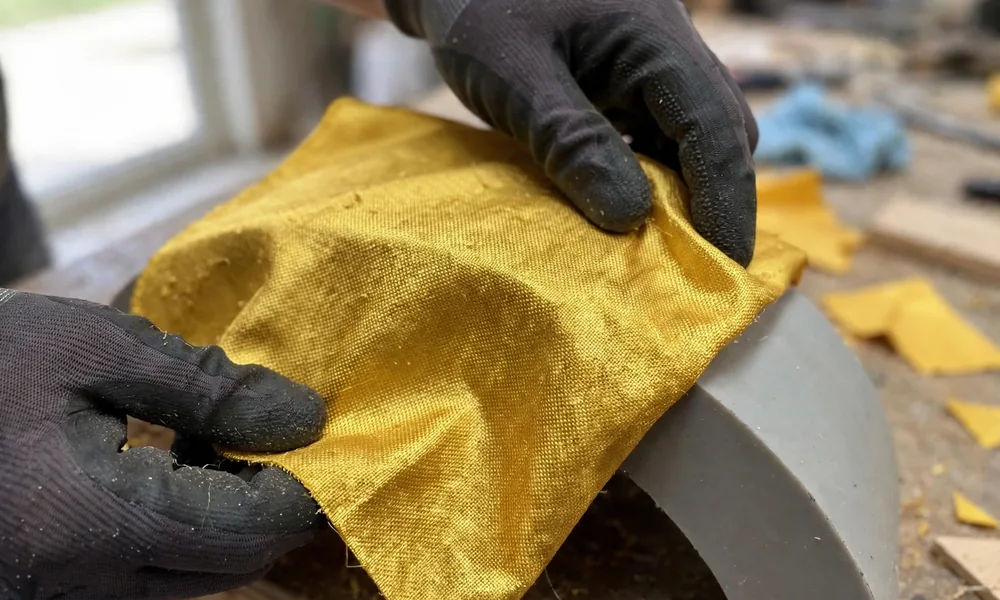
The yarn is woven on a loom into cloth, in plain weave or twill, the same way a shirt is woven, only with far more care. The weave must be perfectly even, because a loose thread or a gap becomes a weak spot in the finished panel. The cloth is inspected as it comes off the loom, and any roll with a flaw is rejected. For the best panels, the cloth is woven from the finest yarns, with more threads per centimetre than ordinary industrial Kevlar.
Step 3: The plies are cut and stacked
The cloth is cut into shapes and stacked in layers, each layer turned at a different angle so the fibres run in many directions. A typical luxury panel has ten to thirty layers, and the number and direction of each layer is decided by engineers who know exactly which way the panel will be loaded. The stacking is done by hand, in a clean room, because a single speck of dust trapped between layers can become a weak point that shows up years later.
Step 4: Resin is added and the panel is pressed
Each layer is coated with epoxy resin, or the cloth is bought pre-impregnated with resin already in it. The stack is then placed in a mould, sealed in a vacuum bag, and put into an autoclave, a giant heated pressure chamber. The heat cures the resin, the pressure squeezes out air bubbles, and the layers fuse into a single rigid sheet. The whole cure takes hours, and the temperature and pressure are logged every minute, because a panel cured too fast is brittle and a panel cured too slowly never reaches full strength.
Step 5: The panel is trimmed and finished
Once cured, the panel is removed from the mould and trimmed to its final shape with diamond tools, because ordinary cutting tools blunt instantly on Kevlar fibres. The edges are sealed to stop moisture getting in, and the surface is sanded and painted or left with the weave showing, depending on the customer. Luxury panels are often finished to furniture standard, smooth and flawless, even though they will spend their lives hidden inside a door or a hull.
Step 6: The panel is tested and certified
Before a luxury Kevlar panel is delivered, samples from the same batch are tested to destruction: pulled, bent, impacted and, for ballistic panels, shot. The panel must meet a published standard, and the test results stay with the panel for its whole life. A panel without certification is just an expensive sheet of yellow cloth, and no armoured car maker, yacht builder or race team will fit one without the paperwork to prove what it can survive.
The same composite thinking shapes other parts of a luxury machine. Our guide to how Kevlar composite is made explains the material from fibre to finished part, and how a luxury carbon fibre wheel is made shows a different fibre used the same way. For another study in numbers that matter, the luxury electric mountain bike specs explain how weight and strength trade off.
What It Costs
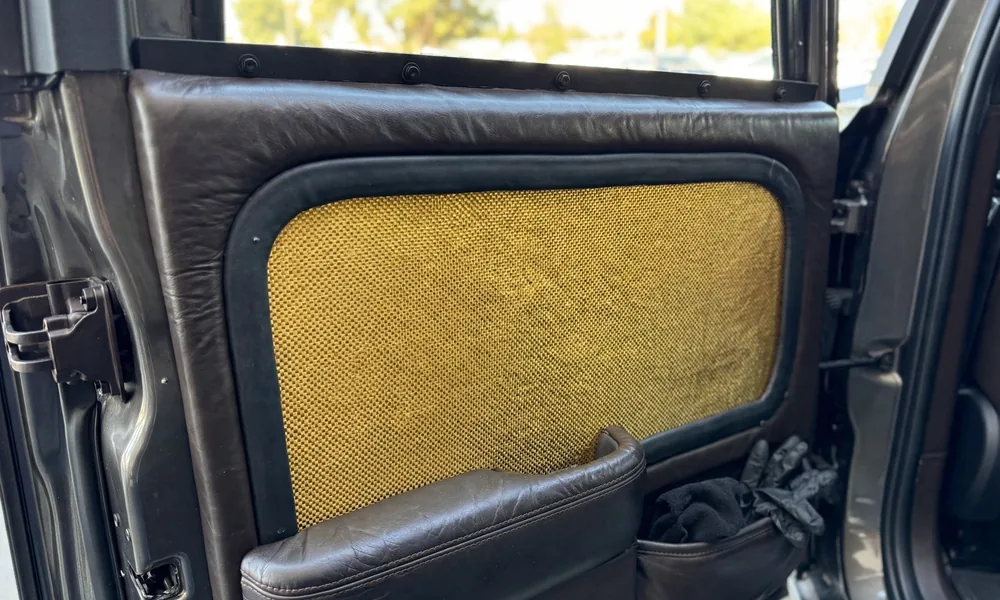
A finished luxury Kevlar panel costs an estimated $500 to $3,000 per square metre, and a full set for an armoured car or a racing yacht can cost tens of thousands of dollars. The price comes from the fibre, the hand labour and the curing: Kevlar yarn is expensive, the layup is done by skilled workers one layer at a time, and the autoclave time alone costs hundreds of dollars per panel. The buyers are not paying for a yellow sheet. They are paying for protection and weight saving in a single part, and for the certification that proves the panel will do its job on the worst day of its life.
A Rare Fact
Here is the detail that surprises most people: Kevlar was invented by accident, by a chemist trying to make a lighter tyre cord. Stephanie Kwolek was working with a polymer solution that looked wrong, thin and cloudy instead of thick and clear, and her colleagues told her not to bother spinning it. She insisted, and the fibres that came out were far stronger than anything anyone had seen. The material went on to save countless lives in body armour, and it did it because one chemist trusted a strange-looking liquid over the advice of everyone around her.