Stand on the quay at dawn while a luxury ship is still in dry dock, and the first thing you notice is how strange it looks out of the water. The hull rises above you like a cliff, painted white and grey, and along the very bottom runs a single dark line of steel, straight as a ruler. That line is the keel, and although passengers never see it, everything else on the ship depends on it.
The keel is the spine of the vessel. It runs from the bow to the stern along the lowest point of the hull, and every frame, every plate and every deck is tied back to it. When a ship meets a heavy sea, the keel takes the bending forces that would otherwise twist the hull apart. When a ship rests in dry dock, the keel takes the entire weight of the vessel on a row of wooden blocks. It is the one part of a ship that is never allowed to fail.
On a luxury ship the keel has an even harder job than on an ordinary cargo vessel. A cruise ship or a large private yacht carries swimming pools, theatres, restaurants and thousands of tonnes of fittings high above the waterline, and all of that top weight wants to roll the ship over. The keel, together with the ballast low in the hull, keeps the centre of gravity down and the ship steady, so that dinner stays on the table even when the sea does not cooperate.
This is what a luxury ship keel is made of, how it is built, and what its numbers really mean, from the thickness of its steel plates to the weight it carries on its back.

How It Works
1. The spine that carries the ship
A keel works like the backbone in a human body. It is a long, deep beam of steel that gives the hull its shape and its strength, and every other structural member is welded to it. The frames that form the ribs of the ship meet the keel at right angles, and the shell plates are welded along its edges, so the whole structure behaves as one stiff box.
2. Flat plate or bar keel
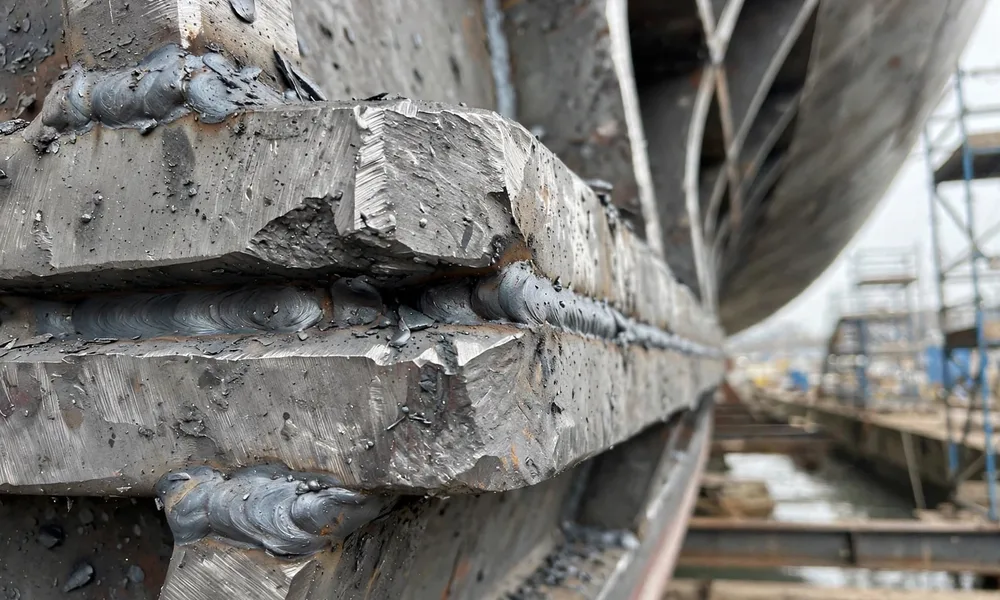
Most large luxury ships use a flat plate keel, which is a wide, thick band of steel plate laid horizontally along the centreline of the hull bottom. It is simple, strong and easy to build, and it gives the ship a flat surface to rest on in dry dock. The plate is usually thicker than the surrounding hull plating, because it takes the most punishment, from grounding touches to the full weight of the ship on the dock blocks.
3. How the keel is built in the yard
Building a keel starts long before the first plate is lifted. The yard lays out the keel line on the building dock, checks it with lasers until it is straight to within a few millimetres over a hundred metres, and then begins placing the keel plates one by one.
Once the keel is in place, the frames go up around it like ribs around a spine, and the hull grows outward and upward from that single line. The way a luxury ship keel is made shows the care that goes into this stage, from the first plate to the final inspection, and it explains why the keel is laid months before the ship begins to look like a ship at all.
4. Ballast, stability and the centre of gravity
A keel does more than hold the hull together. Its position at the very bottom of the ship makes it the natural home for ballast, the heavy weight carried low to keep the vessel upright. On a luxury ship, ballast tanks sit just above the keel and can be filled with seawater or emptied as the load changes, so the ship stays level whether the fuel tanks are full or nearly empty.
5. Protecting the keel in service
The keel lives in the harshest place on the ship. It is the first part to touch the bottom if the water gets shallow, the first part to meet floating debris, and the part most exposed to corrosion, because it sits permanently in seawater. That is why it is built from thicker plate than the rest of the hull and coated with tough protective paint.
In dry dock, surveyors walk the full length of the keel looking for dents, cracks and worn coating, and ultrasonic gauges measure the plate thickness to check how much steel has been lost to corrosion. The way a luxury ship keel works in daily service depends on this quiet maintenance, and a keel that is looked after will outlast almost every other part of the vessel.
6. The keel and the rest of the ship
The rudder hangs from the stern end of the keel line, the propeller shaft runs just above it, and the engine beds sit on the tank top directly over the keel, so the thrust of the engines and the weight of the machinery both flow down into the same steel spine.
That connection is why engine rooms are built the way they are. The heavy main engines need a foundation that will not flex, and the keel provides it. The layout of a luxury ship engine room is shaped by this fact, with the engines sitting low and central, directly over the strongest part of the hull, where their vibration can be absorbed instead of rattling through the passenger decks above.
Key Specifications
| Specification | Typical figure | What it means |
|---|---|---|
| Keel type | Flat plate keel | A wide, thick steel plate along the hull bottom, the standard choice for large luxury ships. |
| Plate thickness | 25 to 40 mm | Thicker than the surrounding hull plating, to take grounding knocks and the full docking weight. |
| Keel length | Nearly the full hull length | Runs from bow to stern along the centreline, so the whole hull is tied to one spine. |
| Steel grade | High-strength shipbuilding steel | Tough, weldable steel graded by a classification society for marine service. |
| Keel weight | Hundreds of tonnes | On a large cruise ship the keel plates alone can weigh as much as a small ferry. |
| Straightness tolerance | A few millimetres over 100 m | Checked with lasers during construction, because a bent keel means a bent ship. |
| Inspection interval | Every dry docking, about 2 to 5 years | Surveyors check the full length for dents, cracks and plate thinning. |
What It Costs
A keel is not bought off a shelf, so its cost is part of the price of building the whole ship, and the figures are estimates rather than price tags. On a large luxury cruise ship, the steel for the keel and the surrounding bottom structure can run into several million dollars, once the plate, the cutting, the welding and the inspection are added up.
A Rare Fact
There is an old shipyard tradition that says a ship is not truly born until a coin is laid under the keel. When the first keel plate is set, the master shipwright places a coin beneath it for good luck, and the coin stays there for the life of the ship, sealed under tonnes of steel. On royal or naval vessels the coin may be gold. It is a small, hidden ceremony for the largest object most people will ever stand beside.


