A submarine hatch looks like a simple round door, yet it is one of the most demanding pieces of metalwork on the whole boat. It must hold back the full weight of the sea at depth, open and close smoothly hundreds of times, and seal so tightly that not a single drop gets through. Building one is slow, precise work, and every hatch is made, machined and tested as its own individual piece.
On a luxury submarine the hatch also has to look the part, with polished fittings and a smooth finish, but nothing about its beauty is allowed to weaken it. This is how a luxury submarine hatch is made.
How It’s Made
Step 1: The steel disc is forged and shaped
Every hatch begins as a disc of steel, chosen for strength and for the way it stands up to years in salt water. The steel is heated until it glows and pressed into a shallow dish shape under a great forge, so the finished door is curved like the lid of a pot.
Forging lines up the grain of the metal, which makes the door far stronger than one cut from a flat plate. Once it has cooled slowly so it does not crack, the disc is checked for flaws with sound waves that can find a weakness hidden deep inside the steel.
Step 2: The door is machined true
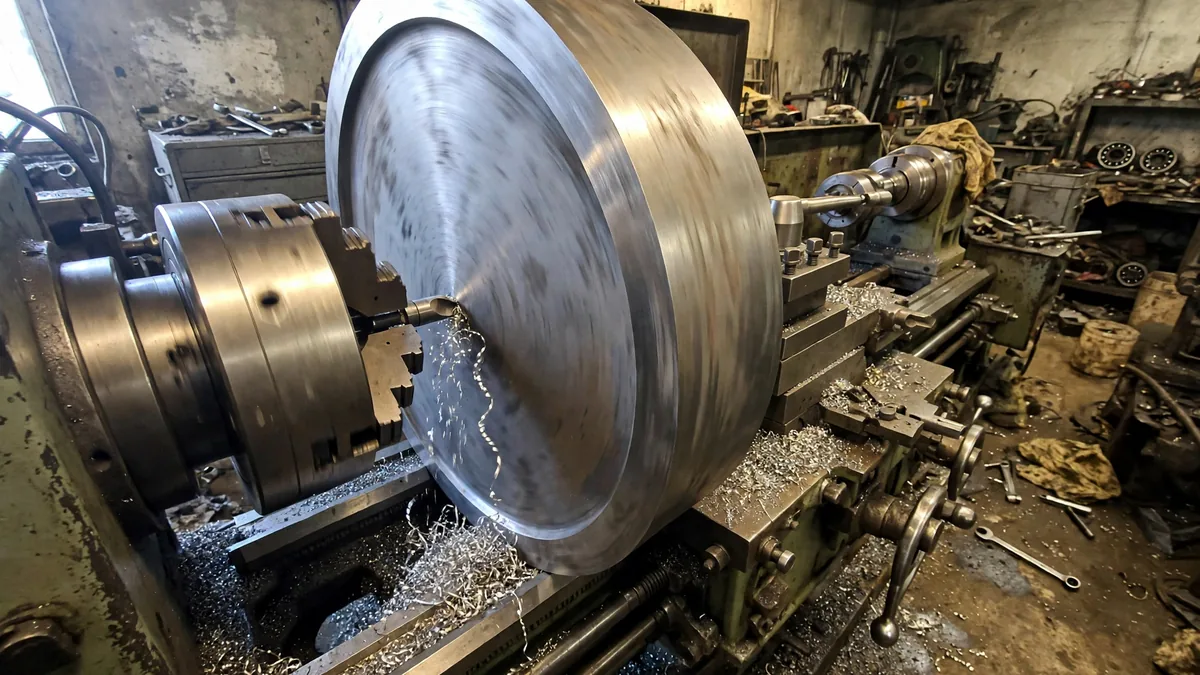
The forged disc is then clamped onto a huge lathe, where cutting tools turn it slowly and shave the steel down to its final shape. The face of the door is machined flat and smooth, the rim is turned to an exact diameter, and the slight dish of the curve is finished so the door will meet its frame squarely all the way round.
Machinists measure the door again and again as they work, with gauges and straight edges, because the fit cannot be guessed. By the end of this stage the rough forging has become a precise piece of engineering, heavy, smooth and true.
Step 3: The seal groove and face are cut
The most delicate machining on a hatch is the groove that holds the seal. A cutting tool carves a ring-shaped channel around the frame, deep enough to hold the rubber seal firmly and smooth enough that the rubber sits evenly all the way round. The matching face on the door is polished to a fine finish, so the rubber can press against it without finding a scratch or a pit to leak through.
The groove and the face are made as a pair, and they are checked together with the door closed, measuring the gap all round the circle.

Step 4: The dogs, wheel and spindle are built
Around the edge of the door sit the dogs, the short steel arms that clamp the hatch shut. Each dog is cut from solid steel, machined smooth, and fitted to a ring gear inside the door, so that turning the central wheel swings them all out together, in step.
The dogs, the ring gear and the spindle are assembled on the bench and worked back and forth hundreds of times before they ever meet the door, so any stiffness or slack is found while it is still easy to fix. The same care with parts that must move together appears in the tower above the hatch, and the way a luxury submarine conning tower is made shows how the strong structure that carries the main deck hatch is put together.
Step 5: The hinges are fitted and the door is hung
A submarine hatch door is heavy, and its hinges must carry that weight without sagging, since a door that sags will not meet its seal squarely. The hinges are made from thick steel pins set in bronze bushes, machined to fit closely and greased against the sea.
Hanging the door is fussy work. The hinge pins are shimmed a fraction at a time until the door hangs true, and the fitters check the seal gap all round with thin feeler gauges, looking for any side that sits proud or low. A well-hung door moves like a good gate, smooth and without a rattle, and it closes onto its seal with the same even pressure on every side.
Step 6: The hatch is pressure tested and fitted to the hull
Before a hatch is trusted, it is tested under pressure in the yard. The door is closed and locked, and water or air is pressed against it at far more than it will ever face in service, while inspectors watch for any leak, any drip or any hiss.
Only when the hatch passes dry is it fitted to the submarine itself. The frame is welded into the steel of the hull, the welds are inspected, and the whole hatch is tested once more in place, with the door swung open and shut hundreds of times. A hatch that passes is signed off as a single finished unit: door, seal, dogs, wheel and hinges, all built to hold back the sea. The air the crew breathes while the hatches stay shut depends on other systems, and the way a luxury submarine snorkel mast works shows how fresh air reaches a boat that spends its life below the surface.
| Spec | Detail |
|---|---|
| Door | Thick steel disc, forged into a shallow dish so sea pressure pushes it into its frame |
| Machining | Turned true on a lathe, with the rim, hinge lugs and spindle holes cut to fine tolerance |
| Seal groove | Ring-shaped channel machined into the frame, matched to a polished face on the door |
| Dogs | Steel clamping arms around the edge, driven together by a ring gear so the seal is squeezed evenly |
| Wheel | Cast and machined hand wheel on a turned spindle, sized for one-handed closing |
| Testing | Pressure-tested with water or air beyond service pressure, then tested again once fitted to the hull |

What One Costs A luxury submarine hatch is an estimated 60,000 to 250,000 dollars, depending on its size, the strength of the steel and how finely the wheel and dogs are finished. The steel is only part of the price; the forging, the machining, the seal and the testing all take skilled hands, and the way a luxury submarine dive plane works shows another part of the boat where precise moving steel decides how the submarine behaves underwater.
A Rare Fact On some submarines the hatches are round because a circle spreads pressure evenly, with no corners for stress to gather in. A square hatch would need far thicker steel to hold the same sea, which is why the round door has survived every change in submarine design, from the earliest boats to the most luxurious modern ones. Yards still test the idea on every new boat, because a shape that has worked for a century is not changed without proof.
A luxury submarine hatch is a simple idea made with great care: a forged steel door, a machined seal face, dogs that clamp it tight, and a wheel that locks it all with a few turns. Every hatch leaves the yard as a single finished unit, signed off only after it has held back more pressure than the sea will ever ask of it, and finished so quietly that the crew forget it is there, which is exactly how a good hatch should be.


