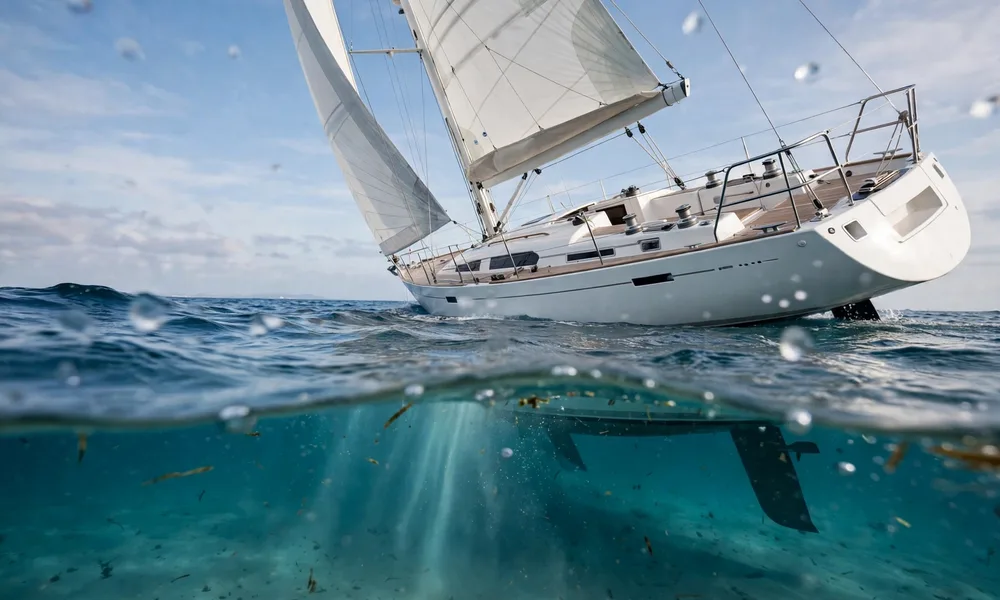
Stand on the deck of a luxury yacht in a stiff breeze and you will feel the wind pushing hard on the sails and the tall white superstructure, trying to lay the boat on its side. Yet the yacht stays upright, leaning only a little, and the reason is hidden below the water. A heavy fin hangs down from the bottom of the hull, and without it the yacht would roll over in the first strong gust.
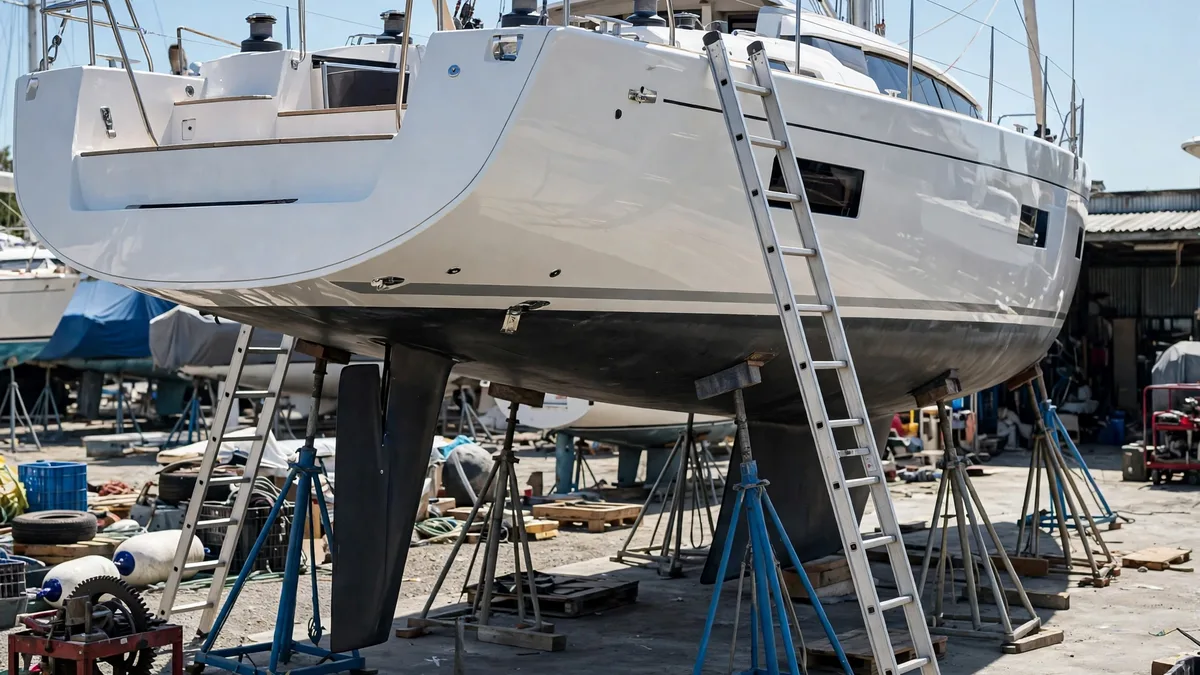
That fin is the keel, and it is one of the most important parts of any yacht. It carries a large part of the boat’s weight low down, it stops the yacht sliding sideways through the water, and it gives the steering something solid to work against. The numbers behind it, from its weight to the size of its bolts, decide how stiff the yacht feels, how fast it points into the wind, and how safe it is when the weather turns.
How It Works
Step 1: Casting the keel in lead or iron
Most luxury yacht keels are cast from lead, because lead is extremely heavy for its size and it never rusts. The metal is melted in a furnace and poured into a mould shaped like a long fin, then left to cool slowly so it does not crack. A keel for a large yacht can weigh as much as several family cars, and moving it around the yard needs cranes, trolleys and a great deal of patience.
Some keels are cast in iron instead, which is cheaper but must be coated carefully to stop it rusting in salt water. Whichever metal is chosen, the keel is cast in one piece when possible, because a single solid casting has no joins to fail. The keel is one of the oldest ideas in sailing, and the way a yacht keel is specified shows how much of a modern yacht’s performance still depends on this simple, heavy fin.
Step 2: Shaping the fin for speed and grip
A keel is not just a lump of metal. Its shape is drawn by designers who balance two jobs that pull in opposite directions. A deep, narrow fin grips the water well and lets the yacht sail close to the wind, but it also makes the yacht hard to take into shallow harbours. A shorter, wider keel is friendlier in shallow water but gives up some grip, so the designer must choose for the way the owner actually sails.
The leading edge of the keel is rounded so water flows smoothly around it, while the trailing edge is kept thin to reduce drag. Some modern keels carry a bulb at the bottom, a fat torpedo shape that puts the weight even lower without making the fin any deeper. Every curve is tested in a towing tank, where a model yacht is pulled through water and the drag is measured to the gram.
Step 3: Bolting the keel to the hull
Attaching the keel is the most nerve-wracking job in yacht building. Huge stainless steel bolts run up through the keel and through the bottom of the hull, where they are fastened to a strong internal frame. The bolts must be tightened to an exact torque, because a loose bolt lets the keel flex, and a bolt tightened too far can crack the hull around it.
The join is sealed with a flexible compound that keeps salt water out of the joint while allowing the keel and hull to move a tiny amount as the yacht flexes in waves. Workers check the joint with feeler gauges and torque wrenches, and the keel is often fitted before the yacht is painted, so any mark from the fitting can be faired smooth. A keel that is fitted well should last the life of the yacht without ever being touched again.

Step 4: Balancing the yacht around the keel
Once the keel is on, the yacht is floated and its balance is checked. The keel puts the centre of gravity low, well below the centre of the hull, and that is what makes the yacht want to stand upright. Designers measure how far the yacht heels in a known wind, and if it leans too much or too little, the ballast is adjusted by adding or removing weight in the keel or in tanks inside the hull.
This balance affects everything else on board. The anchor and its chain, the engines and the fuel tanks all sit where they do partly because of the keel, and the way a luxury yacht anchor is specified shows how the weight at the bow is matched against the weight of the keel below. Get the balance right and the yacht feels calm and steady; get it wrong and it feels twitchy in every gust.
Step 5: Testing, antifouling and care
Before delivery, the yacht is sailed in real wind and waves while engineers watch how it behaves. They measure the heel angle, the speed, and how quickly the yacht recovers after a gust, and they compare the numbers with the design. If the yacht is too stiff, it will feel harsh in a chop; if it is too tender, it will lean too far, so small changes to the rig and the ballast are made until it feels right.
The keel is then coated with antifouling paint, just like the rest of the hull below the waterline, so weed and barnacles do not slow it down. Owners are told to check the keel bolts and the joint every time the yacht is lifted out of the water, because a keel that has touched the bottom needs a careful inspection. The care is worth it, and the way a luxury yacht is made shows how the keel, the hull and the rig are built to work as one system for decades.
| Specification | Typical luxury yacht keel |
|---|---|
| Keel material | Cast lead, sometimes coated cast iron |
| Keel weight | Often 30 to 45 percent of the yacht’s total weight |
| Keel shape | Deep narrow fin, sometimes with a bulb at the bottom |
| Attachment | Stainless steel bolts through the hull to an internal frame |
| Draught | About 2 to 3.5 metres on a large luxury yacht |
| Centre of gravity | Kept low so the yacht rights itself after heeling |
| Coating | Antifouling paint below the waterline |
| Inspection | Bolts and joint checked every time the yacht is lifted out |
A luxury yacht keel is an estimate of $40,000 to $250,000 as part of a new yacht, depending on the size of the yacht, the weight of the casting and whether it is lead or iron. The figure covers the metal, the mould, the casting, the bolts and the fitting, and it is a small share of a yacht’s price for the part that does the most to keep everyone on board safe.
Here is a rare fact worth knowing. A yacht keel can save the boat if it is knocked flat. When a wave rolls a yacht right over, the heavy keel swings underneath and pulls the boat back upright, like a weight on the end of a pendulum. Yachts are tested for this in design software, and a well-designed keel will right the boat even after a full capsize, which is why sailors trust a heavy keel more than any piece of electronics on board.


