On a yacht, the sun lounger is the piece of furniture guests spend the most time in, and the one they think about the least. They lie down, adjust the back with one hand, and stay there for an hour, or three. The spec sheet behind that comfort is a list of small numbers, and the differences between a good lounger and a great one are measured in centimetres and kilograms.
A luxury yacht sun lounger is a reclining deck chair built for a yacht, with a teak or stainless frame, marine fabric, and cushions made to survive sun, salt, and rain. It is not a garden lounger moved outdoors: it is built for one or two pieces on a private deck, made to order, and fitted to the yacht it serves. This is a plain translation of the numbers that matter.
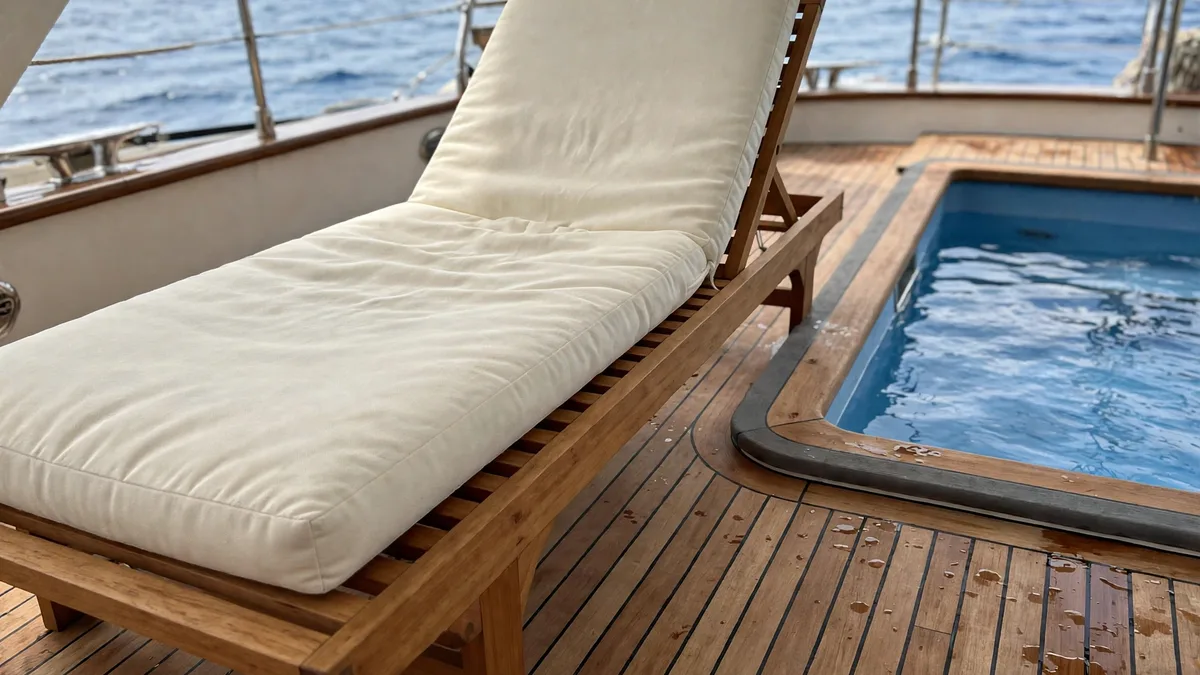
1. Length and width, and the body the lounger is drawn for
The first numbers on the sheet are length and width. A yacht sun lounger is usually 195 to 210 centimetres long and 70 to 85 centimetres wide, drawn for a tall guest lying flat, with room for feet that do not dangle over the end. The width is drawn for shoulders, not for hips, because a lounger that is too narrow feels like a bench.
The figure to read next to the length is the height of the sleeping surface, usually 30 to 40 centimetres off the deck. Low enough to feel close to the water, high enough that the cushion stays dry when the deck is washed down. A lounger that sits too low is the first thing to get wet in a shower.
2. The teak frame, and wood that costs more than the chair
The frame is the second number on the sheet. A yacht lounger is usually built from plantation teak, the same slow-grown hardwood as the deck itself, and the frame needs long, straight, knot-free lengths that are rare and dear. The wood is dried for months, cut, shaped, and sanded by hand.
The number to check next to the timber is the section size, usually 40 to 60 millimetres thick at the rails. The frame carries a guest who shifts, sits up, and lies back down all afternoon, and every joint is a mortise or a bolted fitting, never glue alone. The deck it rests on is described in how a luxury yacht sun deck works.
3. The adjustable back, and a ratchet that never slips
The backrest is the part the guest touches most. A yacht sun lounger back usually adjusts through five to seven positions, from flat to near-upright, held by a stainless steel ratchet that locks with a click. The guest adjusts it with one hand, lying down, without getting up or asking the crew.
The figure to read next to the positions is the ratchet tolerance, usually under half a millimetre of play. A back that slips under a guest’s weight is not just uncomfortable, it is the fastest way to ruin an afternoon. The mechanism is checked at every refit, and the stainless steel is chosen because ordinary steel would seize in a season at sea.
4. Cushions and fabric, and foam that dries in an hour
The cushion is where the money shows. A yacht sun lounger cushion is usually 8 to 12 centimetres thick, made from quick-dry foam that drains water instead of holding it, covered in marine-grade fabric that resists sun and salt. The cover is removable, so the crew can wash it, and the foam is cut to fit one frame exactly.
The number to check next to the thickness is the drying time, usually under an hour in sun and wind after rain. A cushion that stays damp grows mildew, and mildew is the fastest way to ruin a lounger that is otherwise sound. The beach club beside it is measured in the beach club, measured: yacht specs explained.
5. Weight and wheels, and moving a lounger one-handed
The weight is the number the crew asks about first. A yacht sun lounger usually weighs 25 to 40 kilograms, and the better ones carry small wheels at the foot end, so one steward can tilt and roll it across the deck alone. The wheels are recessed, so they never mark the teak.
The figure to read next to the weight is the footprint, usually 70 to 85 centimetres wide and close to two metres long. Two loungers and a small table fill a sun pad, and the crew moves them to follow the shade through the day. The pool beside them is covered in the yacht pool spec sheet, explained simply.

6. Storage and care, and a lounger built for a decade
The last number on the sheet is the service life. A yacht sun lounger frame usually lasts ten to fifteen years, the cushions three to five, and the covers two to three. The crew oils the teak twice a season, dries the cushions after rain, and stores the covers below deck in bad weather.
The figure to read next to the life is the build time, usually two to four weeks of hand work per lounger. The frame is made to order, the cushion is cut to fit, and the whole piece is tested on the deck it will serve before it is signed off. A well-kept lounger is still adjusting with the same click a decade after it was delivered.
The Specifications at a Glance
Here are the numbers that matter most on a luxury yacht sun lounger.
| Specification | Typical Luxury Range |
|---|---|
| Length | 195 to 210 centimetres |
| Width | 70 to 85 centimetres |
| Sleeping height | 30 to 40 centimetres off the deck |
| Back positions | 5 to 7, stainless steel ratchet |
| Cushion thickness | 8 to 12 centimetres, quick-dry foam |
| Frame material | Plantation teak or stainless steel |
| Lounger weight | 25 to 40 kilograms |
| Service life | 10 to 15 years for the frame |
What Does a Luxury Yacht Sun Lounger Cost?
A luxury yacht sun lounger is estimated to cost roughly $8,000 to $25,000 each, depending on the frame and the cushion. A standard teak lounger with a quick-dry cushion is estimated at roughly $8,000 to $15,000, while a custom lounger with a stainless frame, a thicker cushion, and matching side table is estimated at roughly $15,000 to $25,000. A pair with a table is estimated at roughly $18,000 to $55,000.
A Rare Fact
A yacht sun lounger is built for one body, not for a fleet, and the owner is measured for it. The length is drawn from the owner’s height, the width from their shoulders, and the back positions from how they like to read, so two loungers on the same yacht can have different dimensions and nobody but the crew ever notices.

Once you know which numbers do the work, the sheet makes sense. Length decides whether a tall guest can lie flat, ratchet tolerance decides whether the back stays where it is put, and cushion drying time decides whether the lounger is ready again after the next shower.


