Cruise ships are getting quieter in one sense and louder in another. Electric propulsion has taken the rumble out of the engine room, and new ships glide into port with barely a throb. Yet the ships themselves are still noisy machines: fans, pumps, generators, air conditioning, and the low-frequency thrum of a huge hull moving through water. The case for quieter cruise ships is that noise is not a minor annoyance. It is a design failure that harms marine life, wears out passengers, and wastes energy, and the industry should treat silence as a goal in its own right, not as a happy accident.
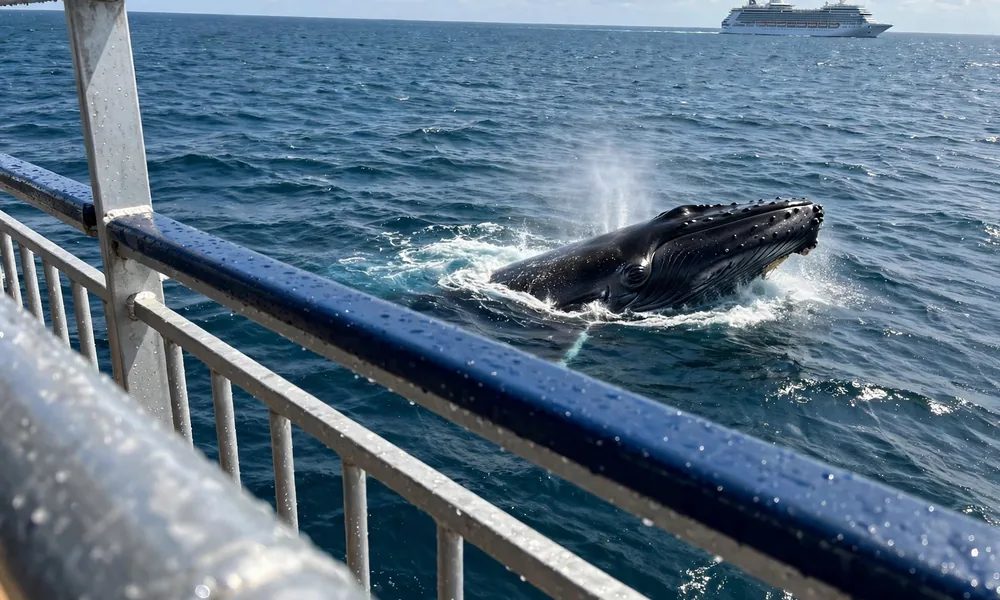
Start under the water, where the damage is worst. A cruise ship is one of the loudest things in the ocean. Its propellers cavitate, its machinery vibrates through the hull, and the sound travels for kilometres underwater, where it is the main sense that whales, dolphins and fish use to navigate, feed and communicate. A loud ship can mask a whale’s call over a wide area, drive animals from feeding grounds, and force them to shout over the noise until they are exhausted. The effect is invisible from the deck, which is why it is so easy to ignore. But a ship that is quiet on the surface and deafening below it has not solved the noise problem. It has only hidden it from the people who caused it.

Noise is pollution, even when you cannot see it
Underwater noise is pollution in the same way that exhaust is pollution, and it should be treated the same way. It is not a by-product to be accepted. It is a design choice, and it can be designed out. Slower-turning propellers cavitate less. Better hull shapes reduce the turbulence that feeds vibration. Machinery mounted on resilient mounts, rather than bolted straight to the hull, stops the ship from turning itself into a loudspeaker. Electric propulsion helps, because an electric motor is smoother than a diesel, but it does not finish the job. A ship can be electrically driven and still be loud, if the propellers, the hull and the auxiliary machinery are not designed for quiet.
The industry already knows how to do this. Naval vessels and research ships have been built for quiet operation for decades, because a quiet ship is a capable ship. The techniques are not secret: careful propeller design, air-lubricated hulls, isolated machinery spaces, and hull forms that keep the flow smooth. What has been missing is the will to apply them to cruise ships, where the priority has been size, speed and onboard attractions. That ordering of priorities is backwards. A cruise ship that harms the ocean it sails through is selling its passengers the very thing it is destroying.
There is a close cousin to this argument in the case for slower cruise ships, and the two reinforce each other. A slower ship is usually a quieter ship, because propeller noise rises steeply with speed. But quiet is not only about speed. A ship can be slow and still loud if its propellers are badly designed or its machinery is bolted to the hull. The noise case stands on its own: sound, vibration and wildlife, not the timetable. Speed helps, but it is not the whole answer.
Passengers feel the noise too
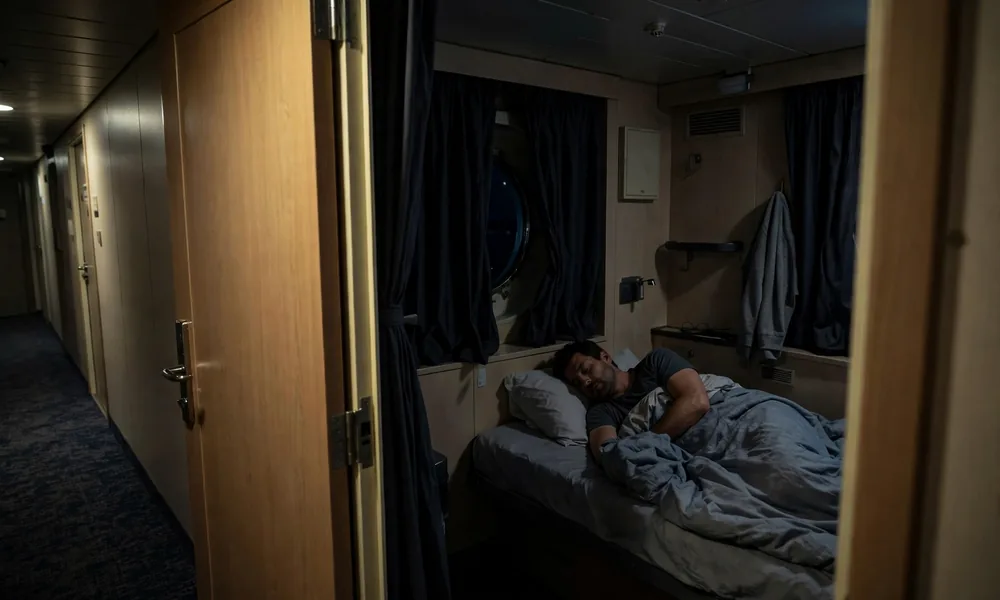
The damage is not only underwater. Passengers feel ship noise as well, even when they do not name it. Low-frequency vibration travels through the steel of a ship and into cabins, restaurants and theatres. It hums through the bed at night, it rattles the glass on the table, and it leaves people tired without knowing why. Cruise lines spend fortunes on mattresses, blackout curtains and spa treatments to help passengers sleep, while the ship itself vibrates all night. A quieter ship is a better night’s sleep, and a better night’s sleep is the difference between a passenger who books again and one who does not.
Crew feel it more, because they live with it for months at a time. Engine-room staff, housekeeping, and the crew in cabins near the machinery spaces work and sleep in noise that would not be accepted in an office on land. Long-term exposure to low-frequency vibration and noise is linked to fatigue, stress and hearing damage, and it is a cost the industry has quietly passed to its workers. A ship designed for quiet is a healthier workplace, and it is a ship whose crew are sharper, safer and more likely to stay.
Quiet ships are efficient ships
There is also an engineering argument that has nothing to do with kindness. Noise is wasted energy. Every decibel of sound and vibration a ship puts into the water is energy that did not go into moving the ship forward. A propeller that cavitates is a propeller that is churning water instead of pushing the ship. A hull that vibrates is a hull that is flexing instead of gliding. Designing for quiet is, to a large extent, designing for efficiency, and the same changes that make a ship quieter usually make it cheaper to run. The way cruise ship propulsion works rewards smooth, well-matched systems, and quiet is a sign that the system is working as it should.
That efficiency shows up in the rankings too. The quietest ferries, for example, tend to be the ones whose propulsion is best matched to the hull, and the same principle holds for cruise ships. The quietest electric ferries are not quiet by accident. They are quiet because someone designed them to be, and cruise ships could be designed the same way if the industry chose to. The technology is not the barrier. The barrier is that nobody is asking for it, and nobody is measuring it.
Measuring noise would make the whole argument concrete. If cruise lines published the underwater noise of each ship, the way they publish fuel use and emissions, passengers could choose the quieter vessel and ports could reward it with better berths or lower fees. A few ports already limit ship noise in sensitive areas, and a public noise rating would give every operator a reason to compete on silence. What gets measured gets improved, and ship noise has gone unmeasured for far too long. The quietest ship should be the one that gets the best welcome, not the one that happens to be newest.
The verdict
Cruise ships should be judged on how quietly they move through the world, not only on how many restaurants they carry. A quieter ship protects the whales and fish it sails past, gives its passengers a better night’s sleep, gives its crew a healthier workplace, and wastes less energy doing it. That is a lot of benefit from a single design goal.
The industry does not need a new invention to get there. It needs to take the quiet techniques it already uses on research ships and naval vessels, apply them to cruise ships, and publish the results so passengers can choose. Silence is not the absence of engineering. It is the sign of engineering done well. The cruise ship of the future should be the one you barely hear coming, and the industry should start building it now.