On a freezing morning, an electric car wakes up and does something a petrol car never has to do: it warms its own battery before it will give you full power. On a hot afternoon in traffic, it does the opposite, chilling the same battery while also cooling the cabin and the motors. All of this is the job of one system — thermal management — and it is one of the most expensive and most underestimated parts of any electric vehicle. It has no glamour, no horsepower figure, no badge on the boot. Without it, the car would be slower, shorter-ranged and, in the worst case, dangerous.
Thermal management is the plumbing, pumps, valves, radiators and software that keep an EV’s battery, motors and electronics at the right temperature in every climate. It is also the reason a modern electric car can fast-charge in twenty minutes in winter and still drive hard on a summer motorway. The system is invisible when it works, and the bill for it is buried in the price of the car — but it is large, and it keeps growing as batteries get bigger and charging gets faster.
Why It Costs So Much
Keeping a battery happy sounds simple until you list everything the system must handle at once: a battery that wants to stay near room temperature, motors that run hot, a cabin that wants to be warm or cool on demand, and a fast charger pouring in hundreds of kilowatts. Each of those demands pulls in a different direction, and the thermal system is the referee.
Reason 1: Batteries are fussy about temperature
A lithium-ion battery works best between roughly 20 and 40 degrees Celsius. Below that, it charges slowly and delivers less power; above it, it ages faster and risks thermal runaway. The thermal system must therefore heat the battery on cold mornings and cool it under load, holding hundreds of kilograms of cells within a narrow window while the weather outside swings by fifty degrees. That precision is what makes the pack itself so demanding to build, as shown by what really goes into an EV battery pack.
Reason 2: Fast charging is a heat problem first
A modern EV can accept 250 kilowatts or more from a fast charger, and almost all of the losses in that transfer become heat inside the battery. The cooling system must remove that heat as fast as the charger delivers energy, or the car throttles the charge and the driver waits. Building cooling loops, cold plates and pumps that can shed tens of kilowatts of heat on demand is the hidden price of every “ten to eighty percent in eighteen minutes” claim.
Reason 3: One loop must do many jobs
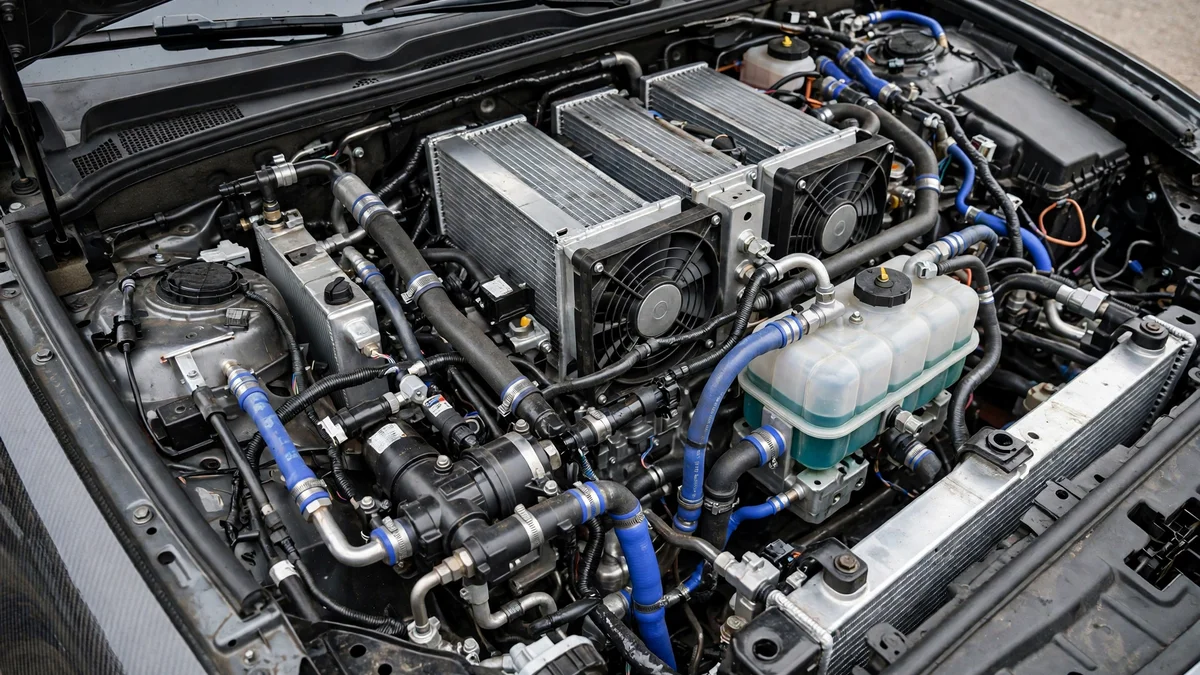
Early electric cars had separate cooling circuits for the battery, the motor and the cabin. Modern cars combine them into one integrated system with valves that shuffle heat where it is needed: waste heat from the motor warms the battery in winter, and a heat pump pulls warmth from the outside air instead of burning battery energy in a resistive heater. This integration saves energy and range, but it means complex valve blocks, more sensors and software that must never make a wrong decision about where heat goes.
Reason 4: The heat pump is a refrigerator in reverse
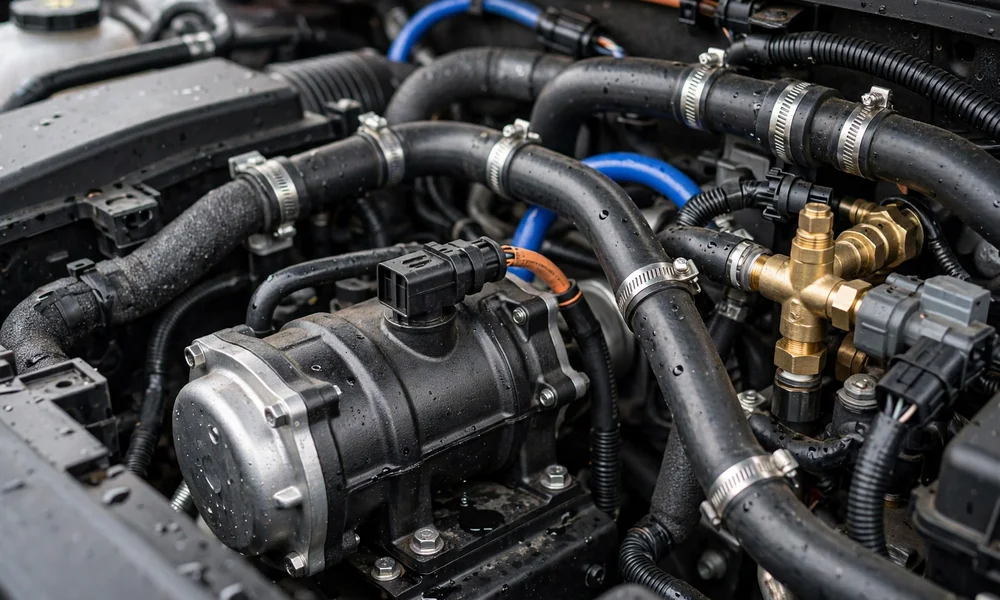
The heat pump is the cleverest and costliest single part of the system. It is essentially an air conditioner running backwards, using a compressor, refrigerant and heat exchangers to move heat rather than create it. In cold weather it can triple the efficiency of cabin heating compared with a simple electric heater, adding real winter range. But it adds a compressor, expansion valves, refrigerant lines and control logic that a petrol car never needed, and it must work silently for the life of the car.
Reason 5: Cold plates and coolant channels are precision parts
Heat leaves the battery through cold plates — aluminium plates with coolant channels pressed against the cells — and through the coolant itself, a special fluid that must not conduct electricity, must not freeze, and must not corrode anything it touches for a decade. Machining and sealing those plates, then plumbing them through a pack that flexes and vibrates for hundreds of thousands of kilometres without a single leak, is manufacturing at its most unforgiving. A leak inside a battery pack is not a puddle; it is a safety event.
Reason 6: Sensors and software never switch off
Dozens of temperature sensors watch the battery, the motors, the coolant and the cabin, feeding a thermal controller that adjusts pumps, valves and fans hundreds of times a second. The system also manages the car when it is parked and charging, waking up to pre-condition the battery before a scheduled departure. Keeping a battery at the right temperature is a close cousin of keeping a processor at full speed, where sustained cooling decides real-world performance. The software behind it is validated across deserts and winters, and that testing is priced into every car.
Reason 7: Safety makes everything more expensive
If a cell ever overheats, the thermal system is the last line of defence before a fire. It must detect the fault, isolate the module, vent gases safely and keep neighbouring cells cool long enough for the occupants to leave. Meeting those requirements means fire-resistant materials, redundant sensors and a design that has been tested to destruction many times over. The inverter that feeds power to the motors faces the same heat battle, as the EV inverter shows, and the thermal system protects it too.
Specifications
| Specification | Detail |
|---|---|
| Battery comfort zone | Roughly 20 to 40 degrees Celsius |
| Fast-charge power handled | Up to 250 kW or more on modern EVs |
| Key components | Heat pump, cold plates, pumps, valves, radiators, chiller |
| Coolant | Dielectric fluid, freeze- and corrosion-resistant |
| Sensors | Dozens of temperature sensors across battery, motors and cabin |
| Heating efficiency | Heat pump up to about three times a resistive heater |
| Control | Thermal controller adjusting pumps and valves continuously |
| Safety role | Detects overheating, isolates modules, vents gases |
Price
An integrated EV thermal management system — heat pump, cold plates, pumps, valves, radiators and controls — is estimated to cost roughly $1,500 to $3,000 per vehicle (estimate), depending on the size of the battery and whether a heat pump is fitted. That makes it one of the most expensive systems in the car after the battery and the motors, and its cost rises with every increase in charging speed. Carmakers accept the bill because the alternative is worse: a car that charges slowly in winter, loses range in summer, and ages its battery years early.

Rare Fact
Some electric cars use the heat from their own motors to warm the battery in winter, and on a cold morning the thermal system may spend several minutes heating the pack before the car allows full charging speed at all. The car is, in effect, warming itself up before it will let you drive it hard — the same way an athlete warms up before a sprint.
That is why EV thermal management costs so much: it is not a radiator and a fan, but a whole climate system for a battery that behaves like a living thing, fussy about temperature, dangerous when overheated, and sluggish when cold. The next time an electric car charges fast on a freezing day, remember the pumps and valves working invisibly underneath — they are the reason the car can do it at all.