Step onto a luxury electric hoverboard for the first time and the machine seems to read your mind. You lean forward a fraction and it rolls ahead, you lean back and it stops, you shift your weight and it turns, all without a handlebar to hold or a pedal to push. The whole trick takes place under your feet, inside a board no bigger than a skateboard, and the price tag is the first clue that the simplicity is an illusion.
A luxury electric hoverboard can cost as much as a good bicycle, yet it has no seat, no handlebars and no brakes you can see. The cost lives in the electric drivetrain: two motors, a battery that must be safe inches from your feet, and a balance system that works a hundred times a second to keep you upright. This is the story of where that money goes, and why the electric parts, not the board itself, set the price.
The Electric Powertrain Is the Price
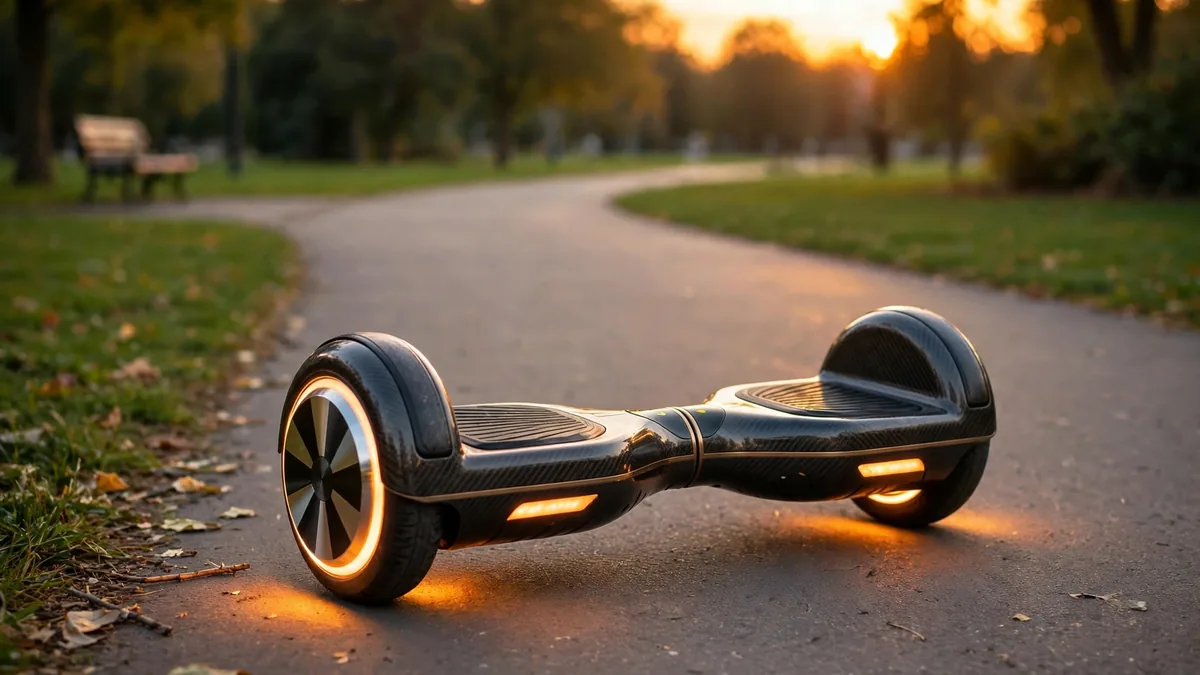
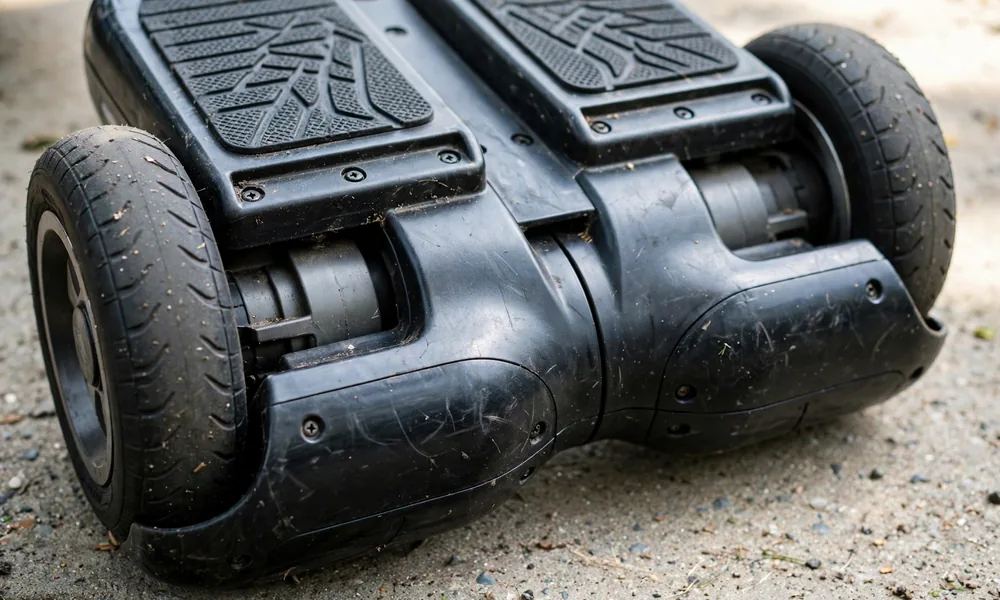
A luxury electric hoverboard has one motor in each wheel, and the two motors must work together perfectly. When the rider leans forward, both motors speed up, and when the rider leans to one side, one motor speeds up and the other slows down, and that difference is what turns the board. The motors are brushless hub motors, sealed inside the wheels, and they have to be powerful enough to carry an adult up a slope from a standing start, yet small enough to fit inside a wheel the size of a dinner plate.
Building a motor that strong, that small and that quiet is expensive, and matching two of them so they respond identically is harder still. A cheap board’s motors whine, shudder and argue with each other, while a luxury board’s motors answer together, silently and instantly, and that smoothness is something a rider feels in the first ten seconds. The how a luxury hoverboard works story explains how the two motors, the sensors and the balance system work as one, and why the electric drivetrain, not the board itself, is where the money goes.
Regenerative braking adds another layer of cost. When the rider slows down, the motors turn into generators and feed power back into the battery, which needs controllers that can switch between driving and generating dozens of times a minute. That electronics is the same idea found in electric cars, shrunk to fit inside a board, and shrinking it without losing reliability is a large part of the price.
Batteries Built for Bursts, Not Just Range
The battery is the single most expensive component in a luxury electric hoverboard, and it is where the cheapest boards cut corners first. A good board uses high-quality lithium cells from a known maker, arranged in a pack with a battery management system that watches every cell for temperature, voltage and charge. That testing and certification costs money, and it is money you cannot see, because a safe battery looks exactly like an unsafe one from the outside.
Luxury boards ask more of their batteries than ordinary ones. The pack must deliver huge bursts of power when the rider accelerates or climbs, then accept charge back from the brakes a moment later, and it must do that hundreds of times without overheating or fading. The how a luxury hoverboard is made story shows how the pack is built and sealed against dust and rain, because a battery that sits inches from the rider’s feet has to be safe in ways a car’s battery, hidden far away, never has to be.
The Electronics That Keep You Upright
The balance system is the hoverboard’s brain, and it never rests. Gyroscopes and accelerometers measure the board’s tilt a hundred times a second, a processor works out what the rider wants, and the motors adjust in the same instant, all without the rider thinking about it. The sensors must be accurate to a fraction of a degree, because a small error becomes a fall, and the processor must never hesitate, because a moment’s delay at speed is a crash.
That electronics is built to a standard far above a toy’s. The circuit boards are sealed against water and dust, the connectors are locked against vibration, and every board is tested on a rig that tilts it in every direction before it is allowed out of the factory. The luxury Segway specs show the same balance thinking on a bigger machine, where the electronics also carry the rider, and the hoverboard packs that whole system into a space smaller than a shoebox.
Tiny Runs, Hand Assembly and Luxury Finishing
Luxury electric hoverboards are made in small numbers, and small numbers mean high prices. A factory that makes ten thousand boards can spread the cost of its tooling, its testing rigs and its engineers across every unit, but a luxury maker building a few hundred boards a year must charge each buyer a share of all of it. The board is assembled by hand, with each motor, battery and sensor fitted and tested by a person, not a machine, and that hand work is slow and dear.
The finishing is where the luxury shows. A luxury board uses a magnesium or carbon shell instead of cheap plastic, rubber footpads that grip in the rain, lights built into the wheels, and a finish that survives being dropped on concrete. The shell must be light, because every gram counts on a board with no seat, and strong, because it protects the battery and the electronics inside it, and making a shell that is both is a job for expensive materials.
As an estimate, a luxury electric hoverboard costs about $800 to $3,000, the battery about $200 to $700 of that, the motors and controllers about $200 to $700 more, and the balance electronics, shell and hand assembly about $300 to $1,200 on top. These are estimated ranges, not quotes, and the final figure depends on the maker, the range and the finish. What never changes is that the board is built in small numbers by hand, and a machine built that way can never be cheap.
A Rare Fact From the World of Electric Hoverboards
Here is a detail few riders ever learn: a luxury electric hoverboard can teach itself how you ride. The balance system records how its rider leans, brakes and turns, and over the first few rides it adjusts its own responses, softening the launch for a cautious rider and sharpening it for a confident one. The board you ride on day ten is not quite the board you bought on day one, because it has quietly learned your balance, and two riders on the same model will find their boards feel different after a week.
What the Price Means for You
If you are wondering why a luxury electric hoverboard costs so much, look at four things: the motors, the battery, the balance electronics and the build. Two matched hub motors, a battery built for bursts and safety, electronics that keep you upright a hundred times a second and a hand-assembled shell are the marks of a board worth its price. Top speed matters less than the brochures suggest, and the battery matters more than anyone admits, because a board with a cheap battery is a board that cannot be trusted under your feet. The best luxury electric hoverboard is the one you never have to think about, gliding silently along while you simply lean and go.


