The trail dropped away through the pines, a ribbon of dirt and roots, and the rider came down it without pedalling hard, the bike humming softly beneath him as it climbed the next rise as if the hill had flattened itself out. At the bottom he stopped, lifted the bike with one hand, and grinned, because it weighed less than the pack on his back. A walker on the path asked what it cost, and when he heard the answer he laughed, until he lifted the bike himself and stopped laughing.
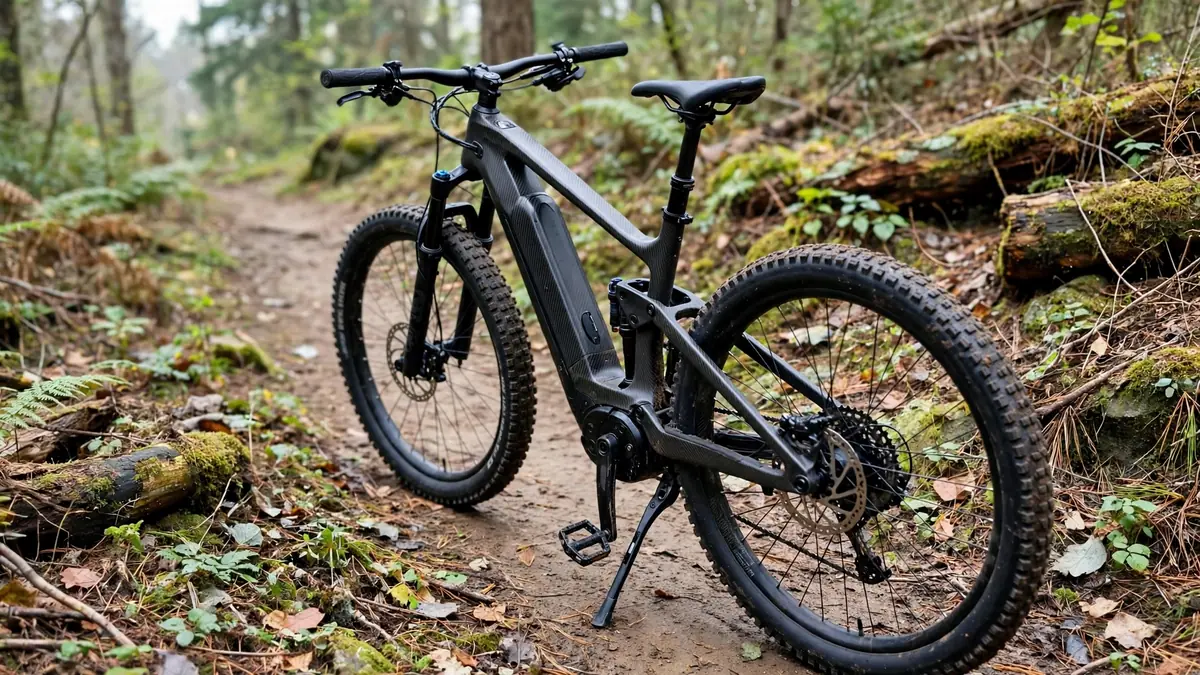
That bike was a luxury electric mountain bike, and it can cost an estimated $10,000 to $15,000, sometimes more. It looks like a bicycle, and it is one, but the price is closer to a small car, and the reasons are hidden in the frame, the motor, the battery, and the suspension. This guide explains why each part costs what it does, and why the total adds up to a car.
The costs at a glance
| What you are paying for | Why it costs so much |
|---|---|
| Carbon fibre frame | Hand-laid carbon, cured in a mould, tested for cracks and fatigue |
| Mid-drive motor | Compact, powerful, sealed against mud and water |
| Battery pack | High-density cells in a frame-shaped case, removable and lockable |
| Suspension | Long-travel air forks and rear shock, tuned for rough trails |
| Drivetrain and brakes | Electronic shifting, carbon wheels, four-piston hydraulic brakes |
| Electronics and sensors | Torque sensor, display, app, and software that tune the ride |
| Hand assembly and testing | Each bike built, tuned, and test-ridden by a specialist |
The frame: carbon fibre, laid by hand
The first cost is the frame, and it is the part that defines the bike. A luxury electric mountain bike uses a carbon fibre frame, laid by hand in a mould, cured under heat and pressure, then inspected for flaws that the eye cannot see. Carbon fibre is light and stiff, which is exactly what a mountain bike needs, but it is also expensive to buy and slow to work with, and a frame that fails on a trail can injure its rider, so the testing is thorough and the rejection rate is high. The guide to luxury electric mountain bike specs explained decodes the numbers behind the frame, the motor, and the battery.
The motor: a small engine that must survive mud
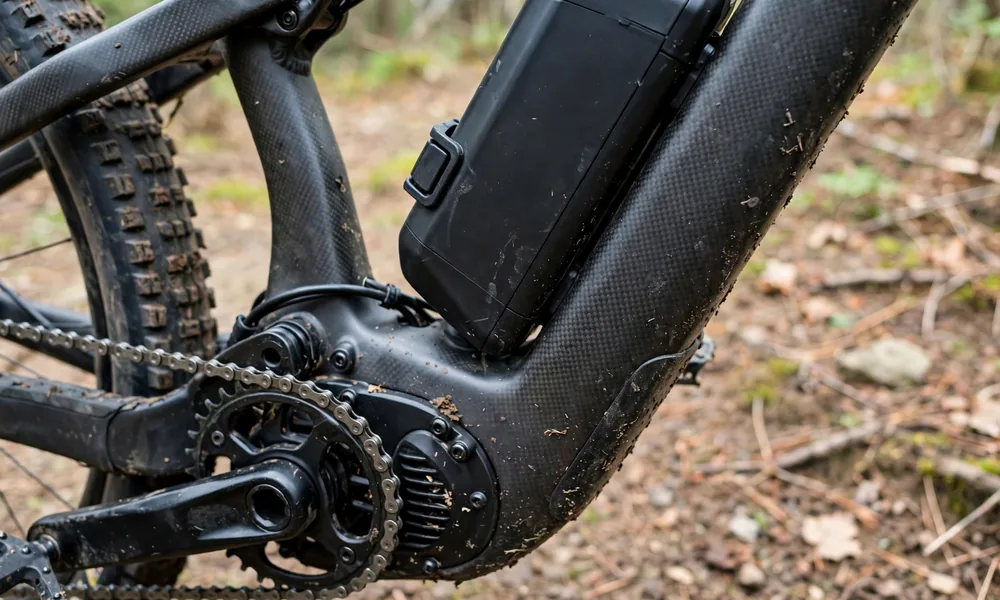
The motor is the second great cost, and it is expensive because it must be small, powerful, and nearly indestructible. A luxury electric mountain bike uses a mid-drive motor, mounted at the cranks, where it drives the chain directly and uses the bike’s gears. That placement gives the best balance and the best climbing, but it also puts the motor in the worst possible place: low, exposed, and in the path of mud, water, and rocks.
The motor makes 250 watts of rated power in most markets, with peak outputs far higher, and torque of 85 to 120 newton-metres, which is what pushes the bike up a steep climb. It is sealed against water and dust, cooled without a fan, and built to survive thousands of kilometres of rough riding. The torque sensor inside it measures how hard the rider is pedalling hundreds of times a second, and adjusts the assistance so smoothly that the rider feels stronger rather than pushed. The account of how a luxury electric mountain bike is made follows the bike from its frame to its finished build, and the motor is fitted with the same care as the frame, because it is the heart of the machine.
The battery: a long ride in a slim case
The battery is the third cost, and it is the part that decides how long the ride lasts. A luxury electric mountain bike carries 625 to 900 watt-hours of battery, packed into a case shaped to fit inside the down tube, and that case must be removable, lockable, and sealed against rain and mud. The cells are the high-density kind, chosen to pack the most energy into the least space, because a bigger battery would make the bike heavier and harder to handle on a trail.
That battery gives a range of 60 to 120 kilometres, depending on how much assistance the rider uses and how steep the trail is. A rider who uses full power on every climb will drain it far faster than a rider who uses it sparingly, and the display on the handlebar shows the remaining range in real time. The battery management system watches every group of cells for heat and voltage, and it shuts the bike down safely if anything goes wrong. The guide to how a luxury electric mountain bike works explains the flow of energy from battery to motor to wheel, and the battery is the figure that sets the length of the day.
The suspension: a motorcycle’s suspension on a bicycle
The suspension is the cost that riders feel most directly, and it is where the bike borrows most from motorcycles. A luxury electric mountain bike has 150 to 170 millimetres of travel at the front and rear, which is the distance the wheels can move up and down to absorb rocks and roots. The fork and the rear shock are air-sprung, adjustable for the rider’s weight, and tuned to keep the tyres on the ground through rough sections.
The drivetrain, wheels, and brakes
The drivetrain is the next cost, and it is where the bike’s price climbs quickly. Electronic shifting changes gear at the touch of a button, with a small motor moving the derailleur, and it keeps shifting accurately even under the extra torque of the motor. Carbon wheels save weight and add stiffness, and the tyres are wide, tough, and tubeless, sealing small punctures by themselves.
How the bike is put together
The build follows a careful sequence, and each step adds cost. First, the carbon frame is laid, cured, and inspected. Second, the motor is fitted to the bottom bracket and the battery case is fitted to the down tube. Third, the suspension is installed and tuned for the frame. Fourth, the drivetrain, wheels, and brakes are fitted, and the electronic shifting is calibrated. Fifth, the display, sensors, and software are installed and updated. Only then is it cleaned, packed, and shipped.
What it costs
A luxury electric mountain bike typically costs an estimated $8,000 to $15,000, with the lightest carbon models and the longest-travel bikes at the top of that range, and limited editions reaching an estimated $18,000 or more. A spare battery, where one is offered, can add an estimated $800 to $1,200. These are estimates, not list prices, because the specification varies widely between makers and the final figure depends on the build. What the buyer is paying for is not a bicycle but a machine that climbs like it has no weight, descends like a motorcycle, and does so quietly, on trails that would defeat an ordinary bike.
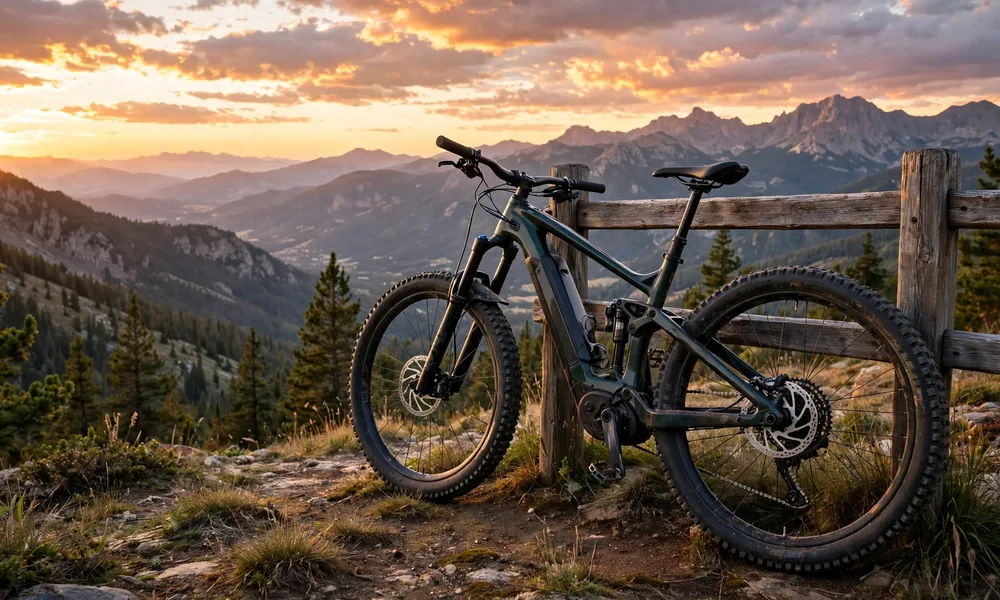
A rare fact
Some luxury electric mountain bikes can climb a hill faster than a motorcycle of the same weight. Because the motor adds its torque to the rider’s pedalling, and the bike’s gears multiply both, the combined force at the rear wheel can exceed what a small motorcycle produces, all in silence. The bike that costs as much as a car can out-climb machines that were built for the job, and it does so without an engine, a throttle, or a drop of fuel.