Every mountain biker knows the feeling of the climb that never ends, the one where the legs burn, the lungs burn, and the summit seems to move further away with every pedal stroke. A luxury electric mountain bike does not remove the climb, but it changes the deal. The rider still pedals, still steers, still picks a line through the rocks, yet the motor quietly adds its own push, turning a grinding ascent into a steady, enjoyable ride and leaving enough energy in the legs for the descent that makes it all worthwhile.
The magic is not brute force. It is a small motor, a clever sensor and a battery that know exactly when to help and when to stay out of the way. The bike reads how hard the rider is pedalling and adds a matching amount of power, so the ride still feels like cycling, only with stronger legs. Here is how a luxury electric mountain bike climbs, from the sensor in the crank to the tyre on the rock.

How It Works
Step 1: The torque sensor reads the rider’s legs
The heart of the system is a torque sensor built into the crank, the part the pedals turn. It measures how hard the rider is pushing, many times a second, and sends that reading to the motor controller. Push gently on a flat path and the motor adds a gentle push of its own. Stand up and stamp on the pedals for a steep pitch and the motor answers with far more. The sensor is what makes the bike feel natural rather than motorised, because the help is always proportional to the effort, and the moment the rider stops pedalling, the help stops too.
Step 2: The mid-drive motor adds its power at the crank
Most luxury electric mountain bikes use a mid-drive motor, a compact unit mounted at the bottom bracket where the pedals meet the frame. It adds its power directly to the crank, so the motor’s effort flows through the same chain and gears as the rider’s legs. That matters on a climb, because it lets the motor use the bike’s gears just like the rider does: a low gear for a steep, rocky pitch, a higher gear for a fast fire road. The motor makes 60 to 90 newton-metres of torque, roughly three times what a strong rider’s legs can produce on their own, and it does so silently.
Step 3: The battery feeds the motor from inside the frame
The battery is a long, slim pack of lithium cells that slides into the down tube, the thick tube that runs from the handlebars down to the pedals. It holds 600 to 800 watt-hours, enough for three to five hours of climbing, and it is locked in place with a key so it can be removed for charging indoors. A management board watches every cell, balancing the charge and protecting the pack from heat and cold. The way a luxury electric bike works uses the same idea of hiding the battery inside the frame, keeping the weight low and centred so the bike still handles like a bicycle rather than a motorbike.
Step 4: The controller blends human and electric power
The controller is the referee between rider and motor. It takes the torque sensor’s reading, the wheel speed and the chosen assistance level, and decides how much power to send to the motor, adjusting the blend hundreds of times a second. On the lowest setting it adds just enough to take the edge off a climb; on the highest it can nearly double the rider’s power. It also cuts the motor the instant the bike passes 25 kilometres per hour, as the law requires in most places, so the bike is a bicycle with help rather than a motorbike in disguise. The way a luxury e-bike works shows the same careful blending, with the controller smoothing the handover so the rider never feels the motor switch on or off.
Step 5: The gears and suspension handle the rough ground
Climbing a mountain is not just about power; it is about grip and control. The bike’s wide, knobbly tyres are run at low pressure so they mould themselves around rocks and roots, and the suspension, with 140 to 170 millimetres of travel, keeps the back wheel pressed into the ground so the motor’s power actually reaches the trail instead of spinning the wheel. The gears are wide-ranging, with a very low first gear for winching up the steepest pitches, and the brakes are powerful hydraulic discs that can stop the heavier bike safely on a long descent. The way a luxury electric bike is made gives the same attention to the frame and the running gear, because a motor is only useful if the rest of the bike can put its power to work.
Step 6: The display and modes let the rider choose the help
A small display on the handlebars shows the battery level, the assistance mode, the speed and the distance, and a thumb switch lets the rider change modes without taking a hand off the bars. Eco mode stretches the battery for a long day, Trail mode gives a natural-feeling boost for technical climbing, and Boost mode delivers full power for the steepest sections. Many bikes also connect to a phone app that records the ride, shows how much of the climb was human and how much was electric, and lets the rider tune the motor’s character to suit their own legs.

Electric Mountain Bike Specifications
| Specification | Typical Luxury Electric Mountain Bike |
|---|---|
| Motor | Mid-drive, 250 watts, 60 to 90 newton-metres |
| Battery | Lithium-ion, 600 to 800 watt-hours |
| Range | 60 to 120 kilometres, depending on mode |
| Suspension | 140 to 170 millimetres front and rear |
| Weight | 22 to 25 kilograms |
| Frame | Carbon fibre or aluminium |
| Charging time | 3 to 5 hours from a home socket |
The Price
A luxury electric mountain bike costs an estimated $6,000 to $12,000, depending on the frame material, the motor and the suspension. The carbon frame and the high-end suspension account for much of the price, and the motor and battery add a premium over a regular mountain bike. Running costs stay modest: a full charge costs only a few cents, and servicing is mostly tyres, brake pads, a chain and a software update once a year.
A Rare Fact
Some luxury electric mountain bikes can sense the trail itself. A sensor in the suspension watches how rough the ground is and tells the motor to add a little extra power just as the bike hits a rock garden, so the rider keeps momentum through the hardest part of the climb without having to think about it.
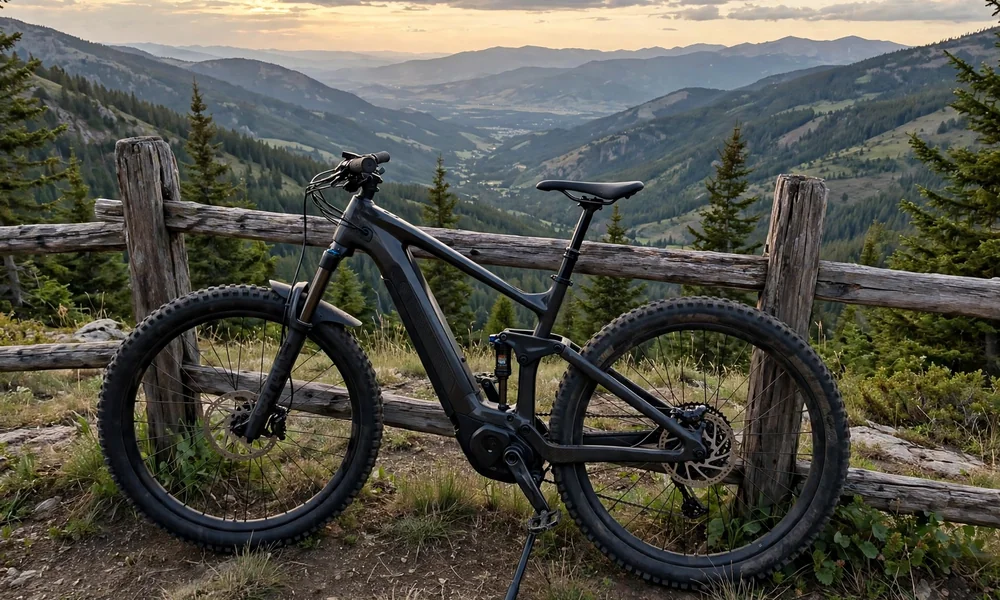
An electric mountain bike changes who can enjoy the mountains. Riders of different fitness levels can climb together, older riders can keep riding the trails they love, and a lunch-hour ride can include a proper climb and a proper descent instead of just one of them. The bike does not ride itself, but it makes the hard parts fair.
A luxury electric mountain bike proves that a motor can make cycling more like cycling, not less. Its sensor reads the rider’s legs, its mid-drive motor adds power through the gears, its battery hides inside the frame, and its suspension keeps the tyres gripping the trail. It climbs with the rider, not instead of them, and that is why it feels so good.