The price tag was the first thing I saw, and it stopped me mid-step. A utility task vehicle, a machine built for mud, fences, and feed sacks, was sitting in the showroom with a price higher than the family car parked outside. The dealer did not flinch. He opened the door, pointed at the battery pack under the floor, and said the price was not in the badge but in what was bolted underneath.
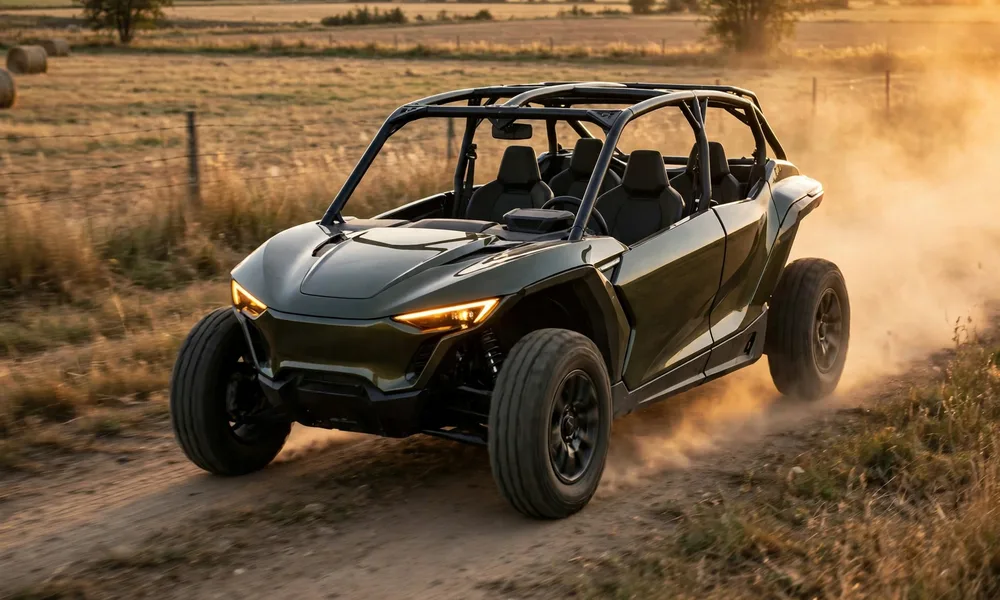
A luxury electric UTV is not a golf cart with bigger tyres. It is a working vehicle for estates, vineyards, resorts, and farms, built to haul a tonne, climb a wet hill, cross a stream, and come home quietly. It must do all of that while carrying its passengers in heated, comfortable seats, and while lasting for years in rain and mud. The price reflects every one of those jobs, and most of them are invisible from the showroom floor. This guide takes the machine apart, cost by cost, to show where the money goes.
There is no single reason a luxury electric UTV is expensive. There are six or seven, stacked on top of each other, and each one adds thousands to the bill. Understand them, and the price stops looking like a markup and starts looking like a bill of materials. Here is what you are actually paying for.

Where the Money Goes
1. The battery is half the machine
The biggest single cost is the battery, and on a luxury electric UTV it is a large one, usually 15 to 30 kilowatt-hours. That pack must deliver a full working day of hauling and climbing, survive constant vibration, and keep working in rain, mud, and freezing weather. It is sealed to a high waterproof standard, heated for cold mornings, and cooled for hard climbs, and every one of those systems adds cost. The battery alone can account for a third or more of the whole vehicle’s price, and it is the part that separates a serious work machine from a recreational toy with a short range.
2. A chassis built for punishment
Under the body sits a heavy steel chassis, and the sheet metal around it is thicker than it looks. A luxury UTV is expected to carry a tonne in its bed, tow a trailer, and survive being driven hard across rutted ground for a decade. The frame is welded, braced, and coated against corrosion, and the roll cage is built to a proper safety standard, not a styling exercise. You are paying for a frame that will not bend the first time it meets a ditch.
3. Suspension and four-wheel drive
The suspension on a luxury UTV is long-travel and independent, with heavy-duty shock absorbers that can soak up rocks and ruts while keeping all four wheels on the ground. Ground clearance is usually 300 millimetres or more, and the four-wheel-drive system can lock differentials and send power exactly where grip remains. Electric drive makes this cleverer than on a petrol UTV, because each wheel can be managed precisely, but the motors, controllers, and sealed wiring that make it possible are expensive.
4. The cab: luxury in a work vehicle
The cab is where the luxury label earns its keep, and it is also where a surprising amount of money sits. Heated seats, a sealed cabin with proper doors, a heater that works in winter, a windscreen that does not fog, and a dashboard display showing range, drive mode, and battery health. Making a comfortable cabin survive that life means better seals, better materials, and better assembly, and the cost of the cab can rival the cost of the drivetrain on some models.
5. Low volumes and hand finishing
A luxury electric UTV is built in small numbers, often hundreds or low thousands a year, not the hundreds of thousands of a mass-market car. That means no economies of scale: every part costs more, every supplier charges more, and much of the assembly is done by hand. The paint, the stitching, the fitting of the cab, and the final inspection are done slowly, by people, rather than by robots on a fast line. Low volume is the quiet multiplier behind the price, and it is the reason a luxury UTV will never cost what a mass-produced petrol machine costs.
6. Safety, sealing and certification
Finally, there is the cost of making the machine legal and safe. The battery must pass crash and fire tests, the whole vehicle must meet road and off-road regulations, and the electrical system must be sealed against water to a proper standard. Certification takes months and costs a fortune, and a small maker spreads that cost across very few vehicles. It is the least visible cost and one of the largest per vehicle. Without it, the machine could not be sold at all, so every buyer pays a share of it.

Typical Specifications
| Specification | Typical Luxury Figure |
|---|---|
| Battery capacity | 15–30 kWh, heated and sealed |
| Motor power | 15–30 kW continuous, higher peak |
| Range | About 100–160 km gentle use; less under load |
| Towing capacity | 900–1,500 kg |
| Payload | 450–700 kg in the bed |
| Ground clearance | 300 mm or more |
| Seats | 2–6, heated on luxury models |
| Weight | 800–1,200 kg |
What It Costs
A luxury electric UTV typically costs an estimated $25,000 to $60,000, with premium models that offer larger batteries, full cabs, and six seats reaching the top of that range. That is roughly double a comparable petrol UTV, and the gap is almost entirely the battery, the electric drivetrain, and the low production volume. Running costs, though, are far lower: electricity is cheaper than petrol, there is no oil to change, no exhaust to maintain, and far fewer moving parts to wear out. Over several years of daily estate work, the savings on fuel and servicing can close much of the gap.
Charging is simple. Most UTVs charge from a standard household outlet overnight, or faster from a wall box, and a full charge typically costs only a few dollars in electricity. The purchase price stings once; the running costs soothe every day after.
A Rare Fact
Here is something few buyers expect: silence is a working tool, not just a comfort. Estate managers and vineyard owners report that electric UTVs let them approach livestock and wildlife without scattering them, and rangers use them to patrol without disturbing guests or animals. One Scottish estate found that deer, which would bolt at the sound of a petrol UTV a field away, barely lifted their heads as an electric UTV passed. The quiet motor is not a side effect of the battery. On a working estate, it is a feature worth paying for.
Read the price with the costs in this guide in mind, test the machine on a hill with a trailer behind it, and the right UTV will announce itself by doing the hard jobs without complaint. That is what the money buys: not a badge, but a battery, a frame, and a cab that will still be working in ten years. Readers who want to see how these machines are put together can read how a luxury electric UTV is made, while how a luxury electric quad bike is made and luxury electric quad bike specs explained show its electric cousins.


