On the deck of every luxury ship, beside each bright orange lifeboat, stands a piece of machinery that most passengers never notice. It is the davit, a steel arm with a winch and wire ropes, whose only job is to swing the lifeboat out over the water and lower it to the sea. It may sit unused for twenty years, and then, on the worst day of the ship’s life, it has to work perfectly, in the dark, in a storm, with a full load of frightened people.
A lifeboat davit looks like a simple crane, but it is one of the most expensive pieces of deck equipment on a luxury ship. It is built to a standard no ordinary crane has to meet, it is tested more often than almost anything else on board, and it is made from materials and mechanisms that cost far more than their size suggests. This is where the money goes, and why a davit is never the place to save it.
Why It Costs So Much
The steel and the load
A davit has to lift a lifeboat that weighs many tonnes when it is full of people, and it has to do it while the ship is rolling. The steel arm is therefore far stronger than it looks, built from high-grade marine steel with a safety factor that would seem excessive on any other crane. The arm, the pivot and the base are all sized for a load much larger than the boat, because a davit that bends under load is a davit that has already failed.
The winch and the wire ropes
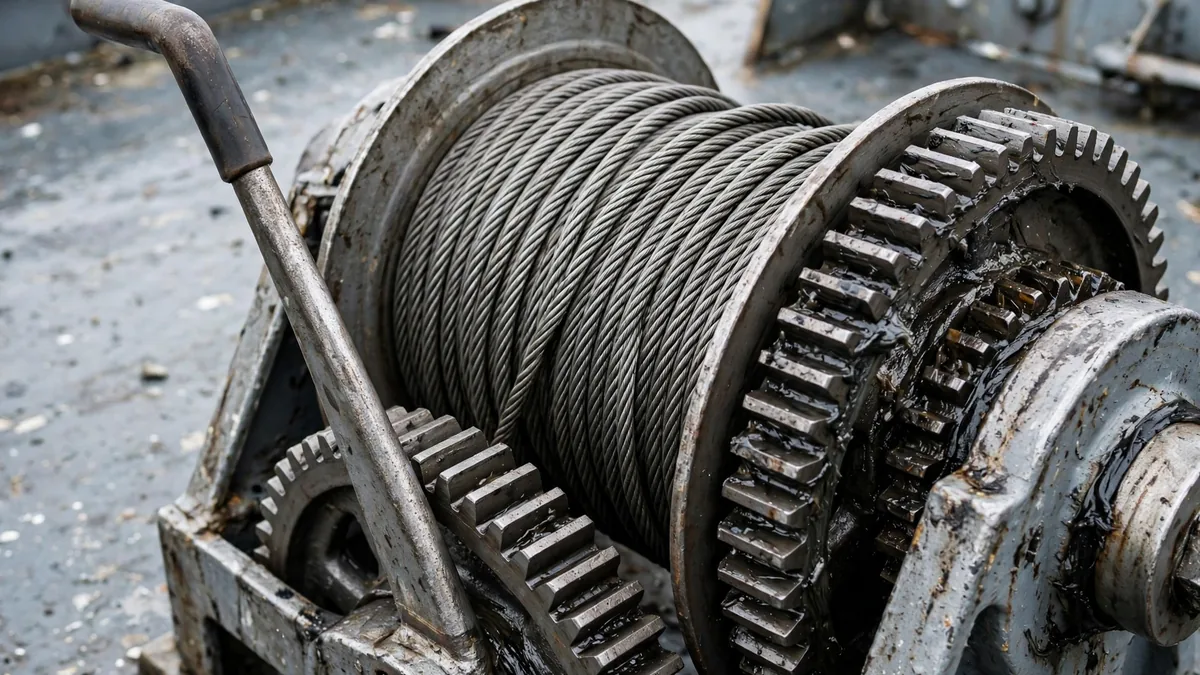
The heart of the davit is its winch, a large drum wound with wire rope, driven by an electric motor with a handbrake as a backup. The winch has to lower the boat at a steady, controlled speed, never too fast and never jerky, and it has to hold the boat still at any point in the descent. The mechanism is built with duplicate brakes, so that if one fails, the other takes over without the boat dropping.
Launching in a storm
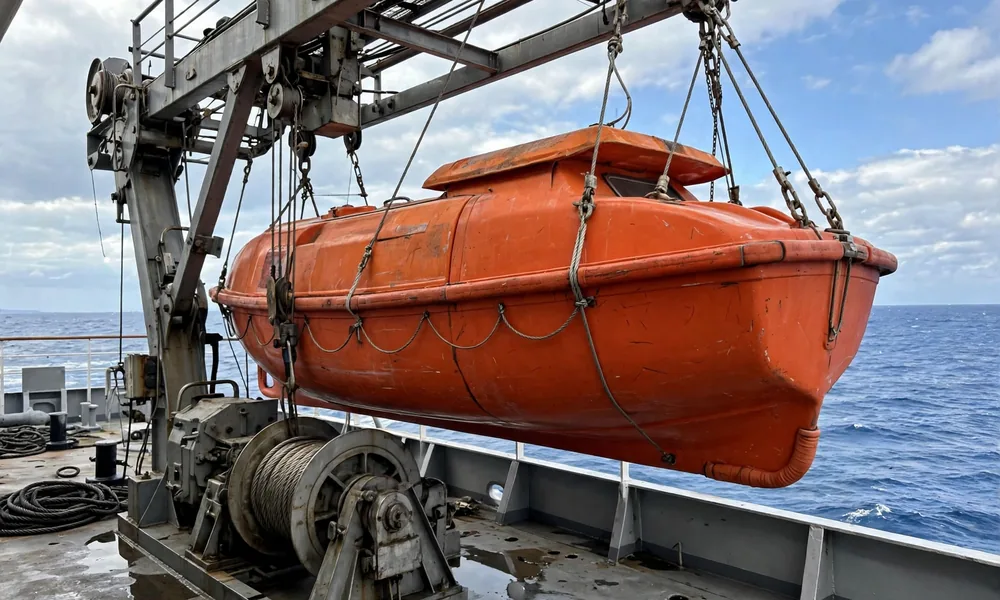
A davit is designed for the worst conditions, not the best. The ship may be listing heavily, the wind may be blowing the boat against the hull, and the sea below may be rising and falling by several metres. The davit has to swing the boat clear of the ship’s side and lower it to the water without swinging it into the steel, and it has to do it with a full load while the deck is wet and the crew are wearing life jackets and gloves.
The design that makes this possible is expensive. The arm is shaped to clear the hull at every angle of list, the winch is governed so the boat cannot descend too fast even if the operator panics, and the release gear lets the boat free itself from the ropes the moment it touches the water. Every one of those features was added because a davit without it failed somewhere, and the cost of each one is the cost of a lesson learned.
Testing, testing and more testing
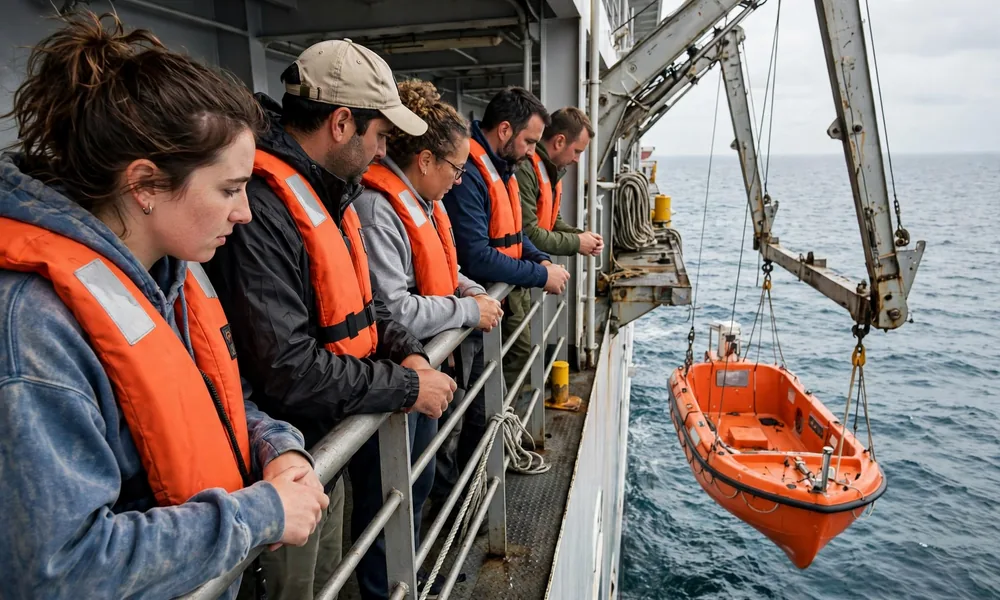
No other piece of deck machinery is tested as often as a davit. The rules require the crew to lower the boats regularly, to test the winches and brakes, to inspect the ropes and to run full drills in which the boat is swung out and lowered to the water. The davits are also load-tested with weights, to prove they can hold more than a full boat, and the tests are recorded and inspected by the classification society.
Certification and the paper trail
Every davit on a luxury ship is certified, and the certification is not a single stamp. The design is approved, the steel is tested, the winch is type-approved, the ropes are certified, and the finished davit is load-tested before the ship is allowed to sail. The paperwork follows the davit for its whole life, recording every inspection, every test and every replacement part.
One davit for every boat
The final reason a davit is expensive is that a ship needs many of them. A large luxury ship carries a dozen or more lifeboats, and each one needs its own davit, its own winch and its own set of ropes. The davits are the most visible equipment on the boat deck, a row of steel arms along both sides of the ship, and the cost of the whole set runs into millions of dollars.
The number is set by the rules, which require enough lifeboats for everyone on board, with a margin for the boats that cannot be launched because the ship is listing to one side. The shipowner cannot buy fewer davits to save money, because the number is not a choice. It is a condition of sailing, and the price of the set is the price of the licence to carry passengers.
| Item | Typical cost or scale |
|---|---|
| Davit arm | High-grade marine steel, built for loads above a full boat |
| Winch | Drum, motor and duplicate brakes for controlled lowering |
| Wire ropes | High-strength galvanised steel, replaced on schedule |
| Release gear | Frees the boat from the ropes the moment it touches water |
| Testing | Regular drills, inspections and load tests with weights |
| Certification | Design, steel, winch and ropes all approved and documented |
| Number per ship | A dozen or more, one for every lifeboat on board |
The figure most people misunderstand is the cost of a single davit, because a davit is never bought singly. The money is in the set, the testing and the certification that cover all of them, and a shipowner who prices one davit has priced the smallest part of a system that only works when every davit works.
What One Costs
A single lifeboat davit on a luxury ship typically costs an estimated 150,000 to 400,000 dollars, set mostly by the size of the boat it serves and the standard of its winch and brakes, and a full set for a large ship runs into several million dollars. The davits are priced like the rescue equipment they are, because they are the only way off a ship that cannot be saved. The same careful building goes into the boats they carry, and the way a luxury ship lifeboat is made covers the moulds and the hand-laid shell, while the question of why a luxury ship lifeboat is so expensive looks at the boat itself from the cost side.
A Rare Fact
The first davits were simple curved arms of wood and iron, worked by hand with ropes and pulleys, and they could only lower a small open boat in calm water. The modern gravity davit, which lowers the boat by its own weight under the control of a brake, was invented after disasters in which boats could not be launched because the ship was listing too far. The gravity davit is one of the few pieces of ship equipment whose design was changed by a single disaster and never changed back.
A luxury ship lifeboat davit costs a fortune because it is not really a crane. It is a rescue system, built to work once, perfectly, on the worst day of the ship’s life, and every part of it is priced for that one moment. The same logic prices every piece of safety equipment on the water, and the way a luxury ship lifeboat works shows how the boat and the davit are designed to work together when it matters most.


