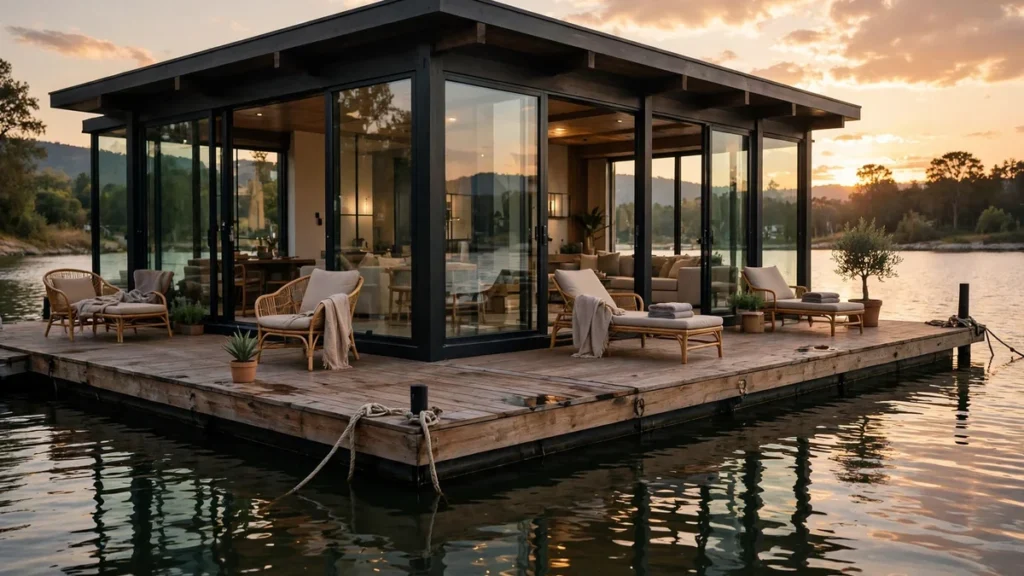
The superyacht in the marina was the one everyone photographed, white and gleaming, with a helicopter on its deck. But the captain spent more time looking at the grey ship moored behind it, plain and workmanlike, with a crane on its stern and a tender the size of a small yacht on its deck. That grey ship, he said, was the reason the white one could do everything its owner wanted, and it had cost a fortune of its own.
A luxury shadow yacht, sometimes called a support vessel, is the boat behind the boat. It carries the tenders, the jet skis, the submarine, the helicopter and the extra crew, so that the main yacht can stay clean, quiet and uncluttered. It sounds like a simple support ship, but building one to luxury standard is a serious engineering job, and the price surprises almost everyone who asks. The shadow yacht is where the toys live, and the toys are only the beginning.

Why a Luxury Shadow Yacht Costs So Much
Reason 1: It is a working ship dressed as a yacht
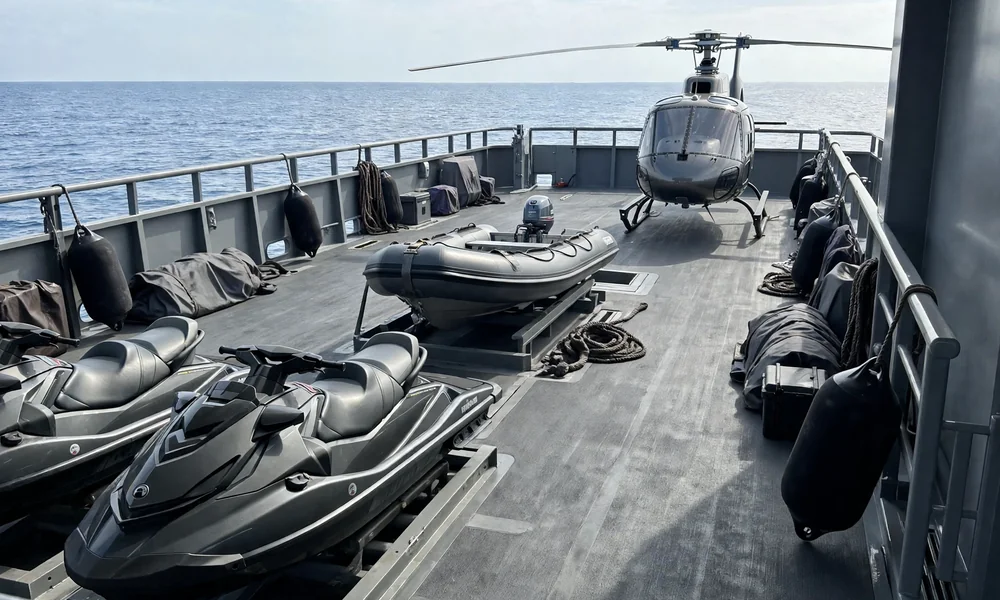
A shadow yacht has to do two jobs at once: work like a cargo ship and look like part of a luxury fleet. Its deck carries heavy cranes, a helipad and a garage for tenders, while its interior carries crew cabins, workshops and stores. The structure must be strong enough to lift a 15-tonne tender over the side in a swell, and the finish must be good enough to moor beside a superyacht without embarrassment. Building a ship that is both a crane barge and a yacht costs more than either one alone.
Reason 2: The crane and the deck are the heart of the ship
The crane is the most expensive single item on many shadow yachts, and it has to be. It lifts tenders, submarines and containers in open water, often at night, and it must work safely in waves that would stop a port crane. A large marine crane, with its hydraulics, controls and safety systems, can cost millions on its own. The deck beneath it is reinforced steel, fitted with tie-downs, rails and floodable wells, and every fitting is marine-grade. Without the crane, the ship is just a hull; with it, the ship earns its keep. The steelwork behind such ships is explained in our guide to how a superyacht steel hull works.
Reason 3: Helicopters need a certified landing deck
Many shadow yachts carry a helicopter, and a helipad at sea is not a flat piece of deck with a painted circle. It must be certified for the weight of the aircraft, fitted with firefighting foam, tie-downs, lighting and a fuel system, and it must stay stable enough to land on in a swell. The hangar below needs space, ventilation and workshop facilities, and the crew need training to handle aviation fuel safely. A certified helipad adds millions to the build and to the running costs, and it is one of the first things a buyer asks about.
Reason 4: It carries a second crew, in comfort
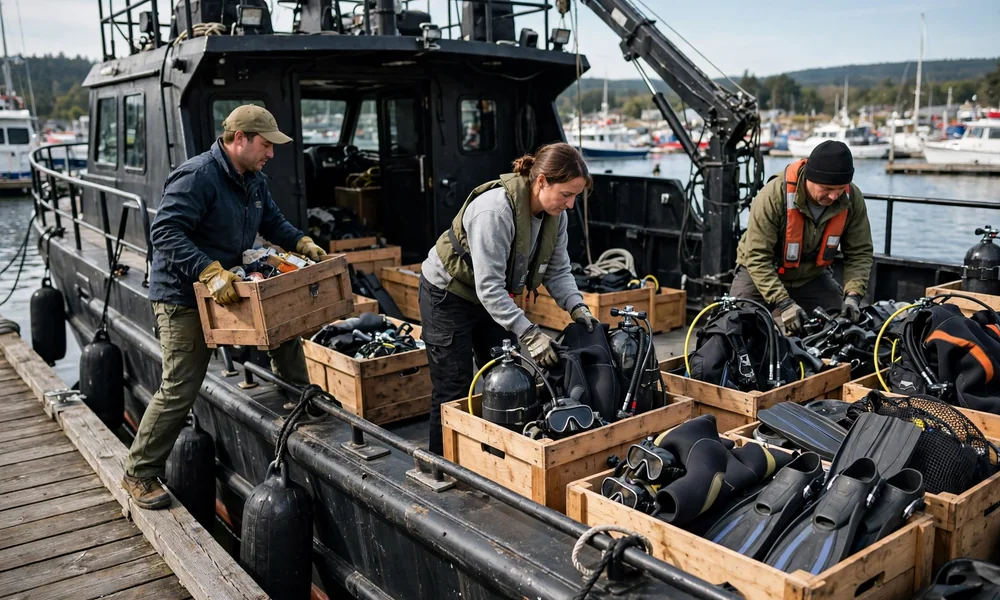
A shadow yacht carries the extra crew the main yacht cannot house: tender drivers, dive masters, engineers, helicopter pilots and security staff, often 10 to 20 more people. Those people need cabins, a mess room, a galley and recreation space, all built to a good standard, because a tired crew is a dangerous crew. The ship also carries their equipment, from diving compressors to spare parts, and it needs workshops to repair it at sea. Housing and feeding a second crew, far from shore, is a large part of the running cost.
Reason 5: Range, speed and keeping up with the mothership
A shadow yacht is useless if it cannot keep up. It must match the superyacht’s cruising speed, often 14 to 18 knots, and it must cross oceans with enough fuel to do so, carrying a range of 5,000 nautical miles or more. That means large engines, large tanks and a hull designed for long passages, not short harbour trips. The ship also needs the same navigation, communication and safety systems as the main yacht, because it sails the same waters. Keeping up is not a luxury; it is the whole point, and it costs accordingly. The main yacht it serves is covered in our guide to how a luxury yacht works.
Reason 6: Custom builds, tiny numbers, no economies of scale
Almost no two shadow yachts are alike, because each one is built around its owner’s toys: one carries a submarine, another carries a fleet of jet skis, a third carries a seaplane. The yard starts from a blank page, designs the deck layout, the crane and the storage around that list, and builds a one-off ship. There are no production lines, no standard models and no discounts for volume, and the design work alone can take a year. A one-off ship built to a one-off list will always cost more than a standard yacht.
Luxury Shadow Yacht Key Figures
| Specification | Typical luxury figure | What it means |
|---|---|---|
| Length | 50 to 85 metres | Large ship, mostly open deck |
| Crane capacity | 10 to 30 tonnes | Lifts tenders and submarines at sea |
| Cruising speed | 14 to 18 knots | Keeps up with the main yacht |
| Range | 5,000 nautical miles plus | Crosses oceans without refuelling |
| Extra crew | 10 to 20 people | Tender drivers, pilots, engineers |
| Helipad | Certified, with hangar | Aviation fuel, foam, lighting |
What a Luxury Shadow Yacht Costs
A new luxury shadow yacht typically costs an estimated $20 million to $60 million, depending on size, crane and helicopter facilities, and the largest custom builds can cost an estimated $80 million or more. Running one costs an estimated $2 million to $5 million per year, covering crew, fuel, berthing, insurance and maintenance, and the helicopter alone can add an estimated $500,000 or more per year. These are estimates, not quoted prices, and they vary widely with the specification. The shadow yacht is an extra ship, with an extra crew and an extra bill, and owners buy one only when the main yacht cannot carry what they want.
A Rare Fact About Luxury Shadow Yachts
Shadow yachts began as converted commercial vessels, often old offshore supply ships bought cheaply and repainted to match the mothership. Owners discovered that a plain working ship could carry everything their beautiful yacht could not, and the idea caught on so fast that yards began building purpose-made shadow yachts from scratch. Some now carry submarines that can dive to 300 metres, and one famous support vessel carries a full research laboratory. The grey ship in the background has quietly become one of the most interesting boats in the harbour.
The price of a luxury shadow yacht is the price of freedom for the main yacht. Without it, the superyacht would be cluttered with tenders, noisy with helicopters and crowded with extra crew. With it, the main yacht stays clean and the toys stay close, ready whenever the owner wants them. That freedom costs tens of millions, and for the owners who buy these ships, it is worth every penny. For the wider picture, see our guide to why a luxury superyacht is so expensive.