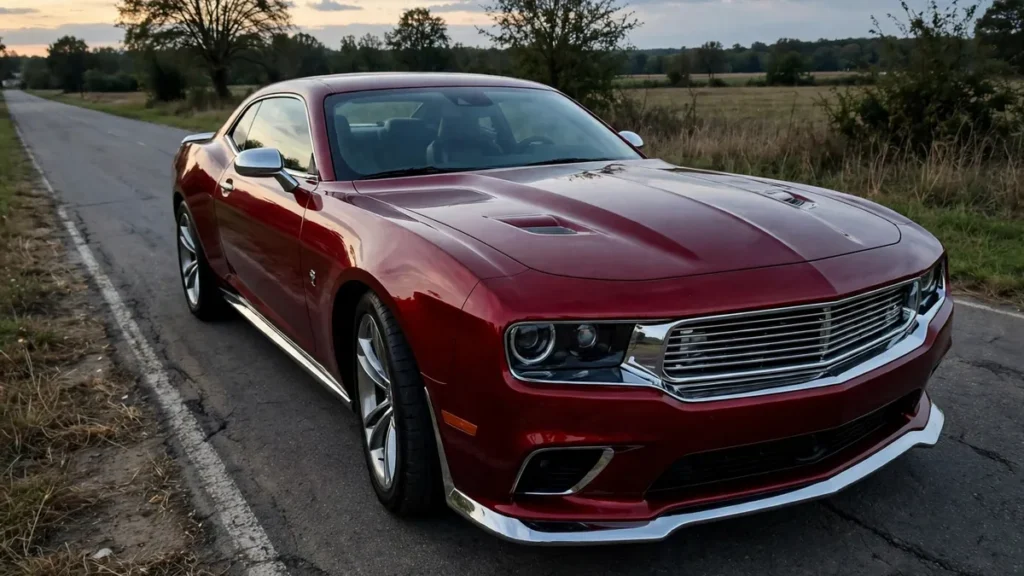
In a small workshop in Modena, Italy, a car is being built that has more in common with a piece of sculpture than with anything on a production line. The Pagani Huayra is one of the rarest and most expensive cars in the world, and at its heart is a single structure that explains much of the price: the monocoque. It is a carbon-fibre tub that forms the cabin, the floor, and the backbone of the car, and it is made by hand, layer by layer, over weeks of work. A Huayra monocoque costs hundreds of thousands of dollars (estimate) to produce, and no two are rushed. The price is not about the material alone. It is about the time, the skill, and the refusal to compromise that goes into a structure almost nobody will ever see.
Most cars hide their structure under panels and trim. The Huayra’s monocoque is different because it is the car. Everything bolts to it: the engine, the suspension, the bodywork, the seats. If it is a millimetre out of true, the car will never drive properly. If it is a gram heavier than it should be, the car is slower. Pagani builds only a few dozen cars a year, so the monocoque is made by people, by hand, in a workshop where the work is checked at every step.

Why the Pagani Huayra Monocoque Costs So Much
1. The material is carbon-titanium, not ordinary carbon fibre
Pagani does not use off-the-shelf carbon fibre. Its monocoque is built from Carbo-Titanium, a weave that threads titanium wire through carbon fibre cloth, combining the lightness of carbon with the toughness of metal. The material is made to Pagani’s own specification and is far more expensive than standard carbon fibre (estimate). It is also harder to work with: the titanium threads resist the mould, and each layer must be laid with care. The result is a tub that is lighter and stronger than a conventional carbon monocoque, and that can survive impacts that would shatter ordinary carbon. The materials inside the Huayra monocoque are the starting point of its price.
2. Every layer is laid by hand
A monocoque is built from hundreds of individual sheets of carbon prepreg, each one cut to a pattern, placed in a mould, and smoothed down by hand. The direction of the weave in each layer matters: fibres running one way carry one load, fibres running another carry a different one, and the person laying them must know which is which. A single monocoque can take weeks of hand lay-up, and the work cannot be hurried. Robots can lay carbon fibre for aeroplane wings, but they cannot match the feel of a human hand in a mould as complex as a car tub.
3. It is cured in an autoclave the size of a room
Once the layers are laid, the mould goes into an autoclave, a giant pressurised oven that bakes the resin and bonds the fibres together. The temperature and pressure must be controlled precisely for hours, and the whole cycle is monitored by engineers. A failed cure means starting again from nothing, so the process is checked and rechecked. The autoclave itself is a major piece of industrial equipment, and running it for a single car is expensive (estimate). The autoclave curing behind carbon fibre parts is one of the most energy-hungry steps in building any hypercar.
4. Titanium inserts are machined and bonded in by hand
Where the suspension, the engine, and the bodywork bolt to the monocoque, Pagani bonds in machined titanium inserts. Each one is machined from solid billet, fitted by hand, and bonded with aerospace adhesive. The inserts must sit exactly right, because they carry the loads of a car that can pull more than a tonne of downforce at speed. Machining titanium is slow and wears out tools quickly, and the fitting is done by craftsmen who have built these cars for years. There are no shortcuts: a badly bonded insert would fail catastrophically.

5. It is inspected like an aircraft part
Every monocoque is inspected with ultrasound and X-ray techniques borrowed from aerospace, searching for voids, delamination, or trapped air that the eye cannot see. A flaw the size of a coin can mean the tub is rejected and the work begins again. The inspection takes days and needs specialist operators and equipment. Pagani accepts this cost because the monocoque is a safety cell: in a crash, it is the structure that keeps the occupants alive. A car that costs millions cannot carry a structure that was merely good enough.
6. The moulds themselves are a fortune
The moulds a monocoque is laid into are precision-machined from metal or high-temperature composite, and they cost a small fortune to make (estimate). They must survive repeated autoclave cycles without warping. Spread across a few dozen cars, the cost of the tooling is enormous per car. A mass-market manufacturer spreads tooling across millions of cars; Pagani spreads it across dozens, and each monocoque carries its share.
7. So few are ever made
Pagani builds only a few dozen cars a year, and each Huayra is tailored to its buyer. There is no economy of scale, no learning curve spread across thousands of units, and no supplier who will cut prices for volume that does not exist. The people who build the monocoque are among the best in the world at their craft, and their time is priced accordingly. Rarity is the point of the car, and rarity is also the reason the monocoque costs what it does. The carbon fibre weave behind it is woven for a handful of cars a year, not a fleet.

Pagani Huayra Monocoque at a Glance
| Specification | Detail |
|---|---|
| Material | Carbo-Titanium, carbon fibre woven with titanium wire |
| Construction | Hand-laid prepreg, hundreds of layers |
| Curing | Autoclave, high temperature and pressure |
| Mounting points | Machined titanium inserts, bonded by hand |
| Inspection | Ultrasound and X-ray, aerospace standard |
| Build time | Weeks of hand work per monocoque (estimate) |
| Production volume | A few dozen cars per year |
| Role | Cabin, floor, and structural backbone of the car |
What Does It Cost?
The monocoque alone is estimated to cost several hundred thousand dollars (estimate) to produce, and it is a large part of why a Huayra costs several million dollars (estimate) when new. The rest of the car carries the same philosophy: small numbers, hand work, and no compromise. A Huayra is not expensive because it is fast, though it is. It is expensive because almost everything in it was made by a person, slowly, in a small workshop in Modena, and that kind of making has a price that no machine can undercut.
A Rare Fact
Pagani’s founder, Horacio Pagani, began his career building composite parts in Argentina before moving to Italy to work with Lamborghini. He was so convinced that carbon fibre was the future of cars that he borrowed money to buy his own autoclave when his employer would not. That autoclave, bought on faith, became the foundation of Pagani Automobili. Every Huayra monocoque is cured in the descendant of that gamble, in a workshop where the cars are still built the way Horacio Pagani imagined them when nobody else believed carbon fibre belonged in a road car at all.