Forget the spec sheet. Wilklit’s view is that the materials in your smartphone matter more than the specifications printed next to them — more than the megapixels, the gigahertz and the milliamp-hours that fill every launch presentation. Two phones can share nearly identical specs and feel like products from different planets, and the difference is almost always in the materials: what the frame is made of, how the glass is treated, what holds it all together, and what happens the first time it meets a concrete pavement. Specs are numbers. Materials are the experience.
This is not a small claim. The phone in your pocket is the most-handled object most people own, touched thousands of times a day, carried everywhere, dropped regularly and expected to survive for years. Its materials decide how it feels in the hand, how it ages, how it survives a fall, how hot it gets, and whether it can be repaired when something breaks. A spec sheet tells you none of that. It tells you the processor is fast — every processor is fast now — while saying nothing about whether the phone will still look and feel good after eighteen months of real life.

The frame is the phone
Pick up a phone with a well-made titanium or aluminium frame and then pick up a plastic one with the same screen and chip. The difference is immediate and physical: the metal phone feels cooler, denser, more solid, and it stays that way. The plastic phone feels hollow, flexes slightly, and picks up scratches that no case fully hides. Nothing about that difference appears on a spec sheet, because there is no benchmark for the feeling of quality in your hand — and yet it is the thing you notice every single time you use the device.
The frame does more than feel good. It is the structural skeleton that holds the screen, the battery and the circuit boards together, and it decides whether a drop bends the phone or merely scuffs it. The story of how a smartphone titanium frame is made shows just how much engineering goes into a part most buyers never think about: machining, anodising, polishing, and tolerances measured in fractions of a millimetre. That work is invisible in the spec sheet and obvious in the hand, which is exactly why it matters more.
Glass, glue and the repairability trap
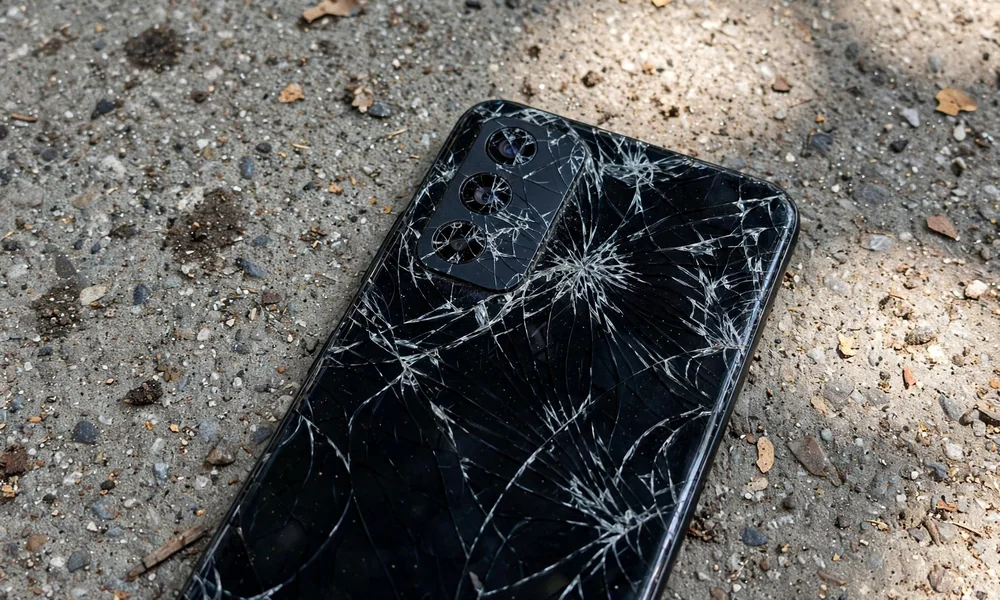
Then there is the glass. Modern phone glass is a genuine engineering achievement — chemically strengthened, resistant to scratches that would have destroyed a screen a decade ago — and the ranking in the best smartphone materials ranked shows how far the field has come. But glass is still glass, and a phone made of two slabs of it will always be one bad drop from a cracked back. The materials choice that makes a phone look premium in a shop is the same choice that makes it fragile in a pocket, and the industry has never been honest about that trade-off.
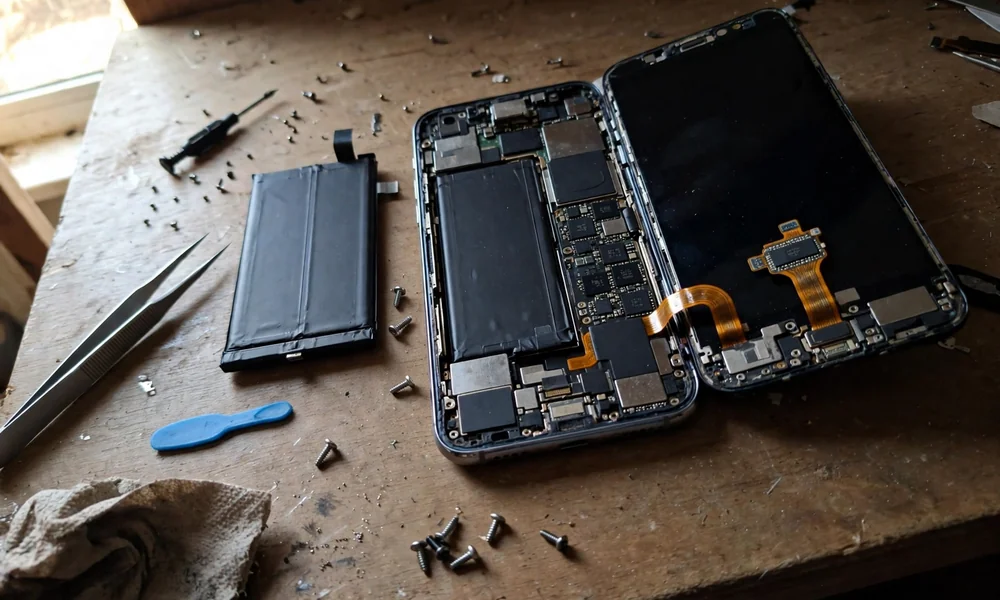
Worse still is what holds the phone together. Modern phones are glued shut with adhesives so strong that replacing a battery — the one part guaranteed to wear out — has become a specialist job involving heat, suction cups and patience. The glue is a materials decision, made to keep the phone thin and water-resistant, and it has turned a simple repair into a reason to buy a whole new phone. A phone built with screws and a replaceable battery would be a fraction of a millimetre thicker and years longer-lived. The spec sheet celebrates the thinness. It never mentions the cost.
Heat, weight and the numbers that lie
Materials also decide how a phone behaves under load, in ways the headline specs actively hide. A phone with a vapour chamber and a metal frame can sustain its performance during a long gaming session; a phone with the same chip and a plastic body will throttle within minutes as heat builds up with nowhere to go. Both phones carry the same processor name on the box. Only one of them actually delivers that performance for more than a few minutes, and the difference is entirely in the materials and thermal design.
The same is true of weight and balance. A phone’s materials decide whether it feels like a precision tool or a slippery bar of soap, whether it sits comfortably in a pocket or drags it down, whether it needs a case to be usable at all. The hinge in a folding phone is an even starker example: a mechanism of dozens of tiny parts, working thousands of times, where the choice of alloy and lubricant decides whether the phone still folds smoothly after two years. Our look at how a foldable phone hinge is made shows a component where materials are not a detail — they are the entire product.
What the other side gets right
The counter-argument is fair: specs do matter, and they matter more than ever for some buyers. A better camera sensor takes better photos in low light. A bigger battery lasts longer on a long day. A faster chip keeps a phone feeling quick for an extra year. For a photographer, a gamer or a power user, the spec sheet is not marketing fluff — it is the difference between a tool that does the job and one that does not. And the spec sheet has one great virtue materials do not: it is comparable. You can line up two phones, compare the numbers, and make a decision in a minute.
It is also true that materials have become a marketing game of their own. Titanium this, ceramic that, sapphire the other — premium words attached to thin coatings and small parts, designed to justify a higher price rather than to improve the product. A titanium frame is only better if it is actually well made; a cheap titanium finish on a poor design is still a poor phone. The honest version of our argument is not that specs are meaningless, but that they have become the easy way to compare phones and the misleading way to choose one. The numbers are the starting point, not the verdict.
The verdict
Wilklit’s view is that the next time you choose a phone, you should spend less time on the spec sheet and more time holding the thing. Feel the frame. Ask what the back is made of. Find out whether the battery can be replaced without a heat gun and a prayer. The phone that survives three years in your pocket, stays cool under load, and still feels good on day five hundred is the better phone — whatever the megapixels say.
Phone makers know this, which is why the premium materials are always in the premium phones. The spec sheet is the advertisement. The materials are the product. Choose the product.


