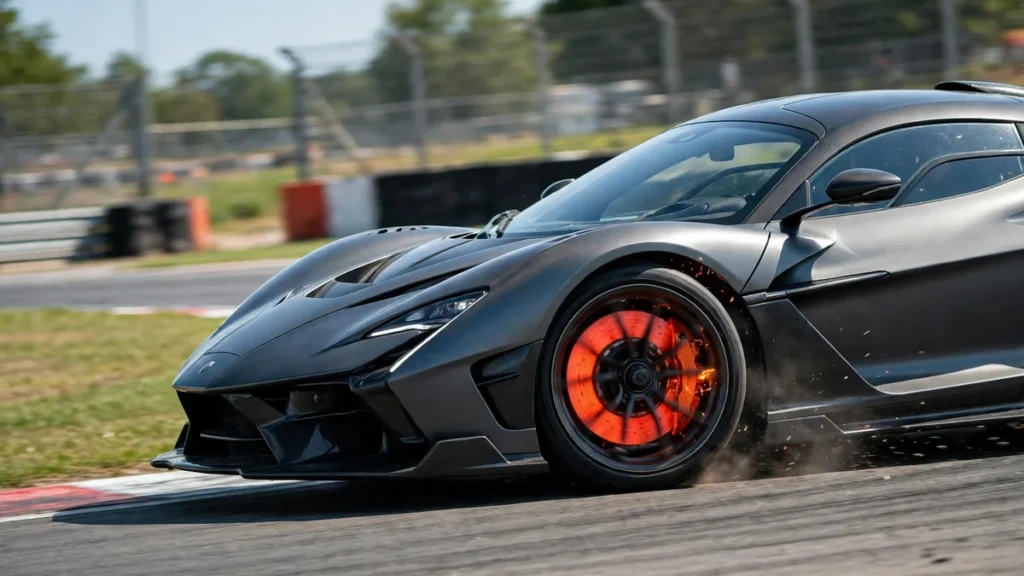
Picture a hypercar leaving a tight corner. The inside wheel is barely loaded, the outside wheel is carrying the weight of the car, and both wheels need different amounts of power at exactly the same moment. That job belongs to the differential, hidden between the rear wheels, spinning in a bath of oil.
A differential is one of the oldest parts in a car, but the hypercar version is a long way from the simple device in a family saloon. It has to handle more than 1,000 horsepower, react in milliseconds, and decide how much torque each wheel gets based on grip, steering, and speed. The specification sheet is where those decisions are written down.
Each number on the sheet answers a question about grip: how much power can it move, how fast can it react, and how much can it lock the two wheels together when one of them starts to slip. Here is what they mean.

Hypercar Differential Specs Explained
1. Differential type: open, limited-slip, or electronic
The type is the first thing to understand. An open differential always splits torque equally, which is useless when one wheel loses grip, because the slipping wheel gets all the speed and no drive. A limited-slip differential, or LSD, resists that: when one wheel starts to spin faster than the other, clutches or gears inside the unit push torque back to the wheel with grip. An electronic differential goes further, using clutches controlled by a computer that reads wheel speed, steering angle, and throttle many times a second. Most hypercars use an electronic limited-slip differential, because it can change its behaviour from one corner to the next.
2. Torque capacity
Torque capacity is the maximum twisting force the differential can pass to the wheels without damage, and on a hypercar it is typically 1,000 to 1,500 newton-metres at the input, before the final drive multiplies it further. The number is set by the size and strength of the gears and by the clutch packs inside the unit. Too small and it fails under full throttle; too large and it adds weight and drag. Engineers size it with a margin, so it can survive repeated full-throttle launches as well as the steady load of high-speed driving.
3. Final drive ratio
The final drive ratio is the last gear reduction before the wheels, and it decides the balance between acceleration and top speed. A typical hypercar final drive ratio is between 2.5 and 3.5 to 1, meaning the driveshaft turns two and a half to three and a half times for each turn of the wheels. A higher number gives stronger acceleration but a lower top speed; a lower number gives the opposite. The choice is tied to the gearbox, and the way the two work together is set out in the dual-clutch gearbox specifications, where the gear ratios and the final drive are matched as one system.
4. Lock-up percentage and torque bias
Lock-up percentage says how much the differential can resist one wheel spinning faster than the other, and torque bias says how unevenly it can split the torque. A typical hypercar electronic differential can send up to 100 percent of the available torque to a single wheel when the other has no grip at all, and it can vary the split continuously between the two wheels. Under braking it can lock partially to keep the car stable. The number that matters in practice is not the maximum but how smoothly it changes: a differential that locks suddenly will upset the car, while one that locks progressively lets the driver feel the grip building.
5. Response time
Response time is how quickly the differential can change its lock-up after the car’s sensors detect slip, and on an electronic unit it is typically 50 to 150 milliseconds. That is fast enough to catch a wheel before it spins up, but the number hides a trade-off. A differential that reacts too aggressively can fight the driver, cutting power just as the driver asks for more. The best systems predict slip rather than waiting for it, using steering angle and throttle position to preload the clutches before the wheel ever starts to spin.
6. Weight and materials
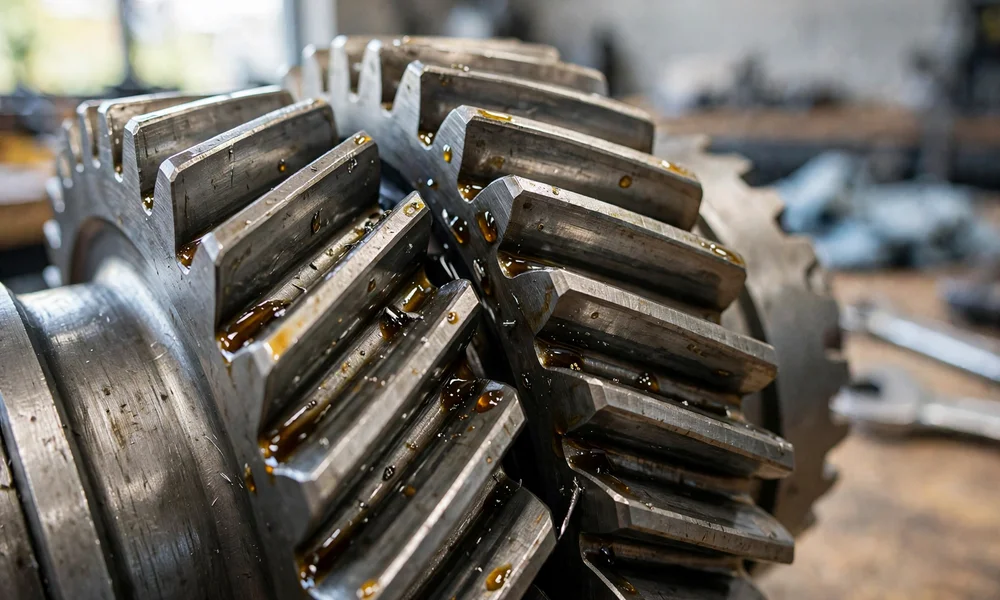
A hypercar differential typically weighs 20 to 35 kilograms, including its housing, gears, and clutch packs. The housing is usually aluminium or magnesium, chosen for lightness and for the way it sheds heat, while the gears are made from forged steel, hardened and ground to precise tolerances. Weight matters because the differential sits at the rear axle, where it affects balance, and in some designs it is unsprung mass, moving with the wheels rather than the body. Every kilogram saved here helps the suspension keep the tyres in contact with the road.
7. Cooling and oil capacity
A differential makes heat, and heat is what limits how hard it can work. The clutch packs inside a limited-slip unit slip against each other as they transfer torque, and that friction turns energy into heat. A hypercar differential typically holds 1 to 2 litres of special oil, and many have a dedicated cooler with a small pump that circulates the oil through a radiator. Without cooling, sustained track driving would overheat the oil, the clutches would lose their grip, and the differential would open up just when the driver needs it most. The carbon-ceramic brake specifications describe the same battle with heat.
Hypercar Differential Specs
| Specification | Typical range |
|---|---|
| Differential type | Electronic limited-slip |
| Torque capacity | About 1,000 to 1,500 newton-metres input |
| Final drive ratio | About 2.5 to 3.5 to 1 |
| Maximum torque to one wheel | Up to 100 percent |
| Response time | About 50 to 150 milliseconds |
| Unit weight | About 20 to 35 kilograms |
| Oil capacity | About 1 to 2 litres, with cooler on most cars |
| Housing material | Aluminium or magnesium |
What Does a Hypercar Differential Cost?
A hypercar electronic differential is estimated to cost roughly $10,000 to $25,000 as a factory-fitted unit (estimate), and a complete replacement with labour is estimated at roughly $15,000 to $35,000 (estimate). The cost is driven by the precision of the gears, the electronic clutch control, and the small production numbers. The hypercar brake disc specifications share that pattern: parts made in the hundreds, each one tested.
A Rare Fact
The first limited-slip differentials were built for racing in the 1930s, and they worked with nothing but gears and friction, no electronics at all. The Torsen differential, one of the most famous designs, uses worm gears that lock up purely through their geometry. The mechanical idea underneath modern electronic units is almost a century old.
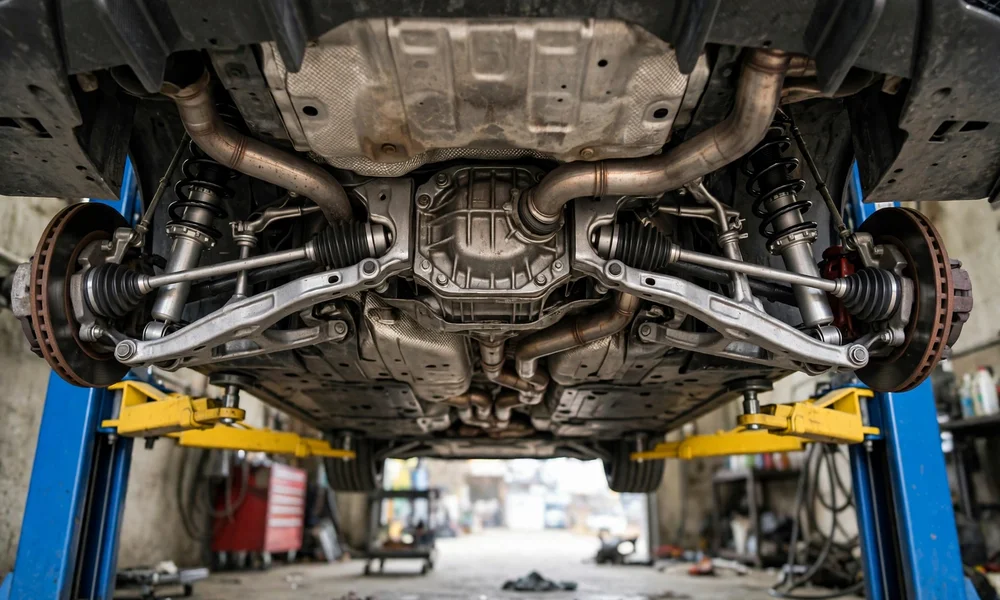
A hypercar differential never gets the attention the engine gets, yet it decides how much of the engine’s power actually reaches the road. Read the type, the torque capacity, the final drive, and the response time together, and the unit stops being a mysterious box and becomes what it really is: the part that turns raw power into grip.