On a long, straight road through the desert, a low silver shape slid past the camera car without a sound. It was barely knee high, its top was a smooth black sheet of glass, and its wheels were so narrow they looked like bicycle tyres. There was no engine roar, no exhaust, and no fuel stop in sight. The driver sat in a small cockpit in the middle, and the car seemed to drink the sunlight itself. That quiet, strange machine is a solar car, and its spec sheet reads like nothing else on the road.
A solar car is built around one simple idea: gather energy from the sun, store it in a battery, and spend it as carefully as possible. Every number on its spec sheet serves that idea, from the size of the solar panels to the weight of the whole vehicle. Because the power available is tiny compared with a petrol car, designers treat weight, drag, and rolling resistance as seriously as a racing team treats lap times. This guide explains the numbers in plain language, so you can see how a car powered by daylight actually works.

The Specs That Decide a Solar Car
Start with the solar array, the panel of photovoltaic cells that covers the top of the car. Its output is measured in watts, and a competition solar car typically carries an array of about 1,000 to 1,500 watts at peak sunlight, which is roughly the power of a hair dryer. A road-going solar car with a larger roof, such as the Lightyear 0, carries more panel area and can gather several kilowatts in strong sun. That sounds small, and it is, which is why the rest of the car is designed to waste almost nothing.
Next comes the battery, measured in kilowatt hours, which is the energy store that keeps the car moving when clouds pass or the sun sets. Competition cars often carry only around 5 kilowatt hours, about the size of a small home battery, while a road car like the Lightyear 0 carries about 60 kilowatt hours, similar to an ordinary electric car. The battery is the buffer between the sun and the road, and its size decides how far the car can travel after dark or through a cloudy stretch.
Then look at the motor power, which is surprisingly small. A solar race car may use a motor of only 5 to 10 kilowatts, about the power of a ride-on lawn mower, because that is all the sun and battery can sustainably supply. The car still reaches highway speeds, because it weighs very little and slips through the air with almost no resistance. A road-going solar car uses a larger motor, often 100 kilowatts or more, so it can accelerate and climb hills like a normal car, but it still relies on efficiency to make the solar panels worthwhile.
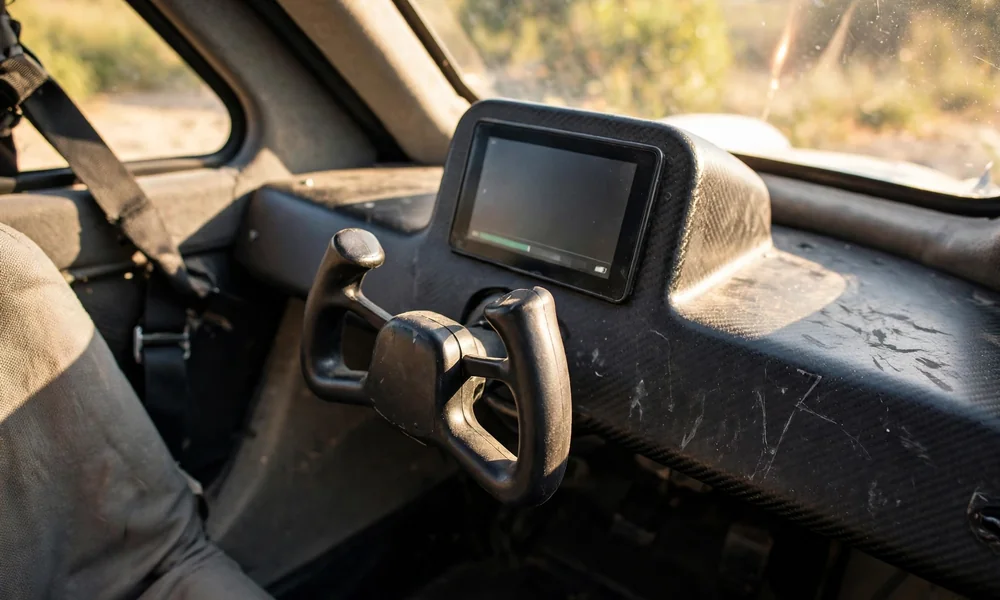
Weight and drag are the numbers that make the whole idea possible. A competition solar car weighs roughly 150 to 300 kilograms without a driver, lighter than many motorcycles, because its body is built from carbon fibre and its structure is pared down to the minimum. Its drag coefficient, a measure of how smoothly air flows over it, can be as low as 0.1, while an ordinary car scores around 0.3. Narrow tyres, a teardrop shape, and a smooth underside all help, and each small saving adds kilometres to the range. The same obsession with weight and drag drives electric boat design, where every kilogram and every ripple of resistance costs range.
Finally, read the range figures with care, because a solar car has two kinds of range. The battery range is how far it can drive on a full charge, often 400 to 700 kilometres for a road car, while the solar range is how many extra kilometres the panels add each day, which can be 40 to 70 kilometres in sunny conditions. A solar race car crossing Australia may cover 3,000 kilometres in a week, stopping only to charge from the sun and to rest the driver, and that slow, steady rhythm is the whole point. Charging infrastructure matters here too, since a solar car still plugs in like any other electric vehicle, as explained in how electric motorcycle charging works.
How to Read the Spec Sheet in Seven Steps
- Read the solar array power first, because it sets the daily energy budget.
- Check the battery size in kilowatt hours to see how far the car goes without sun.
- Look at motor power, and remember that a small motor can still be fast in a light car.
- Note the weight, since every kilogram costs energy on every hill.
- Read the drag coefficient, where a lower number means the air is easier to push aside.
- Separate battery range from daily solar range, because they answer different questions.
- Finish with the top speed and the charging options, which decide how the car fits real roads.

A Typical Solar Car, Side by Side
| Specification | Competition car | Road-going car |
|---|---|---|
| Solar array power | 1,000 to 1,500 watts | Up to 5,000 watts |
| Battery size | About 5 kWh | About 60 kWh |
| Motor power | 5 to 10 kW | 100 to 150 kW |
| Weight | 150 to 300 kg | 1,500 to 1,600 kg |
| Drag coefficient | About 0.10 | About 0.20 |
| Top speed | 110 to 140 km/h | 160 km/h |
| Battery range | 300 to 500 km | 600 to 700 km |
| Extra solar range per day | 200 to 300 km | 40 to 70 km |
What One Costs
Prices depend on which kind of solar car you mean. A university team can build a competition car for an estimated $100,000 to $500,000, with much of the cost in the solar cells, the carbon fibre body, and the custom battery. A road-going solar car is far more expensive, because it must pass crash tests, carry airbags, and meet every rule an ordinary car follows. The Lightyear 0, the best-known example, was priced at an estimated $260,000 when it launched, and only a small number were made before production stopped, which makes surviving cars rare and costly to maintain.
The high price reflects how much is hand-made. Solar cells must be fitted to a curved roof without cracking, the body must be both feather-light and strong enough to protect the driver, and the electronics must squeeze every watt from the sun. As panel prices fall and batteries improve, cheaper solar-assisted cars are likely to appear, with panels that add range rather than replacing charging entirely. For now, the solar car remains a glimpse of the future rather than a car for everyone, and the wider world of battery-powered transport is growing fast, as the best electric motorcycles show on two wheels.
A Rare Fact Worth Knowing
The first solar car race across Australia, the World Solar Challenge, was held in 1987, and the winning car averaged about 65 kilometres per hour over 3,000 kilometres of desert road. The race was the idea of a Danish-born adventurer, Hans Tholstrup, who had already crossed Australia in a solar-powered car of his own and wanted to prove the idea could work at speed. Teams from universities around the world still enter the race today, and the cars they build look like science fiction, with cockpits barely big enough for one person and solar panels stretched across wings. Many of the efficiency tricks those students invent, from low-drag shapes to clever battery management, later appear in ordinary electric cars, so the strange little desert racers are quietly teaching the whole car industry how to go further on less.


