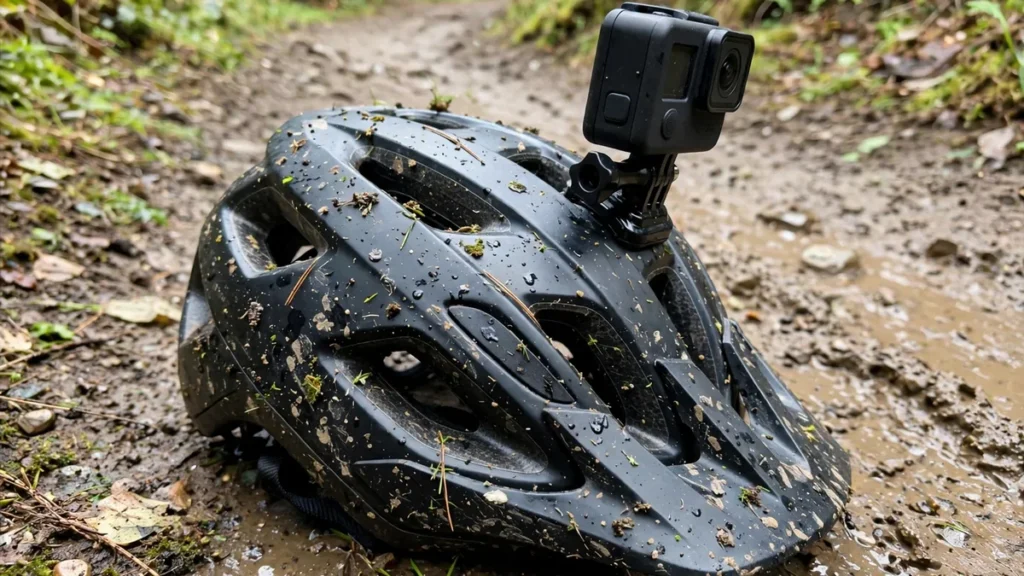
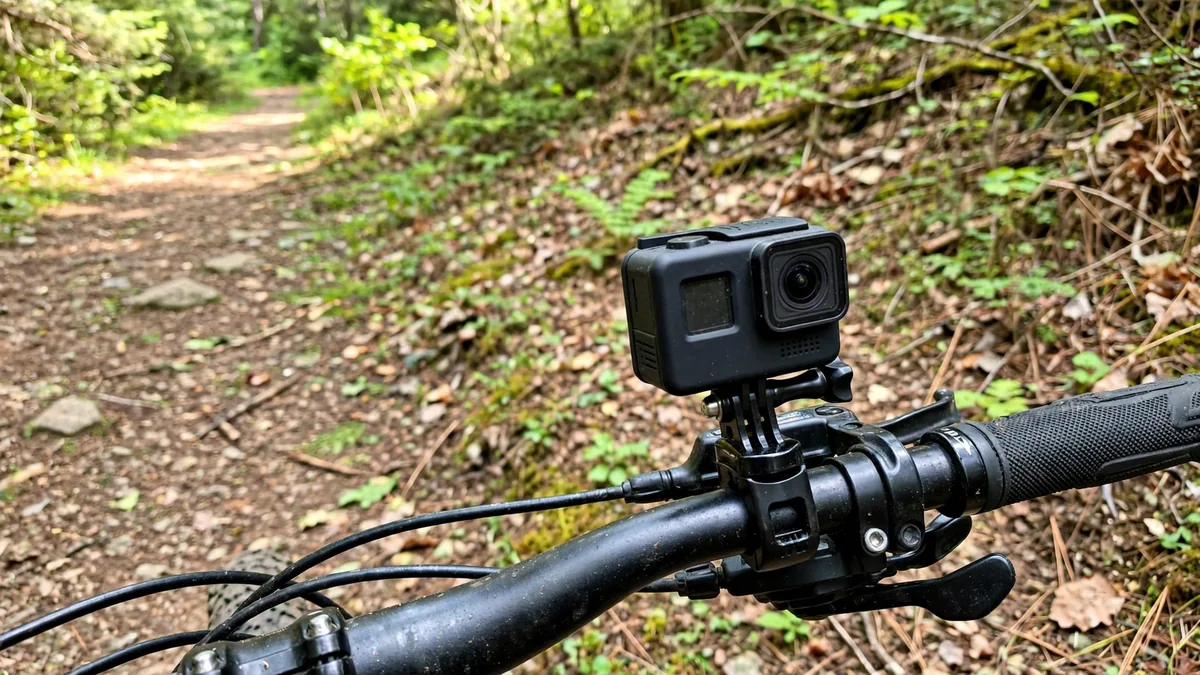
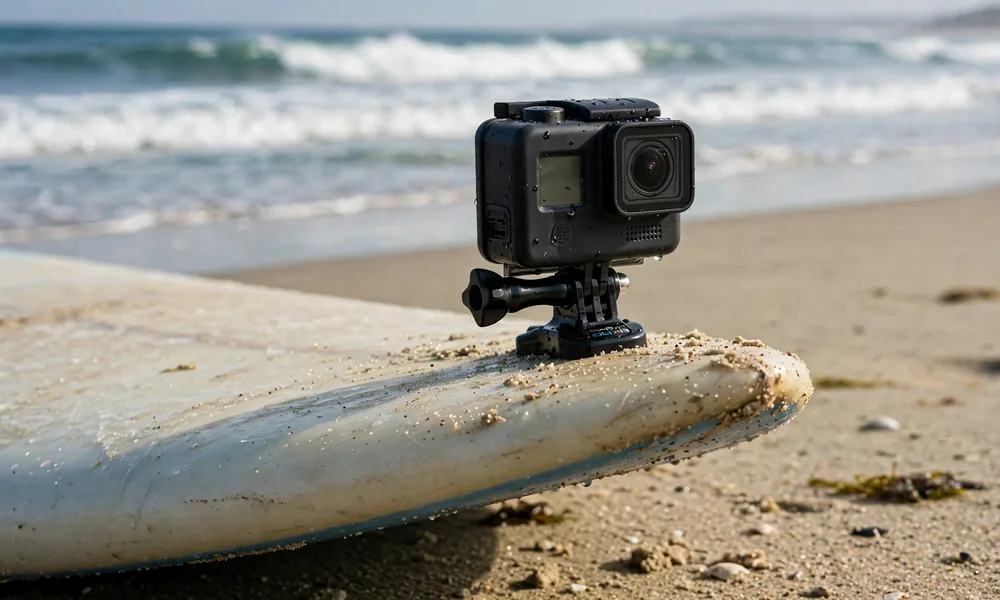
On the nose of a surfboard, bolted to a helmet, or strapped to a handlebar in the rain, a little black box is recording everything. It has no lens cap, no viewfinder worth the name, and no second chance: the wave, the jump and the crash all happen once. Later, on a screen at home, the footage looks impossibly smooth, the colours look like a film, and the sound of the wind is somehow under control. The box is smaller than a deck of cards, and it has just done the job of a camera crew.
A luxury action camera earns that trust with a spec sheet that is easy to misread. Resolution, frame rates, sensor size, stabilisation, waterproof depth and battery life all sound impressive in isolation, and the expensive numbers are not always the ones that matter on a mountain or in the sea. This guide reads the sheet the way a shooter does, starting with the figures that decide image quality and ending with the ones that decide whether the camera survives the day.
The spec sheet at a glance
| Specification | Typical luxury figure |
|---|---|
| Video resolution | 5.3K at 60 frames per second |
| Slow motion | 4K at 120 frames per second |
| Photo resolution | 27 megapixels |
| Sensor | 1/1.3 inch CMOS |
| Stabilisation | Electronic, horizon lock |
| Lens field of view | 155 degrees, ultra-wide |
| Waterproof depth | 10 metres, no case |
| Battery life | 70 to 110 minutes at 4K |
| Battery capacity | 1,900 mAh, removable |
| Storage | microSD, up to 1 terabyte |
| Weight | 150 to 160 grams |
| Dimensions | 71 x 55 x 34 millimetres |
| Display | Rear touchscreen, small front screen |
| Body material | Aluminium frame, toughened glass |
| Connectivity | Wi-Fi, Bluetooth, USB-C |
Resolution and frame rate: what the picture is made of
Resolution is the number everyone quotes, and on a luxury action camera it is usually 5.3K video at 60 frames per second. That is more detail than a 4K television can show, and the reason to have it is not to watch the footage at full size but to crop and reframe afterwards, pulling a close shot out of a wide one without the image falling apart. A camera that can shoot 4K at 120 frames per second adds slow motion, stretching a single second of a jump into four seconds of smooth footage.
Frame rate matters as much as resolution. Sixty frames per second makes fast movement look fluid, and 120 makes it look dreamlike, but both eat battery and storage, and both need more light. In a dark forest or at dusk, a lower frame rate with a slower shutter often gives a cleaner picture than the headline mode. The sensor is the quiet partner in all of this, and the cinema camera sensor spec sheet explains why a bigger sensor gathers more light and more detail than a smaller one, whatever the megapixel count says.
Sensor size and the lens: where the image really comes from
A luxury action camera uses a sensor of about 1/1.3 inch, which is large for a camera this small and small beside a phone or a cinema camera. The size matters because each light-sensitive site on the sensor, each pixel, is bigger when the sensor is bigger, and bigger pixels collect more light with less noise. That is why a luxury action camera can shoot a usable sunset scene while a cheap camera of the same resolution turns the same scene into grain.
The lens is fixed, ultra-wide, and covers about 155 degrees, which is why the footage feels immersive and why straight lines near the edges bend into curves. The wide view is also a practical choice: with a lens this wide, the camera does not need precise aiming, and the shot is usually in frame even when the mount is bouncing. The autofocus system is usually fixed focus, set so that everything from close up to the horizon is sharp, and the camera autofocus motor spec sheet shows how a different kind of camera, one that has to focus, solves the problem this little box avoids entirely.
Stabilisation: the invisible cameraman
Stabilisation is the feature that makes action footage watchable, and it is the one most buyers underestimate. The camera reads its own movement hundreds of times a second from a gyroscope and an accelerometer, and then crops the image slightly and shifts it in the opposite direction, cancelling the shake. Horizon lock goes further, keeping the horizon level even when the camera rolls upside down, so a somersault looks like a smooth spin instead of a blur.
The price of stabilisation is a small crop, which narrows the field of view slightly, and a heavy demand on the processor, which drains the battery faster. It is also the reason the footage can look almost too smooth, like a drone shot, when the camera was really bouncing down a trail. Some shooters turn it down for that reason, preferring a little honest shake, but for most owners it is the feature that turns a day out into a film worth watching.
Waterproofing, battery and the body: surviving the day
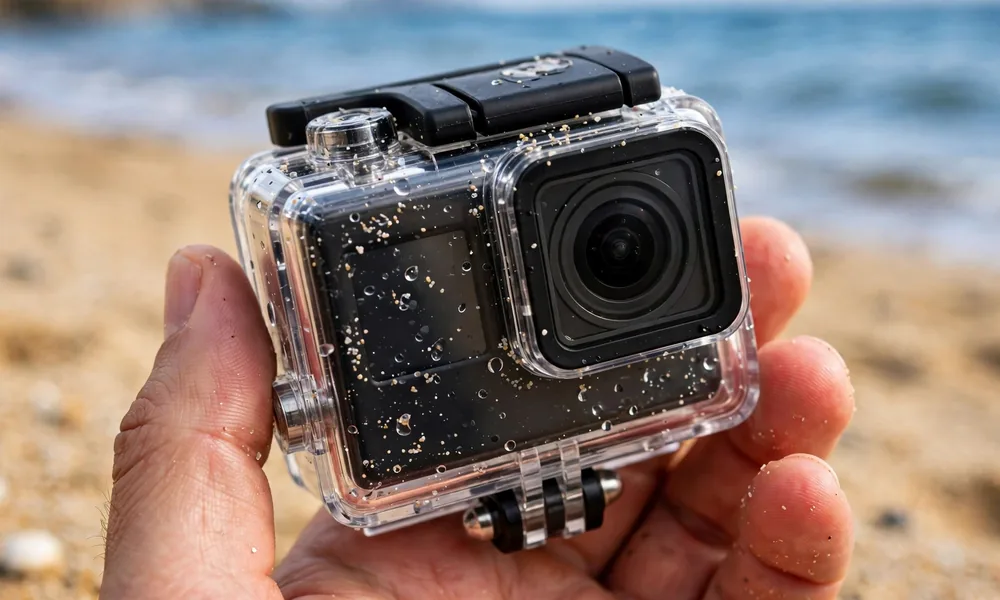
Waterproofing to 10 metres without a case means the camera can be surfed, swum with and dropped in a stream without a second thought, and the seals are tested at the factory in a pressure tank. The weak point is not the body but the doors: the battery door and the memory card door have rubber seals that must be clean and closed, and a single grain of sand in a seal can let water in. The housing that protects the camera from knocks is a separate story, and how an action camera housing is made follows the shell from raw material to finished case.
Battery life is the honest limit of the machine. Seventy to 110 minutes of 4K recording sounds short, and it is, because the processor, the sensor and the stabilisation all draw power at once, and cold weather shortens the figure further. Luxury cameras use a removable battery, so a shooter can carry two spares in a pocket and swap them in seconds, and a 1,900 mAh cell charges over USB-C in about an hour. Storage is a microSD card of up to 1 terabyte, which holds hours of footage, though a fast card is needed for the highest modes, and a slow card can stop a recording mid-shot.
What she costs, and a rare fact
A luxury action camera costs an estimated $400 to $600 for the camera alone, with mounts, spare batteries and a protective case adding more. Those are estimates, because prices vary by model and by bundles, but they explain the gap from a $150 camera: the sensor is bigger, the stabilisation is smoother, the waterproofing is deeper, and the footage holds up on a big screen instead of only on a phone.
Here is the rare fact the spec sheet never mentions. The first action cameras were built by surfers who wanted to film themselves, and the earliest models were little more than a waterproof box with a wrist strap and a film camera inside. The modern luxury camera still answers the same question those surfers asked: how do you film the moment when both your hands are busy living it?