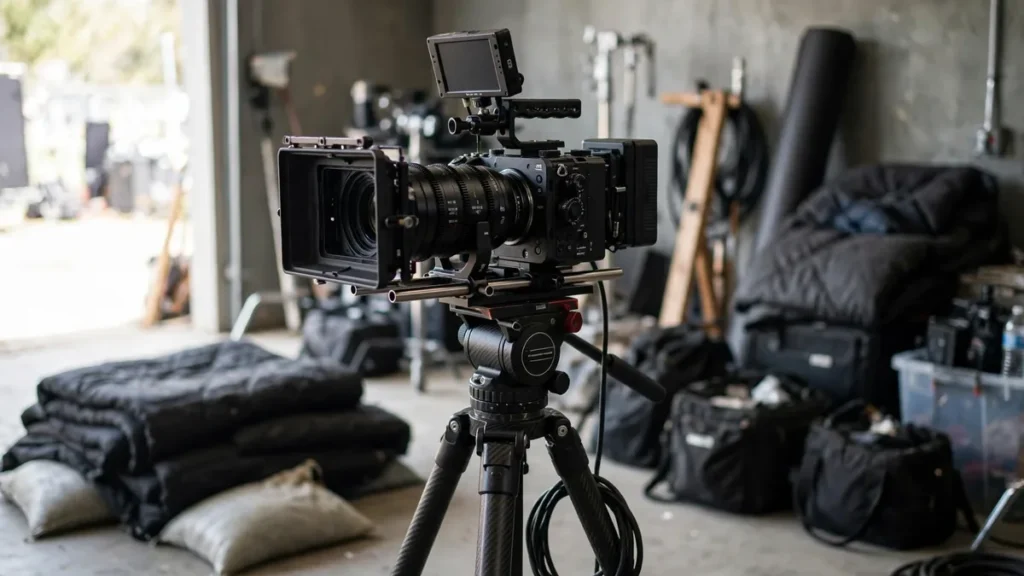
A wildlife photographer is crouched in wet grass at first light, waiting for a kingfisher to leave its perch. When it finally moves, the bird crosses the frame in less than a second, and the camera has one chance to lock on. There is a faint whirr inside the lens, almost too quiet to hear, and the picture comes back sharp — every feather, every drop of water on the beak. The photographer never sees the tiny motor that did the work.
The answer is on the specification sheet, in the numbers for the autofocus motor. The motor is what physically moves the glass: it slides lens elements back and forth along the barrel until the image is sharp, in steps so small you would need a microscope to see them. The type of motor, its speed, its precision, its noise, and its strength all decide whether the camera feels instant and silent or slow and hesitant.
This guide reads those numbers in plain English. Motor type, focus speed, step precision, torque, noise, power draw, and durability — each one tells you something different about how the lens focuses and how long it will keep doing it.
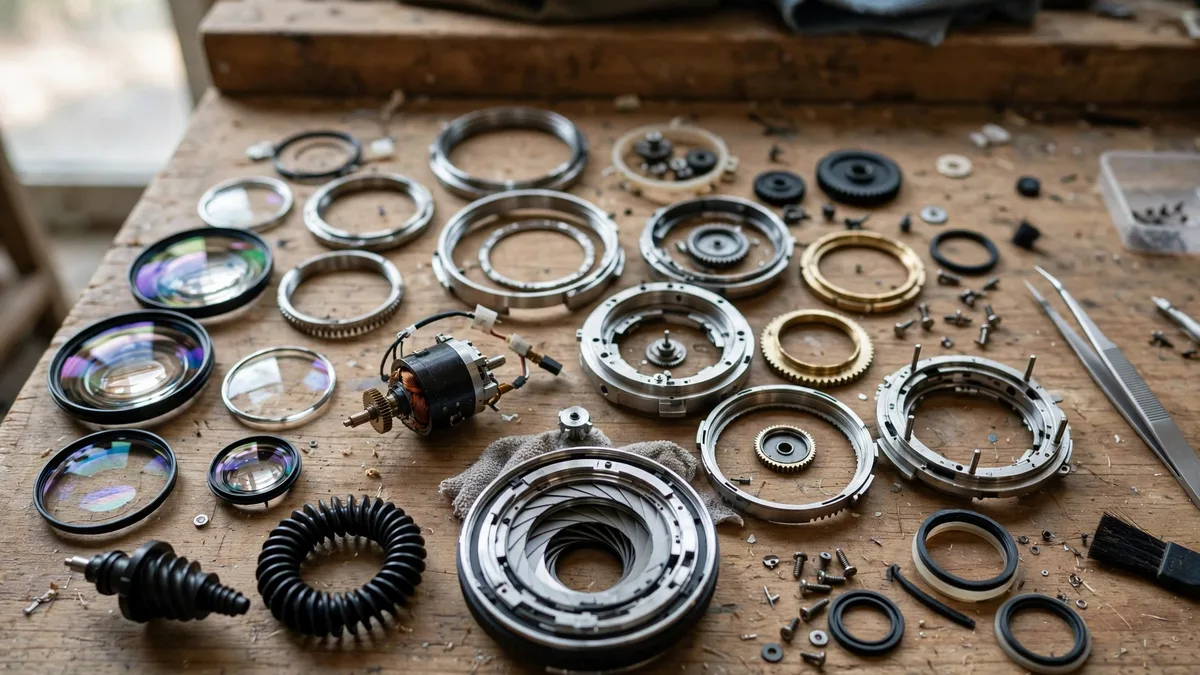
The Specs That Matter
1. Motor type
The first line on the sheet is the motor type, and there are three common kinds. A stepping motor moves in small, controlled steps and is cheap and quiet, which is why it is popular in kit lenses. A linear motor drives the lens directly with magnets, with no gears at all, and it is faster and smoother, which is why it appears in professional lenses. A voice-coil motor, the kind in most phone cameras, floats the lens on a magnetic field and is the smallest and lightest of the three. The glass it moves is its own engineering story, as explained in how a smartphone camera lens works, from light to image.
2. Focus speed
Focus speed is how long the motor takes to move the lens from one end of its travel to the other, usually quoted in milliseconds — a fast lens can cross the range in about 50 to 100 milliseconds, while a slower one can take 300 milliseconds or more. That difference is the gap between catching the kingfisher and photographing the empty branch it just left. Speed also depends on the weight of the glass the motor must move.
3. Step precision
Precision is the smallest step the motor can make, measured in microns — a good autofocus motor can move a lens element by about 1 to 5 microns at a time, far finer than a human hair. That fineness matters most at close range and wide apertures, where depth of field is paper-thin. A motor with coarse steps will overshoot, correct, and overshoot again, and you will see that hunting in the viewfinder as the image pulses in and out of focus. The numbers behind that precision are laid out in smartphone camera lens specs explained, where each figure is translated into what you actually see.
4. Torque and holding force
Torque is how hard the motor can push, and holding force is how firmly it can keep the lens still once it has arrived. Both matter because a lens is not weightless: gravity pulls the elements down when you point the camera at the sky, and a weak motor will let the focus drift. If you have ever watched a lens slowly lose focus while pointed overhead, you have watched a motor without enough holding force.
5. Noise level
Noise is measured in decibels, and a quiet autofocus motor runs at about 20 to 30 decibels — roughly the sound of a whisper — while an older geared motor can reach 40 decibels or more, loud enough to be picked up by a video microphone. Linear and voice-coil motors are nearly silent because they have no gears meshing, while a stepping motor with a gear train will always make some sound.

6. Power consumption
Power draw is quoted in milliwatts, and a typical autofocus motor draws about 50 to 200 milliwatts while it is moving, dropping to almost nothing when it holds still. That sounds small, but a camera that refocuses constantly — tracking a moving subject, for example — can drain its battery noticeably faster than one that focuses once and waits. Phone cameras face the same trade on a tighter budget.
7. Durability and cycle life
Cycle life is how many times the motor can move back and forth before it wears out, usually quoted in hundreds of thousands of cycles — a well-built lens motor is rated for about 100,000 to 500,000 focus cycles. That sounds like a lot, but a busy photographer can run through thousands of cycles in a single weekend of sports shooting, and a phone camera refocuses every time you open the app. The precision that makes all of this possible starts in the factory, as shown in how a smartphone camera lens is made, where the motor and the glass are assembled together.
Camera Autofocus Motor Specs
| Specification | Typical range |
|---|---|
| Motor type | Stepping motor, linear motor, or voice-coil motor |
| Focus speed | About 50 to 100 milliseconds fast; over 300 for a slow lens |
| Step precision | About 1 to 5 microns per step |
| Torque | Enough to move and hold heavy glass groups against gravity |
| Noise level | About 20 to 30 decibels quiet; over 40 for a geared motor |
| Power consumption | About 50 to 200 milliwatts while moving |
| Cycle life | About 100,000 to 500,000 focus cycles |
| Operating temperature | About minus 10 to 60 degrees Celsius |
What Does a Camera Autofocus Motor Cost?
An autofocus motor module is estimated to cost roughly $5 to $50 in a phone camera, and roughly $50 to $300 as a spare part in a professional interchangeable lens, depending on the type and size. A voice-coil motor for a phone is the cheapest, a linear motor for a professional lens the most expensive, and the motor is only a small part of the lens price — the glass, the coatings, and the assembly cost far more. A full lens repair involving the motor is estimated at roughly $150 to $600 at a service centre. All prices are estimates only and vary widely by brand, model, and region.
A Rare Fact
The fastest autofocus motors move lens elements in steps smaller than a human hair, hundreds of times a second — and they do it by floating the glass on a magnetic field with nothing touching it at all. A voice-coil motor has no gears, no belts, and no friction surfaces; the lens hangs in the field and the coil simply pulls it where it needs to go. The first autofocus cameras of the 1980s used noisy geared motors by comparison.

An autofocus motor is easy to ignore until it lets you down, and then it is the only thing in the camera that matters. Read the motor type, the speed, and the step size together, and the specification sheet stops being a list of abbreviations and starts being a prediction: this lens will be silent and instant, or it will hunt, or it will be just fast enough for the pictures you actually take. The bird will not wait for you to decide.