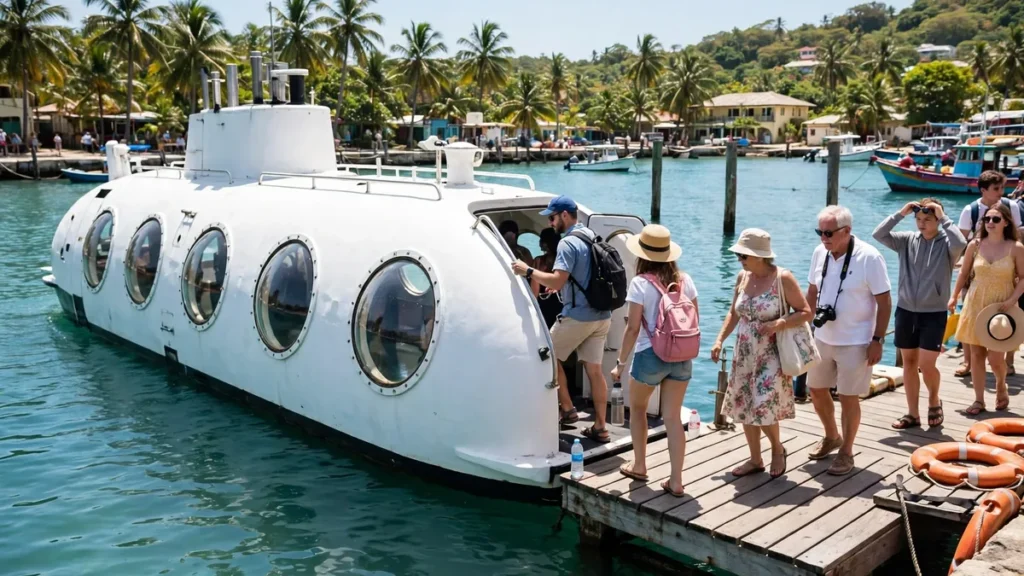
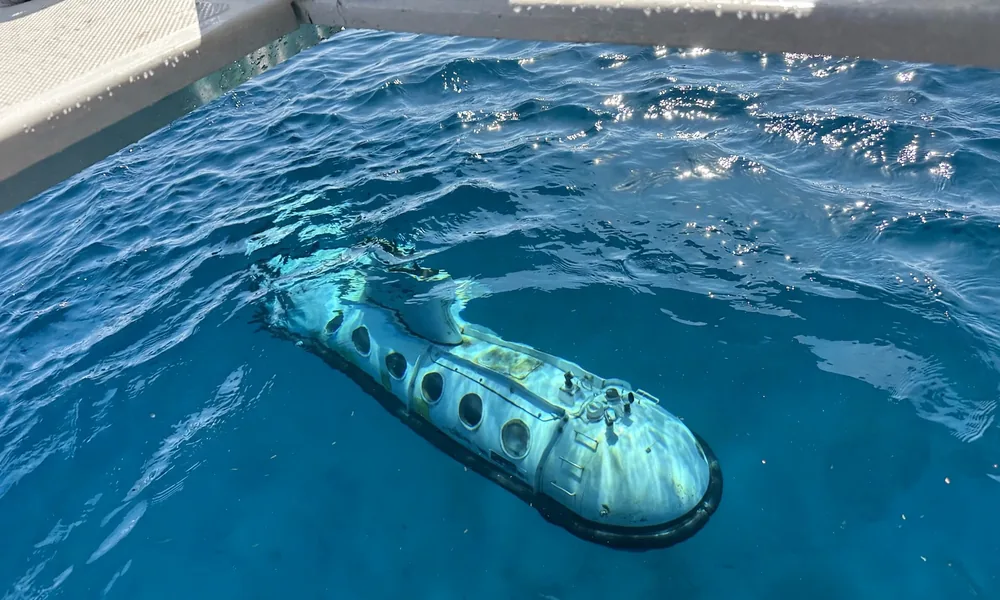
The boat slowed over the reef, and the crew opened a hatch in the deck. Below it, a small white submarine waited in a cradle, its round windows catching the sun like a row of portholes. The passengers climbed down one by one, took their seats inside, and watched as the hatch closed and the water rose up the windows. A child pressed her face to the glass as a turtle drifted past, close enough to touch, and her mother whispered that the ticket for this ride cost more than their flights to the island.
That is the surprise of a luxury tourist submarine. It carries a dozen people for less than an hour, it travels slower than a bicycle, and yet a single ticket can cost hundreds of dollars. The price is not about the distance. It is about the pressure hull, the windows, the air, and the small number of people who are ever allowed to build or drive one. This guide explains why.
The pressure hull: a steel bubble
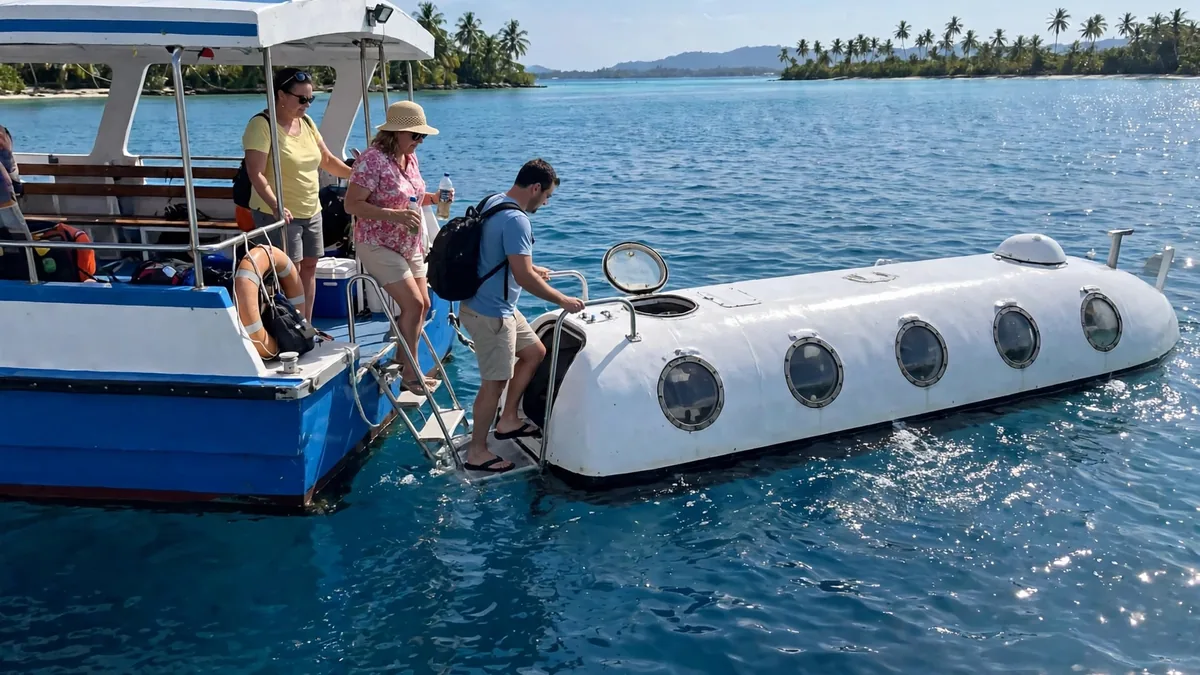
A tourist submarine dives to around 30 metres, where the water presses on the hull with about four times the pressure felt at the surface. The hull is a steel cylinder with rounded ends, built from thick plates that are welded together and then tested to far more pressure than the submarine will ever face. Every weld is inspected, often with ultrasound, and the whole hull is pressure-tested in a chamber before it is allowed to carry passengers. A single flaw in a weld can end the life of the submarine, so the inspection alone costs a large share of the build budget.
The hull is also small on purpose. A tourist submarine is usually only 10 to 15 metres long, because a bigger hull would need thicker steel and a bigger support ship, and the whole business is built around a small boat that can be carried on a deck. The guide to how a luxury tourist submarine is made explains how the steel plates are rolled, welded, and tested into a hull that can dive day after day for decades.
The windows: thick acrylic, perfectly clear
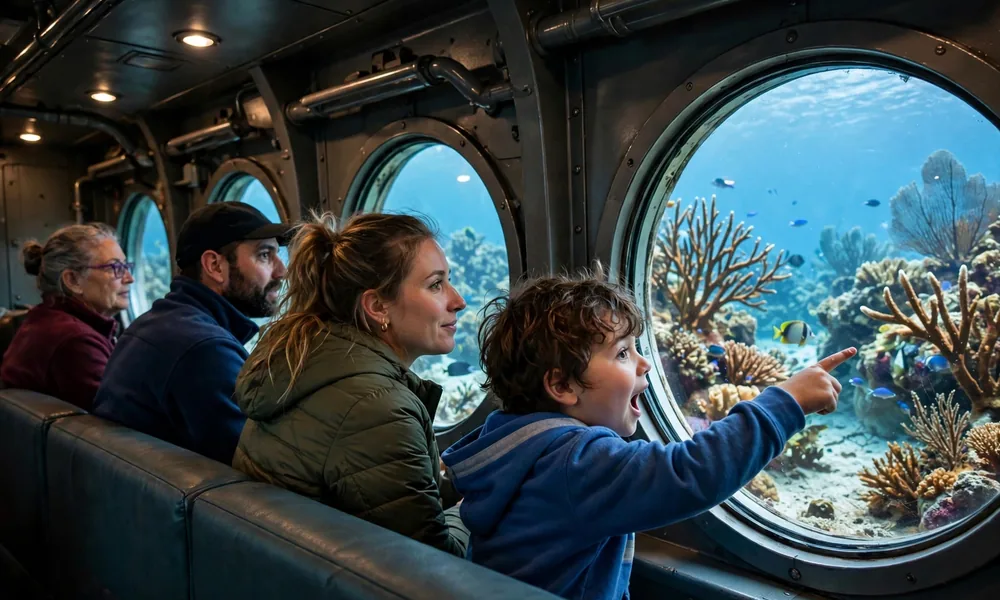
The windows are the reason passengers pay, and they are also one of the most expensive parts of the submarine. Each window is a thick disc of acrylic, sometimes 10 centimetres thick, polished until it is perfectly clear and then fitted into a steel frame with seals that must hold back the sea for years. The acrylic has to be strong enough to resist the pressure, clear enough to show the reef in true colour, and tough enough to survive a bump against a rock or a docking pontoon without cracking.
The crew and the certification
A tourist submarine is driven by a licensed pilot, with a dive supervisor on the surface and a support crew on the boat above. The pilot is trained for months, including emergency training in a simulator, and the licence has to be renewed with regular checks. The submarine itself is certified by a classification society, an independent organisation that inspects the hull, the windows, the air system, and the electrics every year, and can stop the submarine from diving if anything is not right. The certification is not a formality; it is a full inspection that takes days and costs a large sum each time.
The support operation is large for such a small boat. The submarine needs a mother ship to carry it to the dive site, a crane to lift it in and out of the water, a compressor to fill its air tanks, and a workshop to maintain it. The guide to how a luxury tourist submarine works explains how the pilot, the surface crew, and the support ship work together on every dive.
Small numbers and short seasons
Only a few dozen tourist submarines operate in the world, and only a handful are built each year, by a small number of specialist yards. The design, the tooling, and the certification have to be paid for from those few boats, and every part is bought in tiny quantities, so the builder pays far more for each valve, window, and sensor than a mass-market factory would. A tourist submarine costs an estimated 3 million to 5 million dollars to build, and the operator has to earn that back from tickets sold a dozen passengers at a time.
The season is short as well. A submarine in a tropical resort might dive for a few months of the year and spend the rest in maintenance, and every dive is limited by the weather, the sea state, and the number of passengers who want to go. The guide to luxury submarine specs explained covers the depth, size, and power numbers of larger submarines, and the comparison shows how the tourist boat trades depth and speed for windows and comfort.
The numbers at a glance
| Specification | Tourist submarine | Research submersible |
|---|---|---|
| Length | 12 metres | 8 metres |
| Passengers | 12 | 3 |
| Max depth | 30 metres | 1,000 metres |
| Windows | 8 large | 2 small |
| Speed | 3 knots | 3 knots |
| Dive time | 45 minutes | 8 hours |
| Hull material | Steel | Titanium |
| Crew | 1 pilot | 1 pilot |
| Build cost | 4 million dollars | 10 million dollars |
What the price buys
A ticket on a luxury tourist submarine costs an estimated 200 to 500 dollars per person, and a private charter costs an estimated 5,000 dollars or more. The hull and the windows are the largest costs, followed by the certification, the crew, and the maintenance, and the small number of passengers per dive means those costs are shared by very few people. The ride lasts less than an hour, but it takes a steel hull, eight thick windows, a certified pilot, and a support ship to make that hour possible, and that is what the ticket pays for.
A rare fact
The first tourist submarine carried passengers in the 1960s, and it was built by a Swiss engineer who had spent years designing deep-diving research boats. The early boats had tiny windows and carried only two or three passengers, and the passengers had to crouch to see out. The strangest detail is that the same hull shape is still used today, because a cylinder with rounded ends is the strongest shape for resisting water pressure, and no designer has found a better one in sixty years of trying.
The next time a tourist submarine ticket costs more than a flight, remember what is under the water with you. A steel hull built to four times surface pressure, windows as thick as a book, air that is watched by sensors, and a pilot who trained for months to drive a boat that moves slower than a bicycle. A cheap boat ride takes you across the water, and a tourist submarine takes you under it, safely, with a reef close enough to touch. That is a different kind of journey, and it is priced like one.