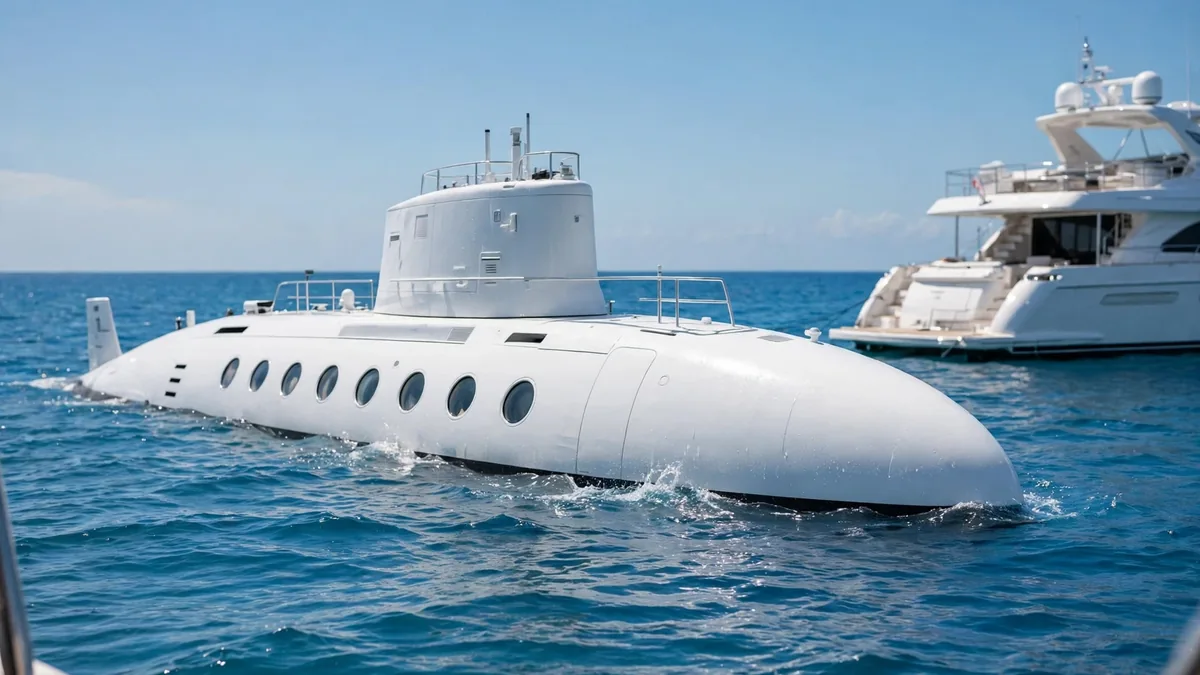
The broker slid the spec sheet across the table, and the buyer stared at it the way most people stare at a tide table: politely, and without understanding a word of it. Metres, tonnes, knots, bar, kilowatts. The submarine in the brochure looked like a smooth white whale with windows, and nothing on the page explained why it could dive to three hundred metres while the one on the next page could only manage a hundred.
A luxury submarine spec sheet is not a puzzle, even though it reads like one. Each number answers a simple question: how deep will it go, how fast will it move, how long can it stay down, and how comfortable will the people inside feel while it does all of that. This guide translates the numbers into plain English, one at a time.
Depth rating: the number that matters most
Depth rating is the first number to look for, because it decides everything else about the submarine. It is usually given in metres, and it tells you the maximum depth the vessel is designed to reach on a normal dive. A small luxury submarine might be rated to one hundred metres, a larger one to three hundred, and a handful of specialist designs go deeper still.
Two depths often appear side by side, and they are not the same thing. The operating depth is the depth the submarine is meant to dive to day after day, while the test depth is the deeper figure it was proven to survive during trials. The gap between them is the safety margin, and a wide margin is a sign of careful engineering rather than wasted effort. The guide to how a luxury submarine works explains how the pressure hull, the ballast tanks and the life support all work together to make those depths possible.
Length, beam and displacement
Length is measured in metres from bow to stern, and luxury submarines usually run from about five metres for a small two-person craft to more than thirty metres for a vessel that carries two dozen guests. Length matters because it decides how much room there is inside, and room inside a submarine is the most expensive space in the world.
Speed: knots above and below the surface
Speed is measured in knots, and one knot is about 1.85 kilometres per hour. A luxury submarine typically cruises at two to three knots underwater, which feels slow on land but is a sensible pace when you are drifting past a reef and want to look at it properly. The top speed is usually only a knot or two higher.
Surfaced speed is sometimes listed separately, and it is usually a little faster, because the hull meets less resistance when it is not fully submerged. Neither figure is about racing. Speed in a submarine is about control: enough power to hold position against a current, to climb gently, and to return to the surface without drama. The guide to how a luxury submarine is made shows how the hull shape and the thrusters are tuned for quiet, steady movement rather than raw speed.
Endurance: how long it can stay down
Endurance is the time a submarine can stay submerged on one charge, and it is usually given in hours. A small battery-powered luxury submarine might manage six to eight hours underwater, while a larger one with a bigger battery bank can stay down for twelve hours or more. The figure assumes a gentle cruising speed, so pushing the thrusters hard will shorten it.
The pressure hull: steel, titanium and acrylic
The pressure hull is the strong inner shell that keeps the sea out, and the material it is made from decides how deep the submarine can go. Most luxury submarines use high-strength steel, which is heavy but well understood and relatively affordable. The deepest-diving designs use titanium, which is far stronger for its weight but much harder to weld and far more expensive.
The windows are just as important as the hull. The big viewing domes are made from thick acrylic, cast and polished until they are optically clear, and they are the most expensive single pieces of glass-like material on the vessel. A large acrylic dome can cost as much as a family car, and it has to be replaced on a strict schedule even if it looks perfect. The guide to superyacht hull construction covers the same ideas on a larger scale, and the lesson is identical: the hull is where the money goes first.

Power: batteries, motors and kilowatts
Power is quoted in kilowatts, and it tells you how much electrical muscle the submarine has. A small luxury submarine might run on 20 kilowatts of battery power, while a large one carries hundreds of kilowatts in lithium battery banks. More power means longer dives, faster climbs and more room for air conditioning, lights and entertainment systems.
Passenger numbers and cabin space
Passenger capacity is a plain number, and it ranges from two in the smallest personal submarines to more than twenty in the largest luxury designs. The number includes the pilot, so a submarine listed for six passengers usually carries five guests plus the pilot. Check the seating layout too, because a submarine where every seat faces a window is a very different experience from one where half the guests face the aisle.
The numbers at a glance
| Specification | Small luxury submarine | Large luxury submarine |
|---|---|---|
| Depth rating | 100 metres | 300 metres |
| Length | 5 metres | 30 metres |
| Passengers | 2 | 24 |
| Underwater speed | 3 knots | 4 knots |
| Endurance | 8 hours | 12 hours |
| Displacement | 10 tonnes | 300 tonnes |
What a luxury submarine costs
A small two-person luxury submarine costs an estimated 2 to 4 million dollars, while a large submarine that carries twenty or more guests costs an estimated 30 to 80 million dollars. The depth rating is the biggest driver of price, because every extra hundred metres of depth needs thicker steel, stronger windows and more testing. The second driver is the interior, because fitting a quiet, air-conditioned cabin with leather seats and a champagne fridge inside a steel tube is slow, fiddly work.
Running costs matter too. A luxury submarine needs a support vessel, a trained pilot, regular pressure testing and a strict maintenance schedule, and the annual running cost is an estimated 5 to 10 percent of the purchase price. That is why most luxury submarines belong to superyachts or resorts rather than private owners, and why a single dive ticket can cost an estimated 10,000 to 25,000 dollars per person.
A rare fact
The acrylic dome on a luxury submarine is polished so finely that it is almost invisible underwater, and fish will sometimes swim straight up to it and stare at the passengers inside. Pilots say the fish treat the dome as open water, which is why the best submarine dives feel less like watching an aquarium and more like being a polite guest in somebody else’s home.
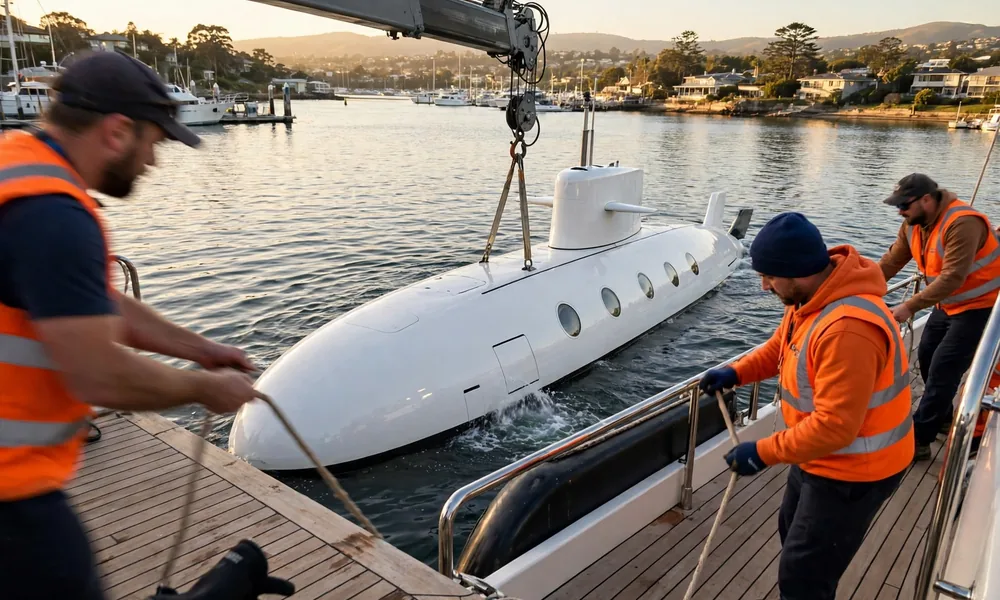
The next time a spec sheet lands on the table, read it from the depth rating down, and ask what each number buys. Depth buys the view, length buys the room, endurance buys the time, and the hull material buys the safety margin underneath all of it. A submarine is the rare machine where the numbers are not marketing, because the sea checks every single one of them on the first dive.


